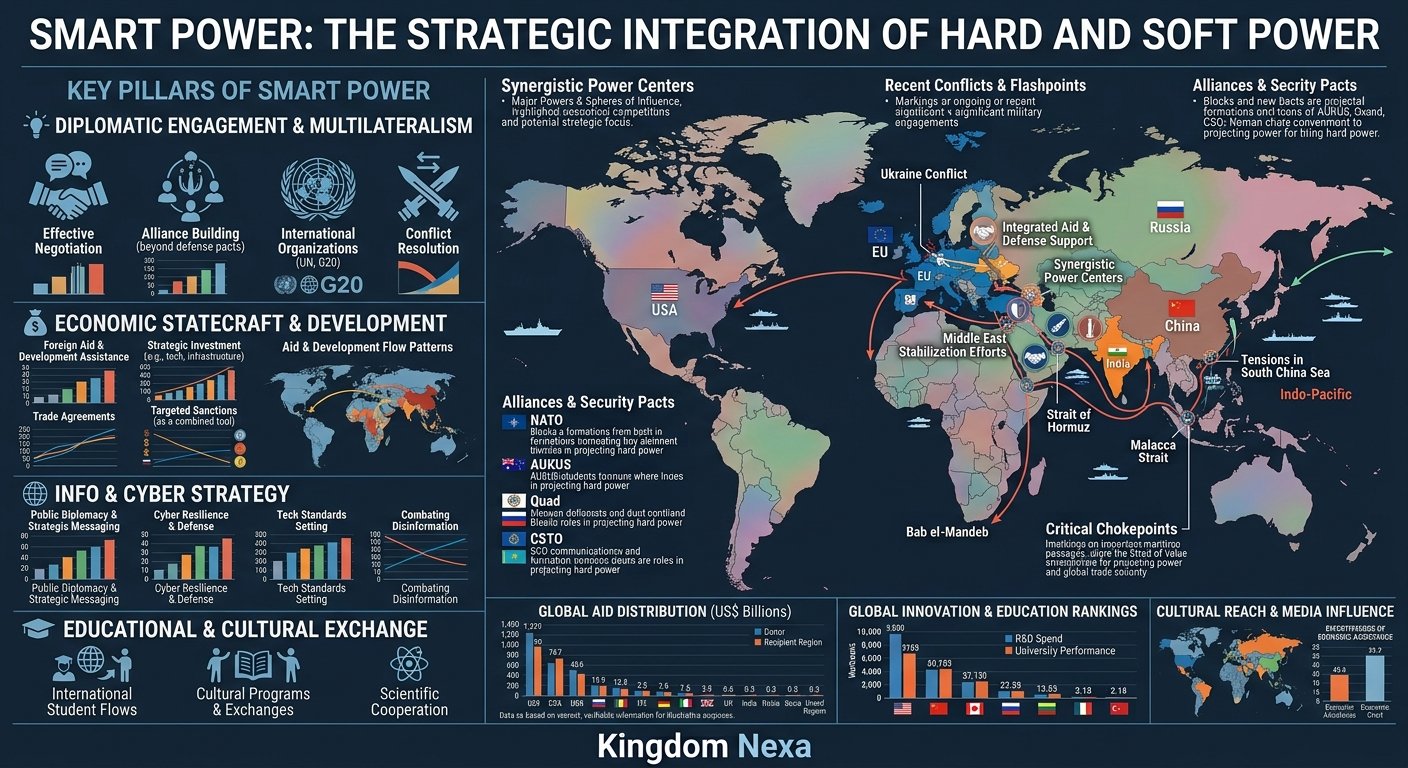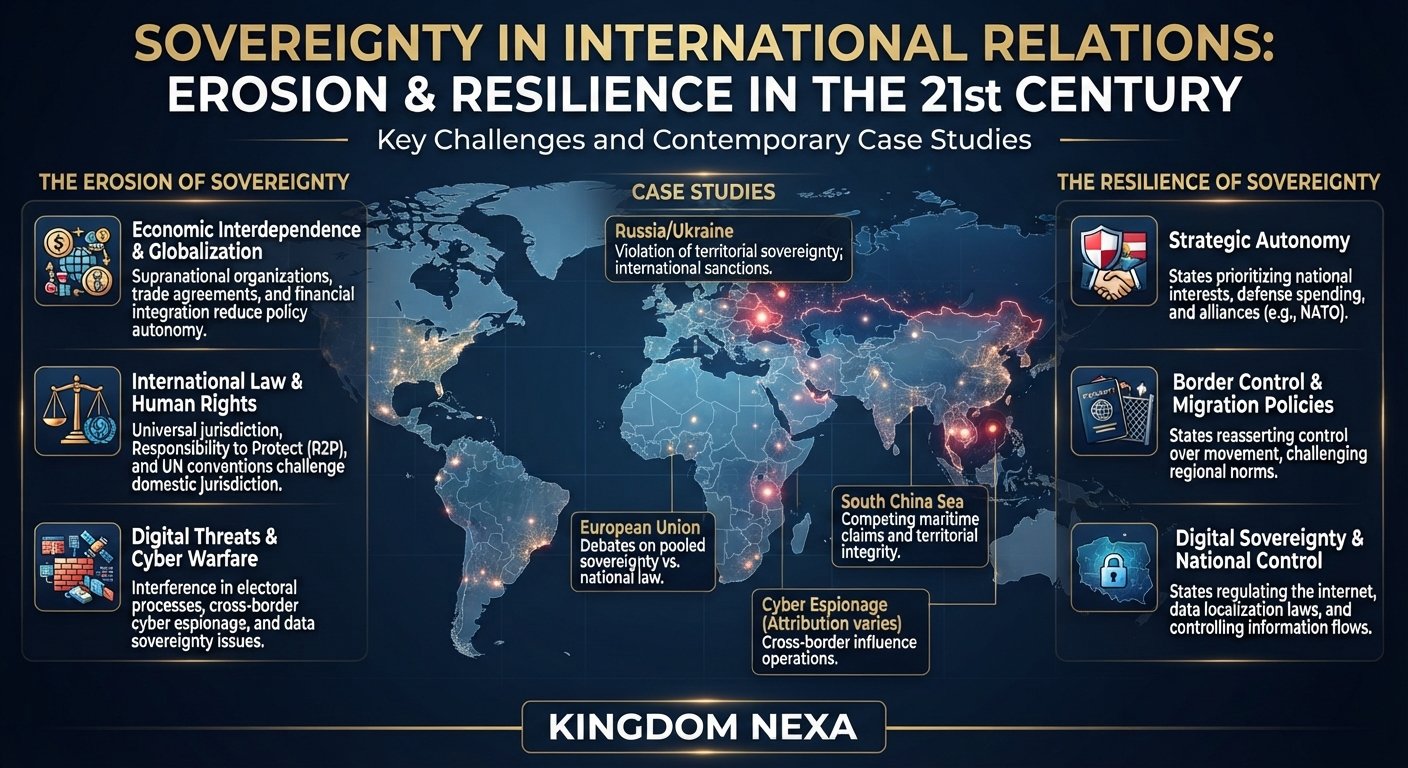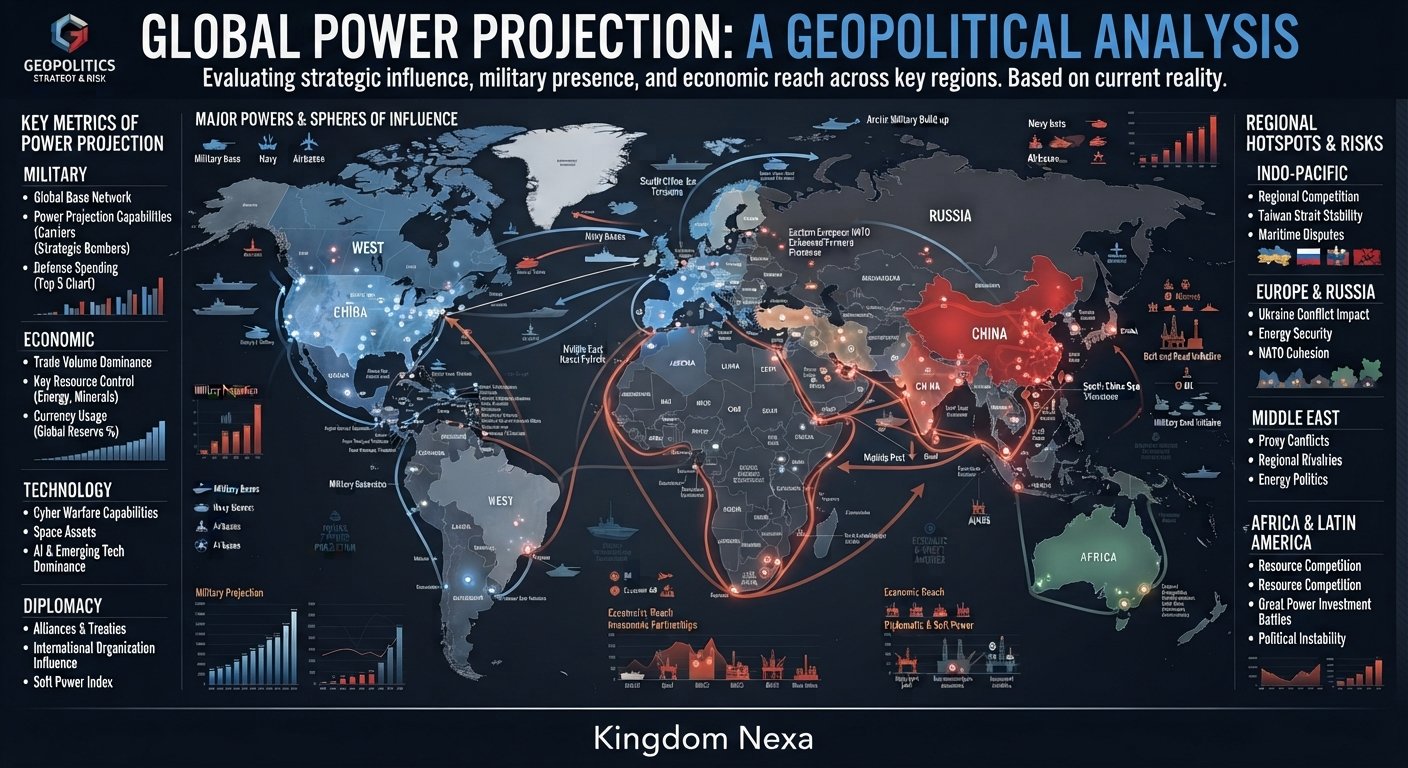
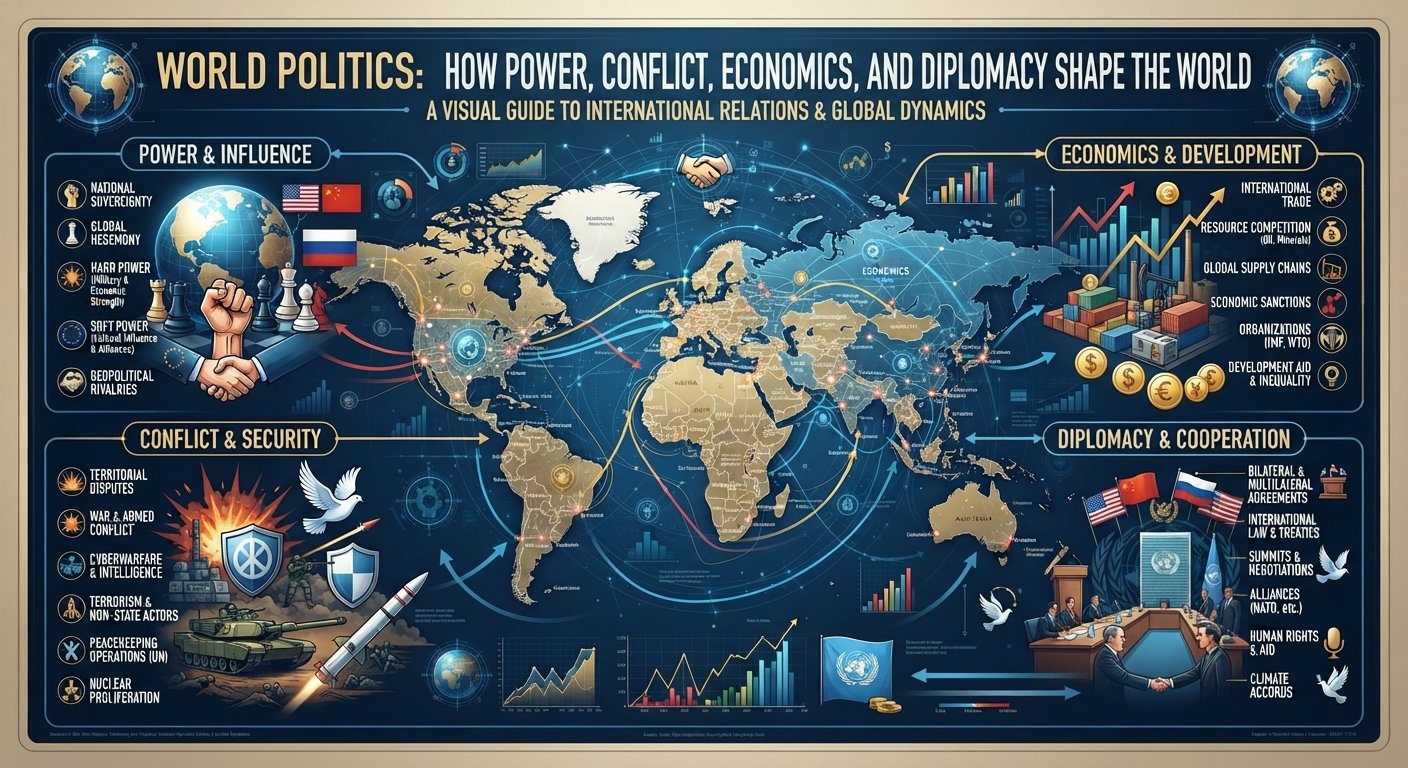
World politics is the study of how countries, governments, international organizations, and other influential actors interact across borders. It encompasses diplomacy, conflict, alliances, trade, international law, security, economic competition, technology, energy, and the struggle for political influence.
Understanding world politics has become increasingly important because events in one region can quickly affect countries thousands of miles away. A war can disrupt energy supplies and food markets. A trade dispute can reshape global supply chains. A technological breakthrough can alter military balances. A diplomatic agreement can change regional security calculations.
In 2026, the international system is experiencing several overlapping pressures: strategic competition among major powers, continuing armed conflicts, economic uncertainty, military rearmament, technological rivalry, and debates over the future of multilateral institutions. The United Nations has described the current environment as one marked by conflict, inequality, unpredictability and geopolitical divisions, while emphasizing the continuing importance of international cooperation. (United Nations)
This article explains what world politics means, how it developed, who the major actors are, how power operates, and why current geopolitical developments matter for the global economy and international security.
What Is World Politics?
World politics refers to the political relationships and interactions that take place among states and other international actors.
At its simplest, it asks questions such as:
- Who has political, economic and military power?
- How do countries pursue their national interests?
- Why do states cooperate in some situations but compete in others?
- How do wars and alliances influence international security?
- How do trade, sanctions and finance become instruments of political power?
- What role do international organizations play?
- How are technology, climate change and resources changing geopolitical competition?
World politics is broader than traditional diplomacy. Governments remain central, but modern international affairs also involve international organizations, multinational corporations, financial institutions, NGOs, armed groups, technology companies, media networks and other non-state actors.
The result is an international system in which military power remains important, but economic strength, technological capabilities, diplomatic influence, geography, demographic trends and control over critical infrastructure can also determine geopolitical outcomes.
How Did Modern World Politics Develop?
Modern world politics did not emerge at a single moment. It developed through centuries of changing political systems, wars, treaties, empires and economic relationships.
From Empires to Sovereign States
For much of history, international politics was shaped by empires, kingdoms and competing dynasties. Political authority was often organized around rulers rather than modern nation-states.
The development of sovereign states gradually changed this system. The Peace of Westphalia of 1648 is commonly associated with the consolidation of principles of territorial sovereignty, although historians caution against treating it as the single starting point of the modern state system.
Over subsequent centuries, European state competition expanded globally through imperialism, colonialism, trade and military power.
The World Wars and the Birth of Multilateralism
The First and Second World Wars transformed international politics.
The devastation of the Second World War contributed to the creation of institutions designed to reduce the likelihood of another global conflict. The United Nations Charter was signed in 1945 and established a framework centered on international cooperation, sovereign equality, peaceful dispute settlement and collective security.
The UN Security Council remains one of the central institutions of international security. It has 15 members, including five permanent members—China, France, Russia, the United Kingdom and the United States—and ten elected members. (United Nations)
The Cold War
After 1945, world politics became heavily influenced by competition between the United States and the Soviet Union.
The Cold War involved:
- Nuclear deterrence
- Military alliances
- Proxy conflicts
- Ideological competition
- Economic rivalry
- Intelligence operations
- Competition for influence in developing countries
- The space and technology race
NATO was established in 1949 as a collective-defense alliance. It has since expanded from its original 12 members to 32 members, with Sweden becoming the 32nd member in 2024. (NATO)
The Post-Cold War Era
The collapse of the Soviet Union in 1991 produced a period of predominant American influence. Globalization expanded, international trade increased, and many countries became more economically interconnected.
However, the international system did not become permanently unipolar. China emerged as a major economic and military power, Russia sought to reassert influence, India expanded its global role, and regional powers increasingly pursued independent strategies.
The result is an international system that is better described as complex and increasingly contested than simply unipolar or bipolar.
What Are the Main Elements of World Politics?

Several interconnected forces determine how world politics operates.
National Interest
States generally pursue what their governments define as national interests.
These may include:
- Territorial security
- Economic prosperity
- Energy security
- Political stability
- Access to markets
- Strategic resources
- International influence
- Protection of citizens abroad
National interests are not always permanent. Governments can redefine priorities when domestic politics, economic conditions or external threats change.
Power
Power is one of the fundamental concepts in international relations.
It can include:
Military power: armed forces, nuclear capabilities, intelligence and defense technology.
Economic power: GDP, trade, financial markets, investment and control over resources.
Technological power: semiconductors, artificial intelligence, cybersecurity, satellites and advanced manufacturing.
Diplomatic power: the ability to build coalitions and influence negotiations.
Soft power: the ability to attract others through culture, political values, education, institutions and international reputation.
A country’s overall geopolitical influence therefore cannot be measured by military strength alone.
Who Are the Major Actors in World Politics?
States remain the most important actors because they possess sovereignty and control formal instruments of foreign policy.
However, modern world politics involves several categories of actors.
Major Powers
The United States, China, Russia, India and major European powers possess substantial combinations of economic, military, diplomatic or technological capabilities.
Their relationships have global consequences.
The United States continues to possess extensive military, financial and diplomatic capabilities. China has become a major economic, technological and military competitor. Russia remains a significant nuclear and military power. India is increasingly influential because of its population, economy, strategic geography and diplomatic relationships.
Middle Powers
Countries such as Türkiye, Japan, South Korea, Saudi Arabia, Brazil, Australia, Indonesia and others can exert significant regional or issue-specific influence.
Middle powers often use flexible diplomacy rather than aligning permanently with a single major power.
International Organizations
Institutions such as the United Nations, NATO, European Union, World Trade Organization, International Monetary Fund and World Bank help establish rules, coordinate policies and manage international problems.
NATO, for example, currently has 32 members and describes deterrence and defense, crisis prevention and management, and cooperative security as its three core tasks. (NATO)
Non-State Actors
Multinational companies, technology firms, NGOs, armed groups, financial institutions and international civil-society organizations can influence international outcomes.
Technology companies, for example, increasingly matter to national security because cloud computing, artificial intelligence, telecommunications infrastructure and semiconductor supply chains have strategic significance.
Why Does Geography Matter in World Politics?
Geography remains one of the most enduring sources of geopolitical power.
A country’s location can influence:
- Access to oceans
- Trade routes
- Natural resources
- Border security
- Military mobility
- Energy transportation
- Access to strategic waterways
- Relations with neighboring powers
Strategic locations such as the Strait of Hormuz, Bab el-Mandeb, Suez Canal, Panama Canal and major maritime routes can therefore have global importance.
Geography also affects the security calculations of landlocked states, island countries, major powers and states located between competing geopolitical blocs.
How Do Alliances Shape World Politics?
Alliances allow states to increase their security and influence by coordinating with other countries.
NATO is one of the world’s most important military alliances. Its Article 5 collective-defense principle states that an armed attack against one member is considered an attack against all, although each member determines what assistance it considers necessary. (NATO)
Alliances can serve several purposes:
- Deterrence
- Intelligence sharing
- Joint military planning
- Defense procurement
- Political coordination
- Crisis management
However, alliances can also create risks. A conflict involving one member can generate pressure on other members to respond, potentially expanding a regional crisis.
How Does Economics Influence World Politics?
Economic relationships are now inseparable from geopolitical strategy.
Countries use:
- Trade agreements
- Tariffs
- Sanctions
- Investment
- Development assistance
- Financial restrictions
- Export controls
- Energy policy
- Supply-chain policy
as instruments of international influence.
The WTO continues to provide the institutional framework for much of global trade, while its 2026 analysis emphasizes that geopolitical tensions, government intervention, technological change and shifting economic power are challenging the multilateral trading system. (World Trade Organization)
Economic Interdependence and Vulnerability
Globalization created extensive economic interdependence.
That creates benefits, but it can also create vulnerabilities.
A country dependent on another state for critical minerals, energy, semiconductors, food or industrial components may face strategic risks during a geopolitical crisis.
This has encouraged governments to pursue concepts such as:
- Supply-chain resilience
- Economic security
- Strategic autonomy
- Friend-shoring
- Near-shoring
- Critical-mineral security
- Semiconductor independence
Economic policy has therefore become an increasingly important component of national security.
Why Is Military Power Still Important?
Military power remains a central element of world politics because states must ultimately protect territory, populations and strategic interests.
Current trends demonstrate the continuing importance of defense capabilities. SIPRI estimates that global military expenditure reached $2.887 trillion in 2025, increasing 2.9% in real terms and marking the 11th consecutive year of growth. Europe increased military spending by 14%, while Asia and Oceania increased spending by 8.1%. (SIPRI)


Military power today extends far beyond traditional armies and navies.
Modern strategic competition includes:
- Nuclear weapons
- Ballistic and cruise missiles
- Drones
- Cyber operations
- Artificial intelligence
- Electronic warfare
- Space systems
- Satellite communications
- Precision weapons
- Autonomous systems
The growing importance of these capabilities is changing how states think about deterrence and warfare.
What Role Does Diplomacy Play?
It is the principal mechanism through which states attempt to manage disputes without resorting to force.
Diplomacy includes:
- Bilateral negotiations
- Multilateral conferences
- Peace agreements
- Treaties
- Confidence-building measures
- Mediation
- Summits
- Back-channel negotiations
Diplomacy does not eliminate competition. Instead, it provides mechanisms through which competing interests can sometimes be managed.
Even countries with hostile relationships may maintain diplomatic channels because communication can reduce miscalculation and create opportunities for negotiation.
How Does International Law Affect World Politics?
International law establishes rules governing relationships among states and other international actors.
Important areas include:
- Sovereignty
- Treaty obligations
- Use of force
- Human rights
- International humanitarian law
- Maritime boundaries
- Diplomatic relations
- Refugee protection
- International criminal law
The United Nations Charter remains a central foundation of the contemporary international legal order. In 2026, UN Secretary-General António Guterres has repeatedly emphasized that the Charter’s principles are under significant pressure from geopolitical conflict and violations of international law. (United Nations)
International law, however, operates within a political system where enforcement can be uneven. Powerful states may have greater ability to resist external pressure, while disagreements within institutions can prevent collective action.
This tension between international rules and political power is one of the central problems of world politics.
How Does Technology Change World Politics?
Technology has become a major source of geopolitical power.
Artificial intelligence, semiconductors, telecommunications, satellites and cybersecurity increasingly influence economic and military capabilities.
Artificial Intelligence
AI can affect:
- Military decision-making
- Intelligence analysis
- Cybersecurity
- Economic productivity
- Information operations
- Scientific research
- Autonomous systems
The countries that lead in AI infrastructure, computing capacity, advanced chips and related research may gain significant economic and strategic advantages.
Cybersecurity
Cyber operations can target governments, banks, energy systems, telecommunications networks and critical infrastructure.
Unlike conventional military power, cyber capabilities can sometimes be deployed across borders without a conventional military attack.
Space Power
Satellites support:
- Navigation
- Communications
- Weather forecasting
- Intelligence
- Missile warning
- Military operations
As dependence on space infrastructure grows, space has become an increasingly important domain of strategic competition.
What Are the Major Geopolitical Issues Shaping World Politics in 2026?
World politics in 2026 is being shaped by several overlapping developments.
Strategic Competition Among Major Powers
Competition among major powers increasingly extends beyond traditional military rivalry.
It includes:
- Technology
- Trade
- Industrial policy
- Critical minerals
- Energy
- Financial systems
- Maritime influence
- Diplomatic partnerships
The key question is not simply which country is strongest, but how different forms of power interact.
Armed Conflicts and Security Crises
Wars in different regions continue to influence diplomacy, humanitarian conditions, energy markets and international security.
The UN has identified conflicts including Gaza, Ukraine and Sudan among major challenges requiring sustained international attention. (United Nations)
The effects of conflicts also extend beyond battlefields through refugee flows, commodity prices, arms transfers, sanctions and disruptions to trade.
A More Contested International Order
The international system is becoming more politically fragmented.
States increasingly disagree about:
- International intervention
- Sanctions
- Sovereignty
- Human rights
- Trade rules
- Security arrangements
- The role of major international institutions
This does not necessarily mean that globalization is ending. Instead, globalization is increasingly being shaped by strategic considerations.
Rising Military Expenditure
The growth in military spending is another important indicator.
SIPRI’s 2025 figures show that global military spending has increased for 11 consecutive years, with the global military burden reaching 2.5% of GDP. (SIPRI)
Higher defense spending may strengthen deterrence, but it can also increase regional arms competition and divert resources from other priorities.
Economic and Energy Security
Geopolitical conflicts can affect oil, gas, electricity, shipping, food and fertilizer markets.
The IMF’s July 2026 outlook projected global growth of 3.0% in 2026 and 3.4% in 2027, while warning that the global economy remains exposed to war-related shocks, stalled disinflation and financial-market risks. (IMF)
This illustrates how security policy and economic policy have become increasingly interconnected.
How Does Domestic Politics Affect World Politics?
Foreign policy does not develop independently of domestic politics.
Governments must consider:
- Elections
- Public opinion
- Economic conditions
- Political parties
- National identity
- Media narratives
- Interest groups
- Business interests
- Military institutions
A government may change its foreign-policy priorities because domestic voters demand different policies or because economic pressures limit its options.
National leaders therefore operate on two levels simultaneously: they negotiate internationally while managing political constraints at home.
What Is the Role of Emerging and Middle Powers?
One of the most important changes in contemporary world politics is the growing importance of states that do not fit neatly into a simple major-power rivalry.
Countries such as India, Türkiye, Saudi Arabia, Brazil, Indonesia, South Africa, Japan, South Korea and others can pursue relationships with multiple major powers.
This creates a more flexible diplomatic environment.
For example, a country may cooperate with the United States on security, maintain economic relationships with China, purchase energy from Russia, and participate in regional institutions at the same time.
This strategy is sometimes described as strategic autonomy, multi-alignment, or hedging, although the precise meaning differs by country.
What Are the Main Risks Facing World Politics?
Several risks could significantly affect the international system.
Great-Power Miscalculation
Competition between major military powers creates the risk that a local crisis could escalate through miscalculation.
Nuclear Risks
Nuclear weapons remain a major feature of strategic deterrence. Crisis instability becomes particularly dangerous when nuclear-armed states are involved.
Economic Fragmentation
Trade restrictions and competing technology ecosystems could increase costs and reduce economic efficiency.
Cyber Conflict
Cyberattacks against critical infrastructure could create significant economic and security consequences without conventional warfare.
Climate and Resource Pressure
Climate-related disasters can worsen food insecurity, migration pressures, water stress and political instability.
Humanitarian Crises
Prolonged conflicts can overwhelm humanitarian systems and create large-scale displacement.
These risks are interconnected rather than isolated. An armed conflict can trigger energy shortages, which can increase inflation, which can create domestic political pressure, which can then influence foreign policy.
What Could the Future of World Politics Look Like?
Predicting the future with certainty is impossible, but several scenarios are plausible.
Scenario 1: Competitive Multipolarity
Several major and regional powers continue competing while avoiding direct large-scale confrontation.
Under this scenario, diplomacy becomes increasingly transactional and states maintain relationships with multiple blocs.
Scenario 2: Greater Geopolitical Fragmentation
Economic, technological and security systems could become more divided.
Different groups of countries could develop partially separate technology standards, financial networks, supply chains and security arrangements.
Scenario 3: Renewed Multilateral Cooperation
Countries could recognize that problems such as climate change, pandemics, financial instability, AI governance and nuclear risks cannot be effectively managed independently.
This could encourage stronger international institutions and new agreements.
Scenario 4: Escalating Strategic Competition
Military modernization, territorial disputes, economic coercion and technological rivalry could intensify.
This would increase the importance of deterrence and crisis-management mechanisms.
These scenarios are not mutually exclusive. Elements of all four could exist simultaneously in different regions.
Why Is World Politics Important for Ordinary People?
World politics can appear distant from everyday life, but its effects are often immediate.
International developments can influence:
- Fuel prices
- Food costs
- Employment
- Interest rates
- Investment
- Travel
- Migration
- Internet security
- Technology availability
- National security
A conflict affecting a major energy-producing region can increase transportation costs elsewhere. A semiconductor dispute can affect electronics production. A trade agreement can create opportunities for businesses. A geopolitical crisis can alter currency and financial markets.
Understanding world politics therefore helps people interpret economic, security and social developments that cross national borders.
How Should Students and Researchers Analyze World Politics?
A useful approach is to avoid looking at an international event from only one perspective.
Ask:
- What happened?
- Who are the major actors?
- What does each actor want?
- What historical factors matter?
- What geographic constraints exist?
- What economic interests are involved?
- What military capabilities influence the situation?
- What international laws or institutions apply?
- What domestic political pressures matter?
- What are the likely consequences?
- Which facts are verified and which claims remain disputed?
- What alternative outcomes are possible?
This approach helps separate description from analysis.
It also prevents a common mistake in geopolitical commentary: assuming that a country’s public statement automatically reveals its complete strategic objective.
Frequently Asked Questions About World Politics
What is world politics in simple words?
World politics is the study of how countries and other international actors interact, compete and cooperate over issues such as security, trade, diplomacy, resources, technology and political influence.
Why is world politics important?
World politics affects international security, economic conditions, trade, energy supplies, migration, technology, investment and relationships between countries.
What is the difference between world politics and international relations?
International relations is the broader academic field studying relationships among states and other international actors. World politics is often used more broadly to describe the actual political processes, conflicts, institutions and power relationships operating across the international system.
Who are the most important actors in world politics?
States remain the primary actors, but international organizations, alliances, multinational corporations, NGOs, financial institutions, technology companies and non-state armed groups can also influence international affairs.
What is geopolitical power?
Geopolitical power is the ability of a state or other actor to influence international outcomes. It can come from military strength, economic resources, technology, geography, diplomacy, alliances and soft power.
How does the United Nations influence world politics?
The UN provides a major platform for diplomacy, international cooperation, peace and security discussions, humanitarian action and the development and implementation of international norms and agreements.
Why are alliances important in world politics?
Alliances allow countries to coordinate their security policies, share resources and increase deterrence. They can also influence the balance of power between competing states.
Is world politics becoming multipolar?
The international system is increasingly characterized by several influential powers and regional actors rather than a simple two-power structure. However, the exact balance of power continues to evolve.
How does economics affect world politics?
Economic power influences trade, sanctions, investment, energy security, technology and financial relationships. Economic interdependence can encourage cooperation but can also create strategic vulnerabilities.
What are the biggest challenges facing world politics?
Major challenges include armed conflict, great-power rivalry, nuclear risks, economic fragmentation, climate change, cyber threats, technological competition, humanitarian crises and weaknesses in international cooperation.
Conclusion
World politics is ultimately about power, interests, cooperation and competition within an interconnected international system. Military capabilities remain important, but modern geopolitical influence also depends on economic strength, technology, diplomacy, alliances, geography, institutions and the ability to shape international rules.
The contemporary system is becoming more complex rather than simply dividing into two opposing camps. Major powers compete, middle powers pursue greater strategic flexibility, international organizations attempt to preserve cooperation, and economic and technological relationships increasingly overlap with national security.
The scale of military spending, continuing conflicts and pressure on international institutions demonstrates how unsettled the global environment remains. At the same time, international cooperation continues to provide mechanisms for diplomacy, trade, humanitarian action and crisis management. The UN’s current emphasis on defending multilateral cooperation reflects the tension between these two forces. (United Nations)
For students, researchers, policymakers, businesses and citizens, understanding world politics requires more than following individual headlines. It requires examining who holds power, what actors want, why they act, what constraints they face, and how decisions in one part of the world can produce consequences elsewhere.
That broader perspective is essential for understanding the direction of international geopolitics and global affairs.