Introduction
Geopolitical forecasting is the systematic assessment of how political, economic, military, technological, diplomatic, and social developments may evolve over time. Governments, intelligence organizations, international institutions, businesses, researchers, and political-risk professionals use it to identify plausible developments before they occur and prepare for uncertainty.
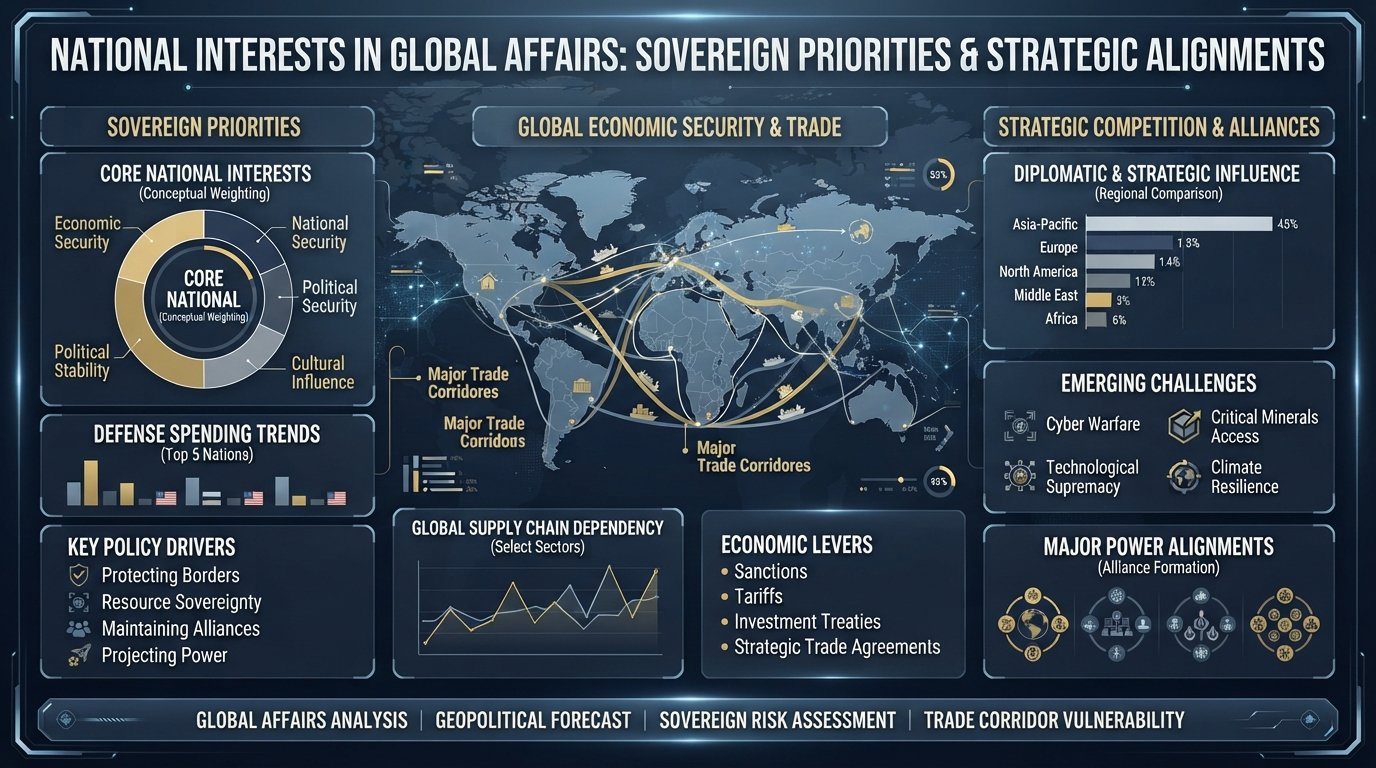
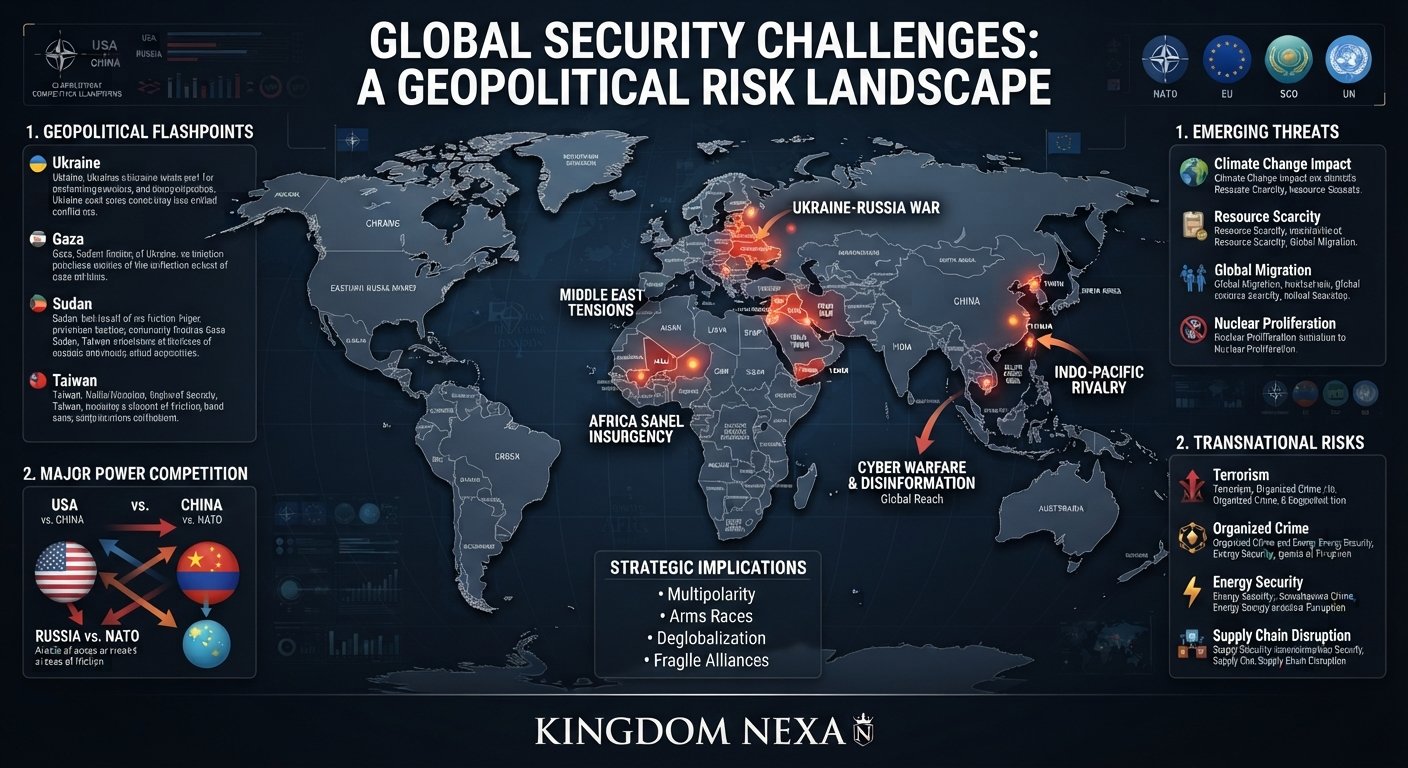
Its importance has increased as geopolitical events have become more interconnected. A military confrontation can affect energy prices and shipping routes; a trade restriction can reshape supply chains; a technological breakthrough can alter military balances; and domestic political changes can transform foreign-policy priorities. The 2026 global risk environment illustrates this complexity. The World Economic Forum’s Global Risks Report 2026 identifies geoeconomic confrontation and state-based armed conflict among the leading near-term global risks, while also emphasizing technological, social, economic, and environmental interactions.
Effective geopolitical forecasting does not claim to know exactly what the future will look like. Instead, it estimates probabilities, identifies important uncertainties, tracks indicators, tests alternative explanations, and updates judgments as new evidence emerges. This article explains how geopolitical forecasting works, the methods used by professional analysts, its limitations, major forecasting mistakes, and how to build more reliable assessments of future international developments.
What Is Geopolitical Forecasting?
Geopolitical forecasting is the structured process of estimating the probability of future international political and strategic events.
A forecast might address a relatively specific question:
- Will a government change a particular policy within six months?
- How likely is a ceasefire to hold?
- Will a trade restriction be extended?
- Could political instability increase in a particular country?
- Is a diplomatic agreement likely to be reached before a specified date?
- How might an alliance relationship change over several years?
The key feature is time-bounded uncertainty. A useful forecast normally specifies the event, timeframe, possible outcomes, evidence, assumptions, and degree of confidence.
Forecasting Is Not the Same as Prediction
The words forecasting and prediction are often used interchangeably, but professional forecasting generally involves probabilities rather than certainty.
For example, an analyst might estimate that an event has a 60% probability of occurring within a defined period. That does not mean the analyst is claiming the event will happen. It means the available evidence supports that probability at the time the forecast was made.
This distinction matters because international politics contains strategic actors who deliberately respond to expectations. A forecast can influence behavior, while unexpected events can rapidly invalidate assumptions.
Forecasting, Foresight, and Scenarios
These concepts overlap but serve different purposes.
Geopolitical forecasting usually asks what is more or less likely to happen.
Strategic foresight explores multiple plausible futures so decision-makers can prepare for uncertainty. The OECD describes foresight as a systematic approach for exploring plausible futures rather than attempting to predict a single future.
Scenario planning constructs internally consistent alternative futures and examines their implications.
Prediction is often used more broadly to describe a claim about what will happen.
The distinction is important because long-term geopolitical analysis is rarely improved by pretending that one precise future can be known decades in advance.
Why Geopolitical Forecasting Matters
Geopolitical decisions increasingly have consequences beyond national borders.
A conflict can disrupt commodity markets and transportation. Sanctions can alter investment patterns. Export controls can affect semiconductor supply chains. Political instability can change migration pressures. Competition over infrastructure, ports, energy corridors, satellites, data, and critical minerals can influence strategic relationships.
The World Economic Forum’s 2026 assessment reflects this interconnected environment. Its survey of more than 1,300 experts examined risks across immediate, two-year, and ten-year horizons. For 2026, 18% of respondents identified geoeconomic confrontation as the risk most likely to trigger a material global crisis, while 14% selected state-based armed conflict. These are perceptions collected through the survey rather than forecasts of what will necessarily occur.
This distinction demonstrates why forecasting requires careful interpretation of evidence rather than simply repeating risk rankings.
Who Uses Geopolitical Forecasting?
Major users include:
- National governments
- Intelligence and security organizations
- Diplomatic institutions
- International organizations
- Armed forces
- Multinational corporations
- Financial institutions
- Energy companies
- Shipping and logistics firms
- Insurance organizations
- Research institutes
- Universities
- Journalists and investigative organizations
For businesses, geopolitical forecasting can influence decisions about market entry, supply chains, investment, insurance, logistics, and political risk.
For governments, it can support contingency planning, diplomacy, national security, economic policy, and crisis management.
How Does Geopolitical Forecasting Work?
A rigorous forecasting process begins by defining the question rather than immediately searching for supporting evidence.
Define the Forecasting Question
A vague question produces a vague forecast.
“Will tensions increase?” is difficult to evaluate because the meaning of tensions is unclear.
A better question specifies:
- Actor
- Event
- Time period
- Geographic scope
- Observable outcome
- Conditions for resolution
For example, a forecasting question might ask whether a government will impose a particular trade restriction before a specified date.
Establish the Baseline
Analysts need to determine what is already happening.
This involves examining:
- Existing policies
- Current diplomatic relationships
- Military deployments
- Economic conditions
- Public statements
- Legislative developments
- Previous agreements
- Historical behavior
- Institutional constraints
Without a baseline, analysts can mistake normal developments for major changes.
Identify Drivers and Uncertainties
Forecasts normally combine relatively stable structural factors with uncertain variables.
Structural drivers can include:
- Demographic change
- Economic growth
- Geography
- Energy dependence
- Military capabilities
- Institutional arrangements
- Technological development
Uncertainties can include:
- Leadership decisions
- Elections
- Unexpected crises
- Diplomatic breakthroughs
- Market shocks
- Domestic political instability
- Technological breakthroughs
- Escalation or de-escalation decisions
The analytical challenge is determining which uncertainties could actually change the outcome.
Generate Probabilities
Probabilistic forecasting forces analysts to express uncertainty explicitly.
Instead of saying:
“A crisis is likely.”
A stronger formulation would specify:
“Given the current evidence and assumptions, the probability of a defined crisis outcome is assessed at approximately X% during the stated period.”
The probability itself should be updated when evidence changes.
Identify Indicators and Triggers
A forecast becomes more useful when analysts identify observable developments that would change their assessment.
For example, indicators could include:
- New military deployments
- Changes in diplomatic language
- Emergency legislation
- Mobilization measures
- Changes in trade restrictions
- Intelligence disclosures
- Financial-market stress
- Public-opinion shifts
- Changes in alliance commitments
This creates an early-warning system rather than a static prediction.
Major Methods of Geopolitical Forecasting
No single forecasting technique works for every geopolitical problem.
Trend Analysis
Trend analysis examines developments over time.
Analysts may track:
- Defense spending
- Trade flows
- Demographic patterns
- Energy consumption
- Military capabilities
- Migration
- Political institutions
- Foreign direct investment
Trend analysis is particularly useful when structural changes develop gradually.
Its weakness is that geopolitical systems can experience discontinuities. A long-term trend does not guarantee that the same trajectory will continue.
Scenario Planning
Scenario planning creates multiple plausible futures rather than selecting one inevitable outcome.
A typical exercise might develop scenarios such as:
- Managed competition
- Escalating confrontation
- Limited cooperation
- Regional fragmentation
The purpose is not to declare one scenario certain. It is to identify the conditions that could push events toward different paths.
The National Intelligence Council’s Global Trends 2040 illustrates this approach. Rather than presenting one definitive prediction of the world in 2040, it developed several alternative scenarios based on structural forces and uncertainties.
Horizon Scanning
Horizon scanning looks for early signals that may indicate emerging change.
Signals can include:
- New technologies
- Unusual diplomatic activity
- Regulatory changes
- Emerging political movements
- Changes in military doctrine
- New economic dependencies
- Shifts in public discourse
The OECD identifies horizon scanning as one of the core tools of strategic foresight.
Probabilistic Forecasting
Probabilistic forecasting assigns numerical probabilities to clearly defined outcomes.
This method allows forecasts to be evaluated after events occur.
For example:
- 20% probability
- 50% probability
- 80% probability
The objective is not to sound certain. It is to become better calibrated over time.
Expert Elicitation
Experts can provide valuable judgments where data are incomplete.
However, expertise alone does not guarantee accuracy. Experts may be influenced by institutional assumptions, ideology, availability bias, reputational incentives, or excessive confidence.
For this reason, modern forecasting research increasingly examines ways to combine judgments systematically.
Aggregation and Ensemble Forecasting
One important lesson from forecasting research is that combining multiple independent judgments can improve accuracy.
The U.S. Intelligence Advanced Research Projects Activity’s Aggregative Contingent Estimation program investigated methods for eliciting, weighting, and combining probabilistic judgments from multiple analysts. IARPA reports that the program involved empirical testing against real events.
This approach treats forecasting as a measurable analytical activity rather than simply an exercise in producing persuasive prose.
The Role of Data, Technology, and Artificial Intelligence
Technology has transformed geopolitical analysis.
Analysts can now process large quantities of:
- News reporting
- Government documents
- Trade statistics
- Satellite imagery
- Financial data
- Shipping information
- Social-media activity
- Election results
- Economic indicators
- Public statements
Machine-learning systems can identify patterns that humans might overlook.
IARPA’s Hybrid Forecasting Competition specifically examined methods for combining human and machine forecasting. The program concluded that hybrid approaches could outperform human-only baseline systems in the tested forecasting environment.
Yet AI does not eliminate uncertainty.
Why AI Cannot Simply “Predict Geopolitics”
International politics is not a closed physical system.
Political leaders can change decisions after observing forecasts. Governments can deliberately conceal intentions. Data can be incomplete or manipulated. Rare events may have enormous consequences even though they have limited historical precedent.
AI systems can also inherit problems from their data, including:
- Historical bias
- Incomplete information
- Correlated sources
- Disinformation
- Selection effects
- Poorly defined outcomes
The most useful role for AI may therefore be to support analysts by processing information, identifying signals, testing assumptions, generating alternatives, and updating models—not replacing human judgment entirely.
What Factors Shape Geopolitical Forecasts?
Geopolitical forecasting requires more than military analysis.
Political Factors
Analysts examine:
- Leadership incentives
- Elections
- Political institutions
- Coalition politics
- Public opinion
- Nationalism
- Opposition movements
- Legislative constraints
Domestic politics can significantly constrain foreign-policy choices.
Economic Factors
Forecasting variables include:
- GDP growth
- Inflation
- Debt
- Trade dependencies
- Foreign investment
- Commodity prices
- Sanctions
- Energy markets
- Supply chains
Economic interdependence can create both cooperation and vulnerability.
The IMF’s research on geoeconomic fragmentation shows why this matters. Its recent work examines how geopolitical divisions can affect trade, investment, supply chains, and economic output across regions.
Military and Security Factors
Military forecasting considers:
- Force structure
- Readiness
- Logistics
- Geography
- Mobilization capacity
- Defense production
- Alliances
- Deterrence
- Command structures
- Strategic weapons
However, military capability alone does not determine political outcomes. Political objectives, economic constraints, alliance behavior, and domestic legitimacy also matter.
Technology
Technology is increasingly central to geopolitical competition.
Important areas include:
- Artificial intelligence
- Semiconductors
- Cybersecurity
- Drones
- Satellites
- Quantum technologies
- Telecommunications
- Digital infrastructure
- Space systems
Technological forecasting is difficult because innovation can develop nonlinearly. A technology that appears commercially limited today can become strategically significant after complementary systems emerge.
Geography and Resources
Geography remains fundamental despite technological change.
Important variables include:
- Borders
- Ports
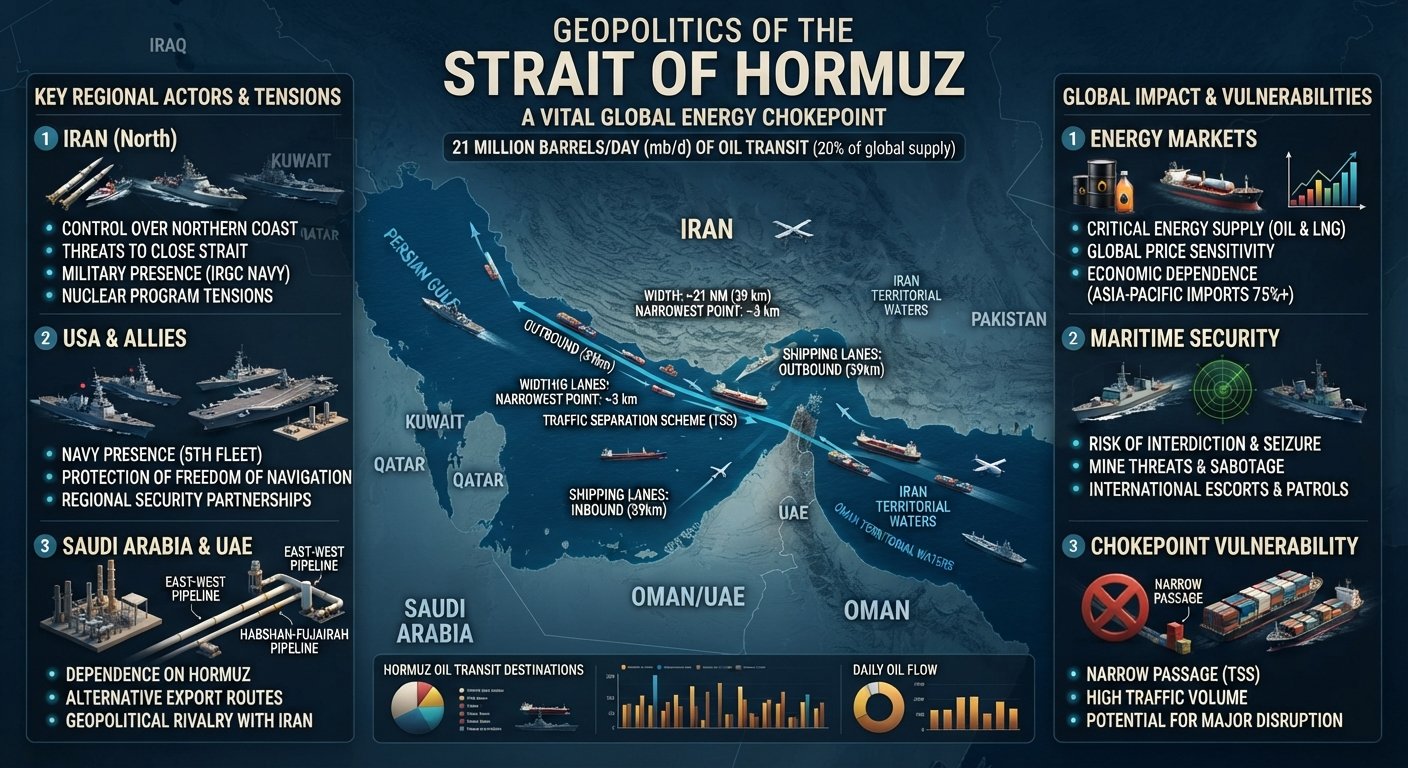
- Maritime chokepoints
- Mountain ranges
- Rivers
- Energy corridors
- Critical-mineral deposits
- Agricultural regions
- Strategic infrastructure
Geography determines many of the physical constraints within which states operate.
Geopolitical Forecasting Across Different Time Horizons
Forecasting methods should change with the timeframe.
Near-Term Forecasting
Near-term forecasting focuses on concrete events.
Useful methods include:
- Probabilistic event forecasting
- Indicator monitoring
- News analysis
- Policy tracking
- Diplomatic signals
- Military activity monitoring
The shorter the timeframe, the more important current evidence and event-specific indicators become.
Medium-Term Forecasting
Medium-term analysis focuses on interactions between structural trends and political decisions.
Scenario planning becomes increasingly useful because governments, markets, and institutions can respond to changing conditions.
Long-Term Forecasting
Long-term geopolitical forecasting should emphasize structural forces rather than highly specific events.
Demography, climate, technological development, economic transformation, institutional change, and shifts in relative power can be assessed over decades.
But precision should decrease as the horizon expands.
It is generally more defensible to explore several plausible futures than to state exactly which country will possess a particular level of influence twenty years from now.
Current Geopolitical Forecasting Environment in 2026
The 2026 forecasting environment is characterized by overlapping sources of uncertainty.
The World Economic Forum’s Global Risks Report 2026 identifies geoeconomic confrontation, interstate conflict, social polarization, misinformation and technological risks among the major concerns shaping the near-term outlook. It also assesses risks across 2026, 2028, and 2036, illustrating why analysts increasingly need multiple time horizons rather than a single forecast.
The economic dimension is especially important. IMF research describes geopolitical fragmentation as a force affecting trade, investment, supply chains, and economic relationships. Its work on the Middle East, North Africa, Central Asia, and Pakistan also examines how trade restrictions, conflict-related uncertainty, and changing trade patterns can transmit geopolitical shocks into economic outcomes.
This environment creates a forecasting challenge: political, military, economic, technological, and social variables increasingly interact.
A geopolitical analyst therefore cannot examine a conflict only through military indicators. A shipping disruption may affect energy prices; energy prices can affect inflation; inflation can affect domestic politics; domestic politics can alter diplomatic choices; and those choices can feed back into the original security environment.
Common Errors in Geopolitical Forecasting
Overconfidence
One of the most persistent forecasting errors is excessive certainty.
A confident forecast can sound more convincing than a carefully qualified one, but confidence and accuracy are not the same thing.
Confirmation Bias
Analysts may unconsciously seek evidence supporting an existing view while discounting contradictory information.
A disciplined forecasting process actively searches for disconfirming evidence.
Linear Extrapolation
Past trends do not always continue.
Political shocks, wars, technological breakthroughs, financial crises, and leadership changes can produce abrupt deviations.
Ignoring Base Rates
Analysts sometimes focus heavily on dramatic narratives while ignoring how frequently similar events have historically occurred.
Base-rate information provides an important starting point.
Mirror-Imaging
Mirror-imaging occurs when analysts assume another actor will behave according to their own preferences or assumptions.
Foreign governments may have different risk tolerances, domestic constraints, strategic cultures, and definitions of success.
Treating Statements as Intentions
Government statements are evidence, but they are not automatically proof of future behavior.
Analysts should distinguish between:
- What an actor says
- What an actor has done
- What an actor is capable of doing
- What incentives the actor faces
Failing to Update
A forecast made six months ago may become less useful when major evidence changes.
Good forecasting is iterative.
How to Improve Geopolitical Forecasting Accuracy
A strong forecasting system should establish a disciplined feedback loop.
Use Explicit Probabilities
Numerical probabilities make uncertainty visible and allow later evaluation.
Keep a Forecasting Record
Analysts should preserve:
- Original forecast
- Date
- Probability
- Evidence
- Assumptions
- Alternative explanations
- Subsequent updates
- Final outcome
Without records, it is difficult to determine whether forecasting performance is actually improving.
Measure Accuracy
Forecasting should be evaluated using proper scoring methods.
The Brier score is one widely used measure for probabilistic forecasts. It penalizes inaccurate probabilities and particularly punishes excessive confidence in outcomes that do not occur.
The value of a forecasting system therefore comes not merely from occasionally making a correct call, but from producing probabilities that are appropriately calibrated over many forecasts.
Combine Independent Perspectives
Different analysts may notice different indicators.
Aggregation can reduce individual errors, particularly when judgments are sufficiently independent.
Conduct Premortems
Before finalizing a forecast, analysts can ask:
“Suppose this forecast turns out to be wrong. What did we fail to notice?”
This forces attention toward overlooked assumptions and alternative explanations.
Identify Forecast Killers
Every forecast should specify what evidence would substantially reduce confidence in it.
This makes updating more disciplined.
International Organizations and Geopolitical Forecasting
International organizations contribute data and analytical frameworks that can support forecasting.
The United Nations provides information on conflicts, peacekeeping, humanitarian developments, and international diplomacy.
The IMF and World Bank provide economic data and assessments relevant to debt, trade, investment, development, and macroeconomic stability.
The OECD develops strategic foresight methodologies and applies horizon scanning, megatrend analysis, scenario planning, and other approaches.
Intelligence organizations also conduct structured assessments. The U.S. National Intelligence Council, for example, produces long-term assessments that distinguish structural forces from uncertainties and alternative futures.
These institutions do not eliminate disagreement. Instead, they provide evidence and analytical frameworks that can improve the quality of forecasting.
International Law and Geopolitical Forecasting
International law can influence the probability of future geopolitical developments.
Relevant areas include:
- UN Charter obligations
- Treaty commitments
- International humanitarian law
- Law of the sea
- Sanctions regimes
- Arms-control agreements
- Diplomatic conventions
Legal commitments can constrain governments, but legal rules do not operate independently of political power.
A forecast should therefore distinguish between:
- What international law requires
- What states claim the law requires
- How institutions interpret the issue
- What states actually do
This distinction is particularly important in disputes involving sovereignty, territorial claims, maritime boundaries, military force, and sanctions.
Future of Geopolitical Forecasting
The field is likely to become more data-intensive and increasingly hybrid.
Human analysts will continue contributing contextual understanding, strategic reasoning, and interpretation. Machines can increasingly process large information streams, detect anomalies, compare historical patterns, and generate probabilistic estimates.
The most useful systems are likely to combine:
Human judgment + structured methods + statistical models + machine assistance + continuous evaluation.
At the same time, forecasting organizations will need stronger safeguards against misinformation and manipulated data.
The future challenge is therefore not simply producing more forecasts. It is producing forecasts that are:
- Transparent
- Calibrated
- Reproducible
- Continuously updated
- Explicit about uncertainty
- Resistant to political pressure
- Open to alternative explanations
Future Scenarios for Geopolitical Forecasting
Several broad developments are plausible.
More Automated Forecasting
AI systems may increasingly monitor thousands of indicators and generate probability updates in near real time.
Greater Integration of Economic and Security Analysis
Geopolitical risk will increasingly be analyzed through trade, investment, technology, energy, finance, and supply-chain networks alongside traditional military indicators.
More Scenario-Based Strategic Planning
As uncertainty increases, governments and businesses may place greater emphasis on resilience across several plausible futures rather than optimizing for one expected outcome.
Continuous Forecast Updating
Static annual reports may increasingly be supplemented by continuously updated assessments.
The central uncertainty is not whether technology will improve forecasting capabilities. It is how effectively institutions will combine technological tools with human judgment, rigorous methodology, quality data, and independent evaluation.
Frequently Asked Questions About Geopolitical Forecasting
What is geopolitical forecasting?
Geopolitical forecasting is the systematic estimation of the probability of future political, diplomatic, economic, military, technological, and security developments.
Is geopolitical forecasting the same as predicting the future?
No. Forecasting normally expresses uncertainty through probabilities and defined timeframes. Strategic foresight goes further by exploring several plausible futures rather than attempting to identify one certain outcome.
What methods are used in geopolitical forecasting?
Common methods include trend analysis, scenario planning, horizon scanning, expert elicitation, probabilistic forecasting, statistical modeling, indicators-based warning systems, and human-machine forecasting.
Why is geopolitical forecasting difficult?
International systems contain strategic actors who can change their behavior, incomplete information, unexpected shocks, feedback loops, and non-linear developments. A forecast can also influence the behavior it is attempting to anticipate.
Can artificial intelligence improve geopolitical forecasting?
AI can process large volumes of information, identify patterns, detect signals, and support probability estimation. However, AI does not eliminate uncertainty and remains dependent on data quality, model design, and human interpretation.
How accurate can geopolitical forecasts be?
Accuracy varies considerably by question, timeframe, data availability, and event type. Forecasting research shows that systematic methods, probabilistic reasoning, aggregation, and continuous evaluation can improve performance, but no forecasting method can reliably eliminate uncertainty.
What is a geopolitical risk forecast?
A geopolitical risk forecast estimates the probability and potential consequences of political or strategic developments that could affect governments, markets, organizations, or societies.
Why are scenarios important in geopolitical analysis?
Scenarios help analysts examine multiple plausible futures and identify the conditions that could lead toward each one. They are especially useful for medium- and long-term planning.
How can geopolitical forecasts be evaluated?
Forecasts can be evaluated against outcomes using measures such as calibration and proper scoring rules, including the Brier score for probabilistic forecasts. Maintaining historical forecasting records makes meaningful evaluation possible.
What makes a geopolitical forecast credible?
A credible forecast clearly defines the question, timeframe, assumptions, evidence, probability, uncertainty, alternative explanations, and indicators that could change the assessment. It should also be updated when significant new evidence appears.
Conclusion
Geopolitical forecasting is not an exercise in claiming certainty about an unknowable future. It is a disciplined method for reasoning about uncertainty.
The strongest forecasts combine historical knowledge, current evidence, probabilistic judgment, structural analysis, scenario planning, and continuous updating. They examine political incentives alongside economic dependencies, military capabilities, technology, geography, diplomacy, domestic politics, and international institutions.
The current 2026 environment demonstrates why this approach matters. Geoeconomic competition, armed conflict, technological change, economic fragmentation, misinformation, and social pressures can interact across borders and create consequences that are difficult to understand through a single analytical lens.
For students and researchers, geopolitical forecasting provides a framework for turning international developments into testable questions. For governments and businesses, it provides a basis for contingency planning and risk management. Journalists and informed readers, it offers a disciplined way to distinguish evidence from speculation.
Ultimately, the value of Geopolitical Forecasting lies less in producing dramatic predictions than in improving how people think about uncertainty. A good forecast does not promise that the future can be known. It helps decision-makers recognize what could happen, understand why it might happen, identify what would change the assessment, and prepare for more than one plausible future.