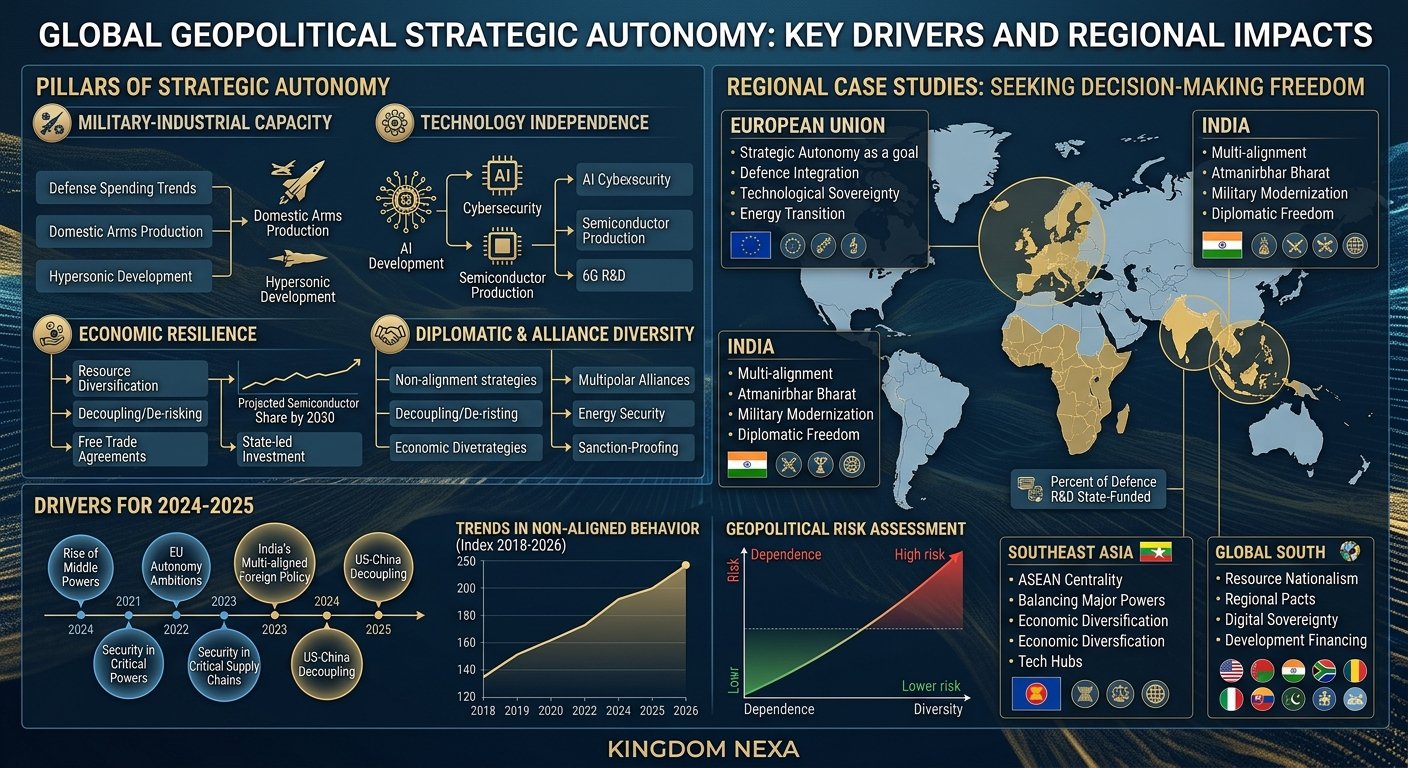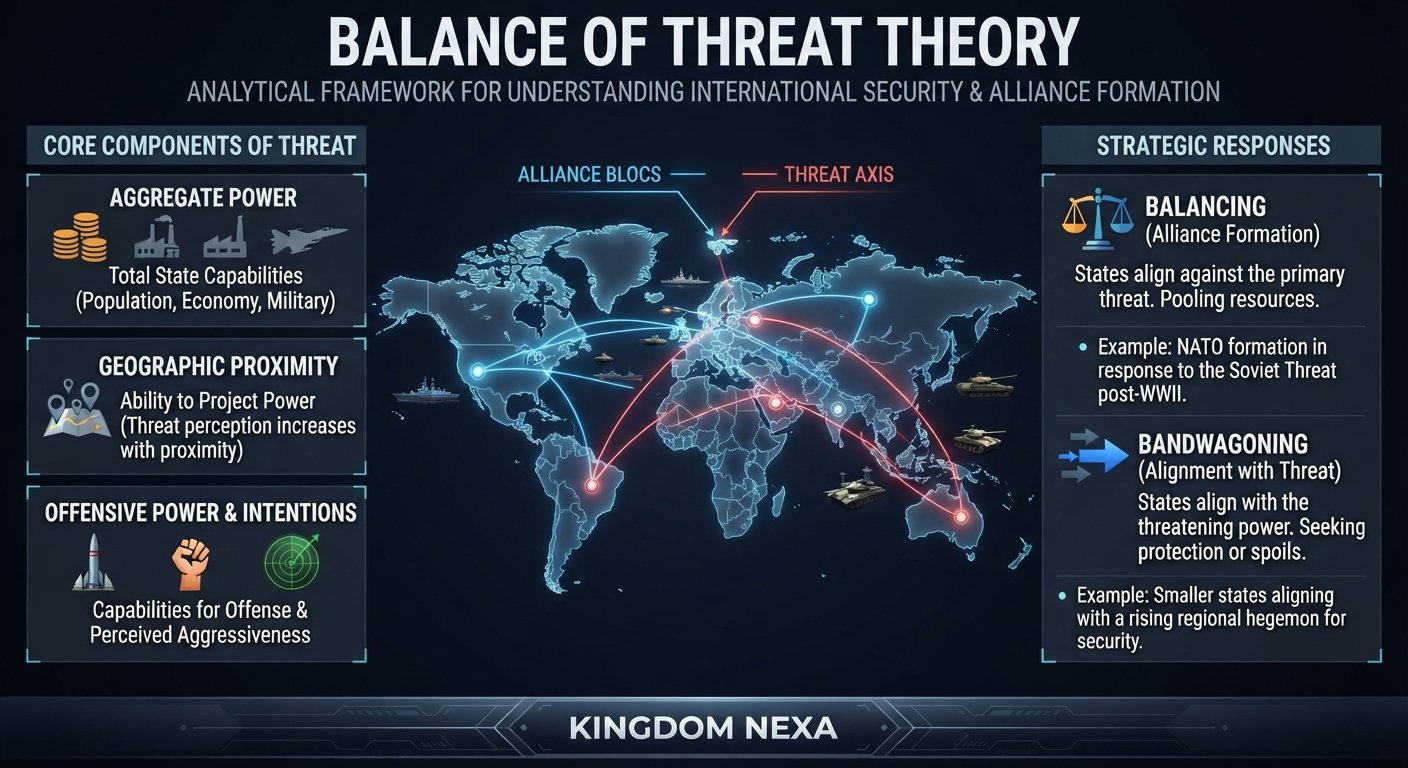
Global security is no longer defined solely by armies, borders, and the threat of war. Today, Global Security Challenges encompass interstate conflicts, terrorism, nuclear proliferation, cyberattacks, economic coercion, climate-related instability, pandemics, and the rapid development of artificial intelligence. These threats increasingly overlap, allowing a crisis in one region to disrupt energy markets, international trade, food supplies, digital infrastructure, and political stability worldwide.
The international security environment in 2026 reflects growing strategic competition, persistent regional conflicts, technological uncertainty, and pressure on institutions designed to maintain international peace. Meanwhile, governments are increasing military capabilities while struggling to address humanitarian emergencies, protect critical infrastructure, and sustain diplomatic cooperation. The United Nations’ Global Risk Report 2026 identifies large-scale conflict and climate inaction among the major concerns highlighted by surveyed stakeholders.
Understanding these developments requires more than examining military strength or individual conflicts. It demands an integrated perspective that considers political interests, geography, economic dependencies, emerging technologies, international law, and human security. This article examines the principal threats, their historical and geopolitical causes, their regional and global consequences, and the practical measures countries can pursue to build a more stable international system.
1. What Are Global Security Challenges?
Global security challenges are threats, risks, and vulnerabilities that endanger the safety, sovereignty, stability, prosperity, or fundamental rights of countries and populations across international borders.
Unlike purely domestic security problems, global threats frequently involve multiple states, international institutions, private organizations, and non-state actors. Their effects may spread through migration, financial markets, digital networks, transportation systems, or environmental changes.
Modern security analysis generally distinguishes between several interconnected dimensions:
- Military security: Armed conflict, military escalation, nuclear weapons, and territorial disputes.
- Political security: Threats to sovereignty, institutional stability, and legitimate governance.
- Economic security: Disruptions to energy supplies, trade, finance, and strategic resources.
- Cybersecurity: Attacks on government systems, infrastructure, businesses, and digital networks.
- Human security: Threats to personal safety, food, health, livelihoods, and basic rights.
- Environmental security: Climate-related hazards, resource scarcity, and ecosystem degradation.
- Technological security: Risks involving artificial intelligence, autonomous weapons, surveillance, and emerging technologies.
These categories are useful for analysis, but they rarely operate independently. An armed conflict can damage agricultural production, increase food prices, trigger displacement, and create opportunities for cyberattacks or organized crime.
The central issue is therefore not simply how to defeat an individual threat. It is how to prevent connected risks from developing into wider international crises.
2. How Has Global Security Evolved Historically?
The meaning of international security has changed considerably over the past century. Understanding this evolution explains why traditional military responses are no longer sufficient on their own.
From world wars to collective security
The two World Wars demonstrated the devastating consequences of major-power rivalry, militarization, and failed diplomacy. The League of Nations attempted to establish collective security after the First World War, but it could not prevent another global conflict.
Following the Second World War, the United Nations was established in 1945 to maintain international peace and security. The UN Charter established a framework for peaceful dispute settlement and restricted the threat or use of force against states, subject to recognized exceptions under international law.
The Cold War subsequently organized much of global security around the rivalry between the United States and the Soviet Union. Nuclear deterrence, military alliances, intelligence operations, and proxy wars shaped international relations.
The post-Cold War security environment
The Soviet Union’s dissolution in 1991 transformed the international balance of power. Some policymakers anticipated a more cooperative world, but regional wars, ethnic violence, terrorism, and state collapse remained serious challenges.
The terrorist attacks of September 11, 2001, elevated counterterrorism and transnational intelligence cooperation. Subsequent conflicts demonstrated the limits of military intervention when political reconciliation, institutional capacity, and local legitimacy remained weak.
The emerging multipolar and interconnected era
During the 2010s and 2020s, strategic competition intensified alongside technological transformation, economic interdependence, and renewed interstate warfare.
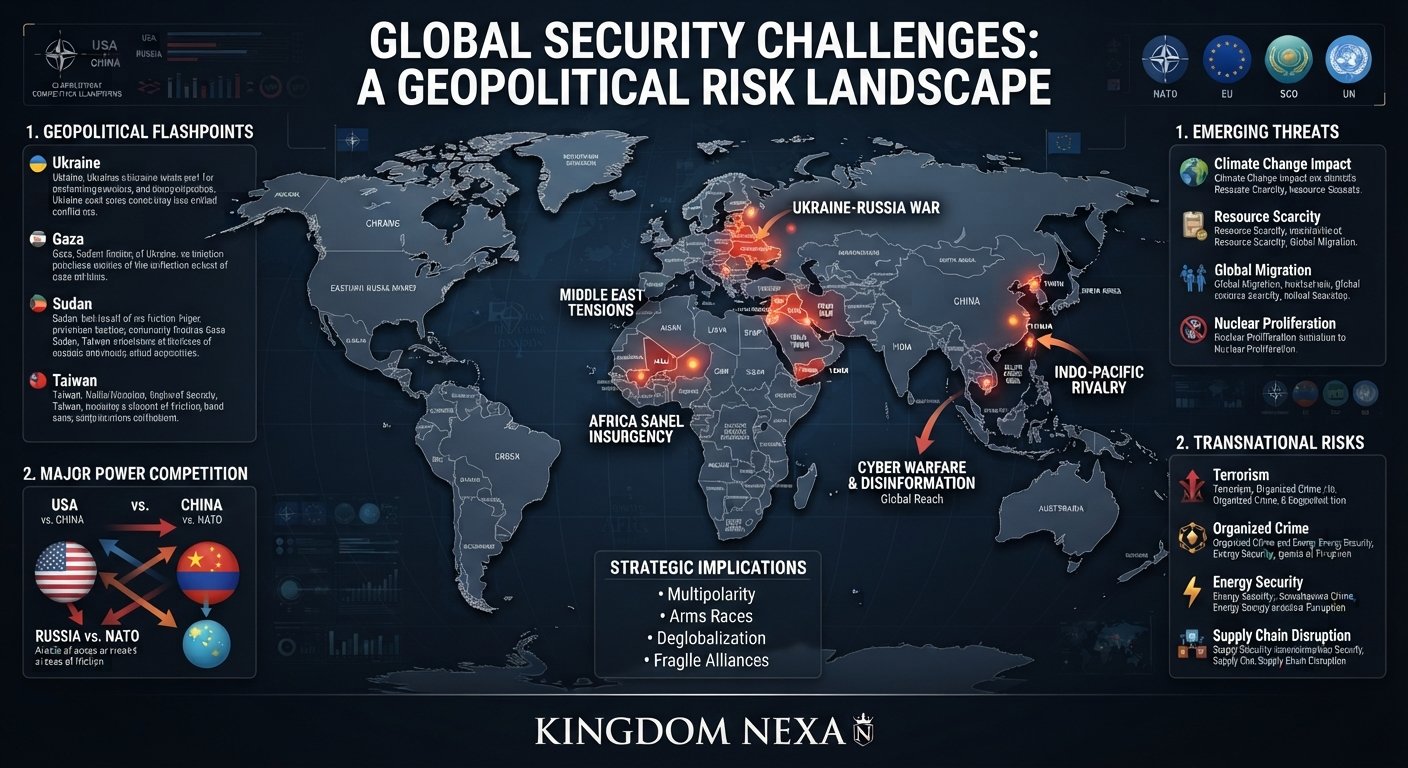
Russia’s full-scale invasion of Ukraine in February 2022, continuing instability in the Middle East, tensions in the Indo-Pacific, and growing cyber risks have reinforced concerns about escalation and the resilience of international institutions.
These developments do not establish that a world war is inevitable. They demonstrate that deterrence, crisis communication, economic resilience, and diplomacy remain essential even when international cooperation is difficult.
3. What Are the Major Global Security Challenges in 2026?
3.1 Interstate conflict and geopolitical rivalry
Armed conflict remains one of the most direct threats to international security. Wars can cause civilian casualties, destroy infrastructure, disrupt trade, and increase the risk of confrontation between outside powers.
The war in Ukraine illustrates how a regional conflict can influence European defence planning, energy markets, sanctions policy, and relations between Russia and Western governments. Conflicts and tensions in the Middle East likewise affect regional security, humanitarian conditions, and strategically important transport routes.
Strategic rivalry among major powers adds another layer of uncertainty. The United States and China compete over regional influence, advanced technology, military access, and economic rules, particularly in the Indo-Pacific.
The central risk is escalation: a localized incident, misinterpreted military movement, or failed diplomatic exchange can trigger a broader confrontation. Effective communication channels and credible crisis-management mechanisms help reduce that danger.
3.2 Nuclear proliferation and strategic instability
Nuclear weapons remain a fundamental global security concern because their use could produce catastrophic humanitarian and environmental consequences.
The principal risks include the expansion of nuclear arsenals, deterioration of arms-control arrangements, proliferation to additional states, and miscalculation during a military crisis.
Nuclear deterrence may discourage direct attacks by raising their potential cost. However, deterrence depends on credible communication, reliable command systems, and the ability of decision-makers to interpret adversaries’ intentions correctly.
Emerging technologies complicate these calculations. Cyberattacks, artificial intelligence, hypersonic delivery systems, and increasingly rapid decision cycles may reduce the time available to assess a potential threat.
The Treaty on the Non-Proliferation of Nuclear Weapons remains a central component of the international framework. Its effectiveness depends on continued cooperation, compliance, safeguards, and progress toward nuclear disarmament.
3.3 Terrorism and violent extremism
Terrorist organizations and violent extremist networks continue to threaten civilians, governments, and regional stability. Their methods may include attacks on public spaces, recruitment through digital platforms, financing through illicit activities, and exploitation of weak governance.
The nature of the threat differs across regions. Some groups control territory or operate across borders, while others depend on decentralized networks or individuals inspired by extremist propaganda.
Counterterrorism requires intelligence sharing, effective law enforcement, border cooperation, financial monitoring, and protection of vulnerable communities.
Military operations may disrupt armed organizations, but lasting improvements also depend on accountable institutions, access to justice, social resilience, and efforts to prevent recruitment.
Security policies that indiscriminately target communities or violate human rights can undermine public trust and strengthen extremist narratives.
3.4 Cybersecurity and attacks on critical infrastructure
Digital connectivity has expanded economic opportunities while creating new vulnerabilities. Governments, hospitals, banks, electricity networks, telecommunications systems, ports, and transport infrastructure increasingly depend on interconnected technologies.
Cyber incidents can involve ransomware, espionage, theft of sensitive information, service disruption, or attempts to manipulate public debate.
Attribution presents a particular difficulty. Attackers may conceal their identities, operate through intermediaries, or exploit compromised infrastructure in other countries. As a result, determining who conducted an attack and whether a government directed it can require extensive technical and intelligence analysis.
Artificial intelligence may improve threat detection, but it can also help attackers automate reconnaissance, produce convincing fraudulent messages, or adapt malicious tools.
Governments and businesses need secure software, multifactor authentication, tested backups, incident-response plans, and effective information sharing. International agreements and confidence-building measures can also reduce the risk that cyber incidents contribute to wider geopolitical escalation.
3.5 Climate change, water stress, and resource insecurity
Climate change is increasingly relevant to national and international security. Heatwaves, droughts, floods, coastal hazards, and ecosystem degradation can weaken livelihoods and place additional pressure on public institutions.
The security consequences are rarely automatic. Environmental stress does not inevitably cause war, and many societies adapt successfully through infrastructure, technology, trade, and cooperation.
Nevertheless, climate hazards can intensify existing vulnerabilities where governments lack resources, communities depend on climate-sensitive livelihoods, or political disputes already affect access to essential resources.
Water management is especially important in transboundary river basins. Upstream infrastructure, agricultural demand, population growth, and changing rainfall patterns can create disagreements among neighboring states.
Cooperation requires transparent data sharing, reliable agreements, investment in water efficiency, and dispute-resolution mechanisms. Climate adaptation should therefore be treated as part of long-term security planning rather than solely as an environmental issue.
3.6 Pandemics and biological security
The COVID-19 pandemic demonstrated how a health emergency can disrupt international travel, labour markets, education, supply chains, and public confidence.
Future biological risks include naturally occurring outbreaks, accidental laboratory incidents, and the possible misuse of biological knowledge or materials. The scale and likelihood of individual scenarios vary, so they should not be treated as equally probable.
Effective preparedness requires disease surveillance, accessible healthcare, laboratory safety, emergency coordination, and timely information exchange.
The World Health Organization supports international cooperation in health emergencies, while the Biological Weapons Convention prohibits the development, production, acquisition, and stockpiling of biological and toxin weapons.
International security depends on making public-health systems resilient without treating legitimate scientific research or international mobility as inherently dangerous.
3.7 Artificial intelligence and autonomous weapons
Artificial intelligence is reshaping intelligence analysis, military planning, cybersecurity, surveillance, and information operations.
AI-enabled systems may help analysts process large datasets and identify emerging risks. However, unreliable outputs, biased training data, manipulated information, and excessive reliance on automated recommendations can create serious operational problems.
Autonomous weapons raise additional questions about human control, accountability, distinction between civilians and combatants, and compliance with international humanitarian law.
There is also a geopolitical dimension: competition over computing infrastructure, advanced chips, technical expertise, and standards may influence the distribution of economic and military power.
International governance should encourage responsible innovation while preserving meaningful human oversight in decisions involving lethal force. Clear accountability and rigorous testing are particularly important in high-consequence applications.
3.8 Economic coercion and supply-chain vulnerability
Economic interdependence can encourage cooperation, but it can also create strategic vulnerabilities. States may use sanctions, export controls, tariffs, financial restrictions, or limits on access to critical materials to pursue foreign-policy objectives.
These measures differ legally and politically, and their consequences depend on their design, enforcement, and international context.
Concentrated production of semiconductors, energy equipment, pharmaceuticals, and essential minerals can expose countries to disruptions. Shipping interruptions or restrictions on key transport routes may raise prices far beyond the affected region.
Governments increasingly seek to diversify suppliers, strengthen strategic reserves, and protect critical industries. Yet complete economic self-sufficiency is generally costly and impractical.
A balanced strategy combines diversification and contingency planning with international trade, transparent rules, and diplomatic engagement.
3.9 Forced displacement and humanitarian insecurity
Conflict, persecution, violence, and serious human-rights violations force people to leave their homes, placing pressure on displaced families and host communities.
UNHCR reported that 123.2 million people were forcibly displaced worldwide at the end of 2024, equivalent to approximately one person in every 67 globally. The figure included refugees, internally displaced people, asylum-seekers, and other groups within the report’s statistical framework.
Displacement is both a humanitarian emergency and a consequence of wider security failures. It can strain public services in host areas, separate families, interrupt education, and expose people to exploitation.
Effective responses require civilian protection, humanitarian access, adequate funding, legal safeguards, and political efforts to address the causes of displacement.
Returns should be voluntary, safe, and dignified. Where conditions remain dangerous, premature return policies may expose people to renewed violence or persecution.
3.10 Transnational organized crime and maritime insecurity
Organized criminal networks exploit weak enforcement, corruption, financial secrecy, and gaps between national jurisdictions. Their activities may include trafficking in people, illicit drugs, weapons smuggling, financial crime, and cyber-enabled fraud.
Maritime insecurity presents related challenges. Piracy, attacks on commercial vessels, illegal fishing, and threats to shipping can disrupt trade and threaten the livelihoods of coastal populations.
International cooperation is essential because criminal networks and commercial routes routinely cross national borders. Effective responses combine intelligence sharing, judicial cooperation, financial investigations, maritime surveillance, and stronger governance.
Criminal activity should not automatically be equated with terrorism or interstate conflict. The actors, motivations, legal frameworks, and appropriate policy responses may differ substantially.
4. How Do Global Security Challenges Differ Across Regions?
Security threats are global, but their effects depend on geography, political institutions, economic structures, and historical relationships.
Europe
The war in Ukraine, defence preparedness, energy resilience, cyber threats, and relations with Russia remain central security concerns. European governments must balance military readiness with economic sustainability and diplomatic options for reducing escalation.
Indo-Pacific
US–China competition, Taiwan Strait tensions, the South China Sea, the Korean Peninsula, and maritime trade routes shape regional security. ASEAN diplomacy and bilateral partnerships can support stability, although states differ in their threat perceptions and strategic priorities.
Middle East
Armed conflicts, regional rivalries, missile and drone threats, maritime chokepoints, and competition over influence interact with humanitarian crises. Sustainable stability requires credible security arrangements, political dialogue, and protection of civilians.
Africa
Several countries face overlapping challenges involving armed groups, political instability, displacement, resource pressures, and limited state capacity. The African Union and regional organizations play important roles in mediation and peace operations, although resources and implementation capacity vary.
Latin America and the Caribbean
Organized crime, illicit financial networks, maritime trafficking, cybercrime, and institutional vulnerabilities are significant concerns in parts of the region. Public safety and accountable law enforcement are central to sustainable security.
Regional differences matter because a policy that works in one setting may fail elsewhere. Effective security strategies must account for local political realities rather than impose a single model on every country.
5. What Role Do Major Powers and International Organizations Play?
Global security depends on decisions by powerful states, regional organizations, international institutions, and smaller countries with important diplomatic or geographic positions.
Major powers and strategic competition
The United States maintains extensive military partnerships and a significant role in international security arrangements. China combines growing economic and technological influence with expanding military capabilities. Russia remains an important military actor, particularly in European and Eurasian security. India, European powers, and other influential states shape regional balances and international negotiations.
These actors have different priorities and threat perceptions. Cooperation may be possible on nuclear risk reduction, maritime safety, counterterrorism, or public health even when wider strategic competition persists.
Smaller states are not merely passive participants. Through regional partnerships, diplomacy, economic cooperation, and international institutions, they can influence security outcomes and help prevent crises.
The United Nations and collective security
The UN Security Council has primary responsibility for maintaining international peace and security under the UN Charter. It can authorize sanctions, establish peacekeeping operations, and take other measures within its mandate.
Its effectiveness is constrained by political disagreements, especially when permanent members use their veto powers or disagree about how to respond to a crisis.
UN peacekeeping, humanitarian agencies, mediation efforts, and international legal institutions nevertheless remain important components of the broader security system.
Regional organizations and alliances
NATO provides collective-defence arrangements among its members. The European Union combines diplomatic, economic, regulatory, and security instruments. The African Union, ASEAN, the Organization for Security and Co-operation in Europe, and other regional bodies provide platforms for dialogue, cooperation, and conflict management.
No institution can resolve every conflict. Their effectiveness depends on political support, adequate resources, legal authority, and cooperation among member states.
6. What Does the Military Spending Trend Reveal?
Military expenditure provides one measurable indication of how governments are responding to perceived threats, although spending alone cannot establish whether a country is safer.
According to the Stockholm International Peace Research Institute (SIPRI), global military expenditure reached $2.887 trillion in 2025, an increase of 2.9% in real terms from 2024. This represented the eleventh consecutive annual increase. Military spending amounted to approximately 2.5% of global GDP.
The trend reflects several overlapping developments, including the war in Ukraine, heightened tensions in other regions, and defence modernization.
Higher expenditure may improve readiness, deterrence, and resilience. It can also increase fiscal pressure, intensify arms competition, and divert resources from public services if spending decisions are poorly balanced.
The strategic question is therefore not simply whether military budgets rise or fall. It is whether defence policies reduce the likelihood of conflict, maintain credible deterrence, and remain compatible with diplomacy and long-term economic stability.
7. How Can the International Community Address These Threats?
No single government can eliminate all global security risks. Effective responses require national preparedness, international cooperation, credible institutions, and policies tailored to specific threats.
Strengthen diplomacy and conflict prevention
Governments should maintain communication channels with rivals, support mediation, and use confidence-building measures to reduce misunderstandings.
Early-warning systems and preventive diplomacy can help identify emerging crises before they become more difficult to manage.
Improve international law and accountability
Respect for the UN Charter, international humanitarian law, human-rights obligations, and applicable arms-control agreements helps establish common standards.
Consistent implementation matters. Selective enforcement and contradictory political messaging can weaken confidence in international rules.
Build resilient economies and infrastructure
Countries should identify critical dependencies in energy, food, health, communications, transport, and strategic technologies.
Diversified suppliers, secure digital systems, emergency reserves, and tested contingency plans can reduce exposure to disruption without abandoning the benefits of international trade.
Improve cyber and technological governance
Public authorities, technology companies, and researchers should strengthen cybersecurity, share threat information responsibly, and develop clear accountability mechanisms for high-risk technologies.
International dialogue is particularly important where emerging technologies could accelerate military escalation or create risks that cross borders.
Invest in human security
Reliable healthcare, education, effective public institutions, disaster preparedness, and protection of vulnerable populations can reduce underlying sources of instability.
Development policy cannot substitute for conflict resolution, but societies with resilient institutions and trusted public services are often better equipped to manage shocks.
Maintain credible deterrence while preserving dialogue
Defence capabilities can discourage aggression, but deterrence is most useful when accompanied by clear communication, proportionate policy, and credible diplomatic alternatives.
Governments should avoid assuming that military superiority alone guarantees political success.
8. What Are the Possible Future Scenarios for Global Security?
The future international security environment is uncertain. Three broad scenarios illustrate how policy decisions and geopolitical developments could shape outcomes.
Scenario 1: Managed strategic competition
Major powers continue to compete but preserve crisis communication, arms-control discussions, trade channels, and cooperation on selected global risks. Regional disputes remain difficult, yet stronger diplomacy limits escalation.
Scenario 2: Fragmented security blocs
States increasingly prioritize rival alliances, strategic industries, sanctions, and technological separation. Some countries become more resilient, but weaker coordination raises costs and makes shared problems harder to solve.
Scenario 3: Escalating interconnected crises
A major conflict coincides with cyber disruption, economic instability, or a humanitarian emergency. Weak communication and institutional paralysis allow separate problems to reinforce one another.
These are analytical possibilities, not predictions with established probabilities. Actual outcomes will depend on political leadership, military decisions, economic conditions, technological change, and the willingness of governments to cooperate.
The most useful approach is to prepare for multiple scenarios while investing in measures that reduce risk across all of them.
9. Frequently Asked Questions About Global Security Challenges
1. What are the biggest global security challenges in 2026?
Major concerns include interstate conflict, nuclear proliferation, cyberattacks, terrorism, climate-related insecurity, pandemics, technological risks, economic coercion, and humanitarian emergencies. Their relative importance varies across regions and changes as events develop.
2. Why are global security challenges increasing in complexity?
Security risks increasingly cross national borders and interact with one another. Digital connectivity, economic interdependence, strategic competition, climate pressures, and rapidly developing technologies can amplify the consequences of individual crises.
3. How does geopolitics affect international security?
Geopolitics explains how geography, resources, alliances, political interests, and strategic competition shape state behaviour. These factors influence military deployments, territorial disputes, trade routes, energy security, and diplomatic relationships.
4. What is the difference between national security and global security?
National security focuses primarily on protecting a country’s sovereignty, institutions, population, and critical interests. Global security addresses threats and risks that affect multiple countries or require international cooperation. The two overlap because transnational threats can undermine domestic stability.
5. What role does the United Nations play in global security?
The United Nations provides a framework for collective security, diplomacy, peacekeeping, sanctions, humanitarian coordination, and international cooperation. Its effectiveness depends partly on Security Council decisions, member-state support, resources, and compliance with international obligations.
6. How do cyberattacks threaten international peace?
Cyberattacks can disrupt essential services, expose sensitive information, damage infrastructure, and intensify political tensions. Uncertain attribution and the potential for misinterpretation make cyber incidents especially challenging during international crises.
7. How does climate change affect global security?
Climate change can increase exposure to extreme weather, threaten livelihoods, worsen food and water insecurity, and intensify existing vulnerabilities. Its effects depend on local conditions, governance, adaptation capacity, and cooperation between affected countries.
8. Can military spending improve global security?
Military spending can strengthen defence and deter aggression when capabilities are appropriately designed and managed. However, excessive or poorly communicated military expansion can intensify arms competition. Security also depends on diplomacy, economic resilience, institutions, and conflict prevention.
9. How can countries reduce global security risks?
Countries can strengthen diplomatic engagement, comply with international law, protect critical infrastructure, improve intelligence cooperation, diversify essential supply chains, prepare for public-health emergencies, and invest in resilient institutions.
Conclusion
Global Security Challenges reflect a fundamental reality of international relations: threats to peace and stability are increasingly interconnected. Armed conflict, nuclear risks, cyberattacks, climate pressures, economic vulnerabilities, and humanitarian emergencies cannot be addressed effectively through isolated policies.
Military preparedness remains important, but sustainable security also requires diplomacy, international law, reliable institutions, technological safeguards, and investment in human resilience. Major powers have particular responsibilities because their decisions can influence regional balances and global stability. Smaller states, international organizations, businesses, and civil society also contribute to preventing and managing crises.
The direction of global security in the coming years will depend not only on the distribution of military and economic power but also on whether governments can manage competition without allowing it to become uncontrolled confrontation. Cooperation will remain difficult, yet practical agreements on crisis communication, cyber resilience, arms control, public health, and humanitarian protection can reduce shared risks.
A safer international system does not require countries to share every political objective. It requires them to recognize common dangers, establish credible rules, and preserve workable channels for resolving disputes.