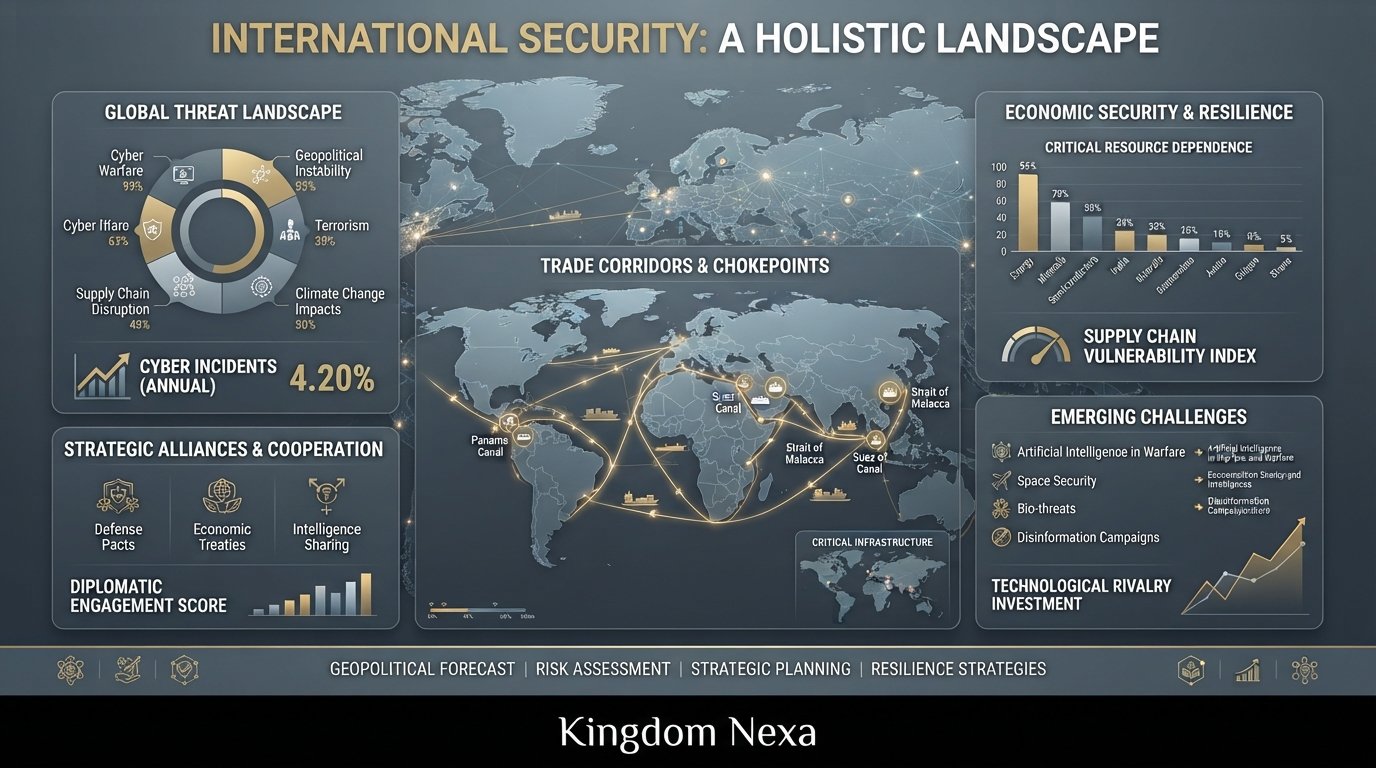
International Security is no longer defined only by armies, borders, missiles, and conventional wars. The modern security environment connects military confrontation with nuclear deterrence, cyberattacks, economic coercion, terrorism, climate-related instability, critical infrastructure, artificial intelligence, space systems, and competition over strategic technologies.
In 2026, these challenges are becoming increasingly interconnected. The United Nations has warned that the international system is under pressure from a high level of armed conflict, geopolitical divisions, erosion of international-law norms, and accelerating arms competition. SIPRI has also reported continued nuclear modernization and rising global military expenditure, while NATO is adapting its resilience planning to cyberattacks, sabotage, strategic dependencies, emerging technologies, and environmental shocks.
Understanding International Security therefore requires looking beyond individual conflicts. It means examining how states, alliances, international organizations, businesses, armed groups, and technological systems interact. This article explains the concept, historical evolution, principal actors, major threats, legal framework, economic and technological dimensions, and plausible directions for global security.
What Is International Security?
International Security refers to the systems, policies, institutions, relationships, and strategies used to prevent or manage threats to the safety and stability of states, societies, populations, and the wider international system.
Traditionally, security studies concentrated on protecting national territory from external military attack. During the Cold War, nuclear deterrence, military alliances, strategic weapons, intelligence, and balance-of-power politics dominated the field.
The concept has since expanded considerably.
Traditional and Non-Traditional Security
Traditional security focuses mainly on military threats. These include interstate war, territorial disputes, nuclear weapons, missile systems, military alliances, and strategic deterrence.
Non-traditional security covers threats that can cross borders without resembling conventional warfare. Cyberattacks, terrorism, pandemics, organized crime, climate-related disasters, food insecurity, energy disruption, and attacks on critical infrastructure can all have international consequences.
The distinction is useful, but modern crises often combine both categories. A conventional conflict can involve cyber operations, economic sanctions, disinformation, drones, satellite disruption, and attacks against infrastructure at the same time.
International Security vs National Security
National security primarily concerns the protection of an individual state and its population. International Security has a broader focus: it examines interactions among states and other actors and asks how instability in one location can affect others.
For example, disruption to a major maritime route can influence global shipping costs, energy markets, food prices, insurance premiums, and supply chains far beyond the conflict zone.
This interconnectedness is one of the defining characteristics of contemporary security politics.
Historical Evolution of International Security
The modern international security system was strongly shaped by the experience of the two World Wars.
From Collective Security to the Cold War
The League of Nations represented an early attempt to establish collective mechanisms for preventing war. Its limitations became evident during the crises preceding the Second World War.
The United Nations was established in 1945 with a central objective of maintaining international peace and security. Under Article 24 of the UN Charter, the Security Council has primary responsibility for this task.
The Cold War then produced a security structure organized around rivalry between the United States and Soviet Union. NATO was created in 1949, while the Soviet-led Warsaw Pact followed in 1955.
Nuclear deterrence became central to strategic thinking. The possibility of catastrophic retaliation discouraged direct war between the principal nuclear powers, while proxy conflicts occurred elsewhere.
The Post-Cold War Period
The Soviet Union’s collapse in 1991 temporarily reduced the likelihood of a direct confrontation between the world’s two principal military blocs.
However, new security challenges emerged. Civil wars, terrorism, ethnic conflicts, state fragility, proliferation concerns, transnational crime, and humanitarian crises became increasingly prominent.
The September 2001 terrorist attacks further transformed international security priorities, placing counterterrorism, intelligence cooperation, border security, and military operations against non-state armed groups at the center of many national strategies.
The Return of Great-Power Competition
The 21st century has increasingly featured strategic competition among major powers alongside regional conflicts.
Russia’s war against Ukraine, intensifying US-China strategic competition, tensions in the Middle East, instability in parts of Africa, and competition over advanced technologies demonstrate that international security is again strongly influenced by power rivalry.
The United Nations reported in May 2026 that the world was experiencing the highest number of conflicts since the organization’s founding, while emphasizing that geopolitical divisions were making collective action more difficult.
Who Are the Main Actors in International Security?
International Security is not controlled by governments alone.
Nation-States
States remain the most important actors because they possess sovereignty, armed forces, intelligence services, diplomatic institutions, economic instruments, and legal authority over national territory.
Major powers possess additional capabilities, including nuclear weapons, global military reach, advanced aerospace systems, large economies, and significant technological industries.
Regional powers can also exert substantial influence within their neighborhoods through diplomacy, military capabilities, trade, energy relationships, and security partnerships.
International Organizations
The United Nations provides the central multilateral framework for international peace and security. The Security Council can adopt resolutions, establish sanctions, authorize certain measures, and create or support peacekeeping operations.
Other institutions have more specialized roles.
NATO focuses on collective defence among its members. The European Union combines diplomatic, economic, regulatory, and security instruments. Regional organizations such as the African Union, ASEAN, the Organization of American States, and others contribute to conflict prevention and regional stability.
Non-State Actors
Armed groups, terrorist organizations, criminal networks, humanitarian organizations, NGOs, technology companies, financial institutions, and multinational corporations can influence security outcomes.
In some conflicts, armed groups control territory or important infrastructure. Corporations may operate critical communications, cloud-computing, energy, transport, satellite, and financial systems.
The result is a security environment in which public and private capabilities increasingly overlap.
The Major Dimensions of International Security
International Security is best understood as a multidimensional system.
Military Security
Military security remains fundamental.
States maintain armed forces to defend territory, deter attacks, protect national interests, and support allies. Military capabilities include land forces, naval power, airpower, missiles, drones, electronic warfare, space systems, intelligence platforms, and nuclear forces.
Global military expenditure reached approximately $2.887 trillion in 2025, according to SIPRI, representing an increase of 2.9 percent in real terms over the previous year and the eleventh consecutive annual increase.
The increase reflects different national circumstances. European countries increased defence spending substantially, while military expenditure also continued to rise in several regions.
Nuclear Security and Deterrence
Nuclear weapons remain one of the most consequential elements of international security.
SIPRI reported in 2026 that all nine nuclear-armed states continued modernizing their arsenals during 2025, with most deploying new nuclear-armed or nuclear-capable systems. The institute also highlighted concerns about increasing reliance on nuclear weapons and rising risks of miscalculation and escalation.
Nuclear deterrence can reduce incentives for direct war between nuclear-armed states, but it also creates severe risks.
Why Nuclear Stability Is Difficult
Strategic stability depends on communication, credible deterrence, survivable forces, crisis-management mechanisms, and accurate information.
New technologies can complicate this balance. Artificial intelligence, cyber operations, hypersonic systems, autonomous platforms, and increasingly complex command-and-control environments can compress decision-making time.
Misinterpretation becomes particularly dangerous during a crisis.
Political and Diplomatic Security
Diplomacy remains one of the most important mechanisms for reducing security risks.
Negotiations can establish ceasefires, prisoner exchanges, arms-control arrangements, confidence-building measures, humanitarian access, and longer-term political settlements.
The UN’s peacekeeping experience illustrates an important principle: military deployments cannot substitute indefinitely for political solutions. In September 2026, the UN Secretary-General emphasized that peacekeeping is fundamentally a political instrument and that peace agreements have become harder to reach and more fragile.
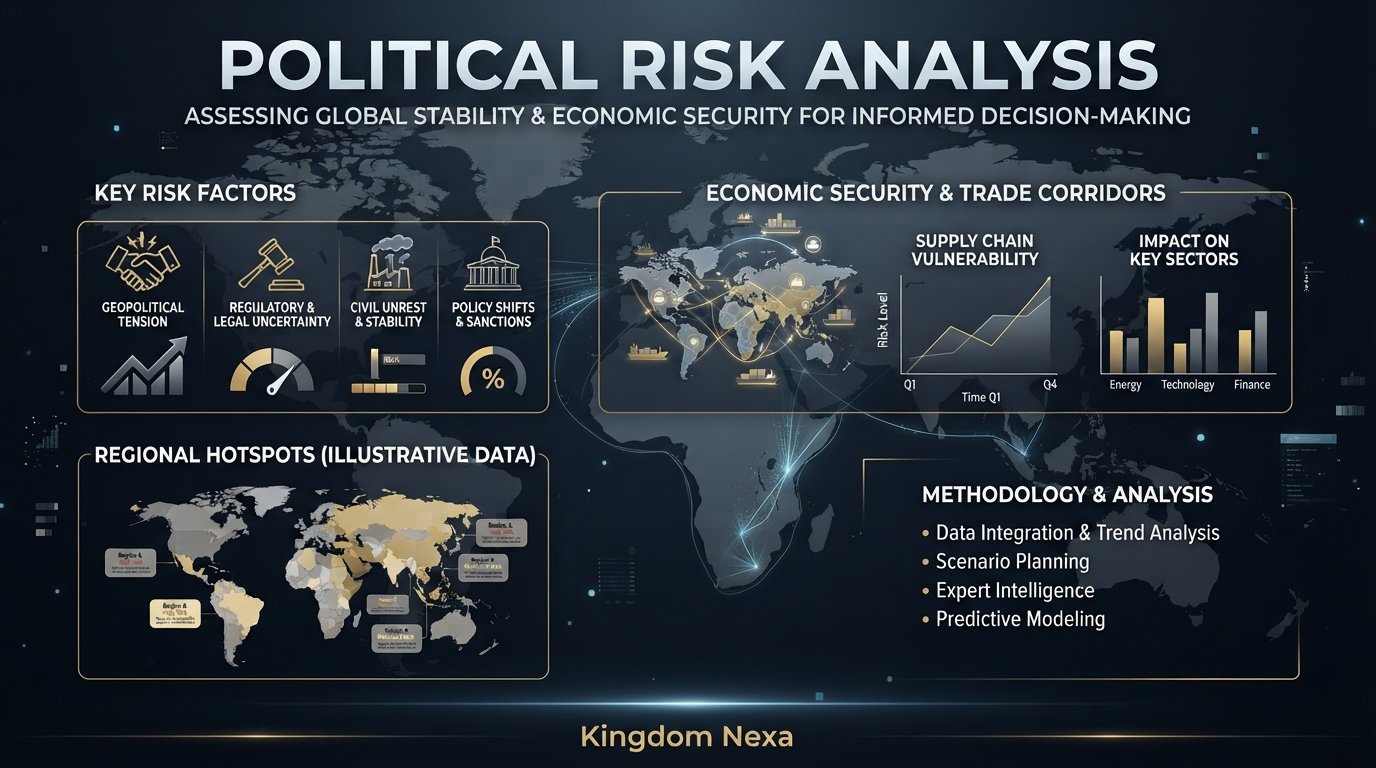
Economic Security
Economic relationships have become instruments of geopolitical power.
Governments can use sanctions, export controls, tariffs, investment restrictions, financial regulations, energy policy, and technology controls to pursue strategic objectives without direct military confrontation.
At the same time, excessive economic fragmentation can damage global stability.
The World Economic Forum’s 2026 Global Risks Report identified geoeconomic confrontation as the leading risk selected by respondents for potentially triggering a material global crisis in 2026. The report also highlighted state-based armed conflict, misinformation, cyber insecurity, and longer-term risks associated with AI.
Economic security therefore involves a difficult balance between national resilience and international interdependence.
Cybersecurity and Technological Competition
Digital technology has transformed the security environment.
Cybersecurity
Cyberattacks can target governments, banks, hospitals, telecommunications networks, energy infrastructure, transportation systems, defence organizations, and industrial facilities.
Unlike conventional military operations, cyber operations can be conducted remotely and may be difficult to attribute with certainty.
The World Economic Forum’s 2026 Global Cybersecurity Outlook reported that AI is changing both offensive and defensive cyber capabilities. It found that 87 percent of respondents identified AI-related vulnerabilities as the fastest-growing cyber risk during 2025.
Geopolitical tensions also influence cybersecurity. The same report found that 64 percent of organizations were accounting for geopolitically motivated cyberattacks in their risk-mitigation strategies.
Artificial Intelligence
AI presents both opportunities and risks.
Governments can use AI for intelligence analysis, logistics, surveillance, cyber defence, military planning, and decision support. The same technologies can potentially accelerate malicious cyber operations, disinformation, targeting, and autonomous military capabilities.
SIPRI’s 2026 analysis notes that military applications of AI have expanded beyond autonomous weapons to areas such as targeting, planning, and intelligence analysis.
The central challenge is governance.
International institutions must determine how existing international law applies to military AI, how meaningful human control should operate, and what safeguards are necessary when AI systems influence decisions involving the use of force.
Space Security
Satellites support communications, navigation, weather forecasting, financial systems, intelligence, disaster management, and military operations.
This makes space infrastructure strategically important.
Damage or disruption to satellites could have consequences far beyond the space sector itself. International security therefore increasingly includes space-domain awareness, responsible behaviour, protection of space systems, and measures designed to prevent escalation.
Regional Conflicts and Strategic Hotspots
Contemporary international security cannot be separated from regional crises.
Europe and the Russia-Ukraine War
The war in Ukraine has reshaped European security, defence planning, military production, energy policy, and NATO strategy.
NATO describes Russia’s war against Ukraine as the gravest threat to Euro-Atlantic security in decades and is strengthening its deterrence and defence posture across conventional, nuclear, missile-defence, cyber, and space capabilities.
The conflict also demonstrates how drones, long-range missiles, electronic warfare, satellite capabilities, cyber operations, industrial capacity, and economic sanctions can interact within a modern war.
Middle East
The Middle East remains a major centre of international security concerns because political conflicts, military confrontation, energy markets, maritime trade, terrorism, and regional rivalries intersect there.
In June 2026, the UN Secretary-General warned that escalating conflict in the region could have consequences beyond the Middle East through displacement, insecurity, trade routes, food prices, and fuel costs.
The security environment involves multiple state and non-state actors, making escalation management particularly complicated.
Indo-Pacific
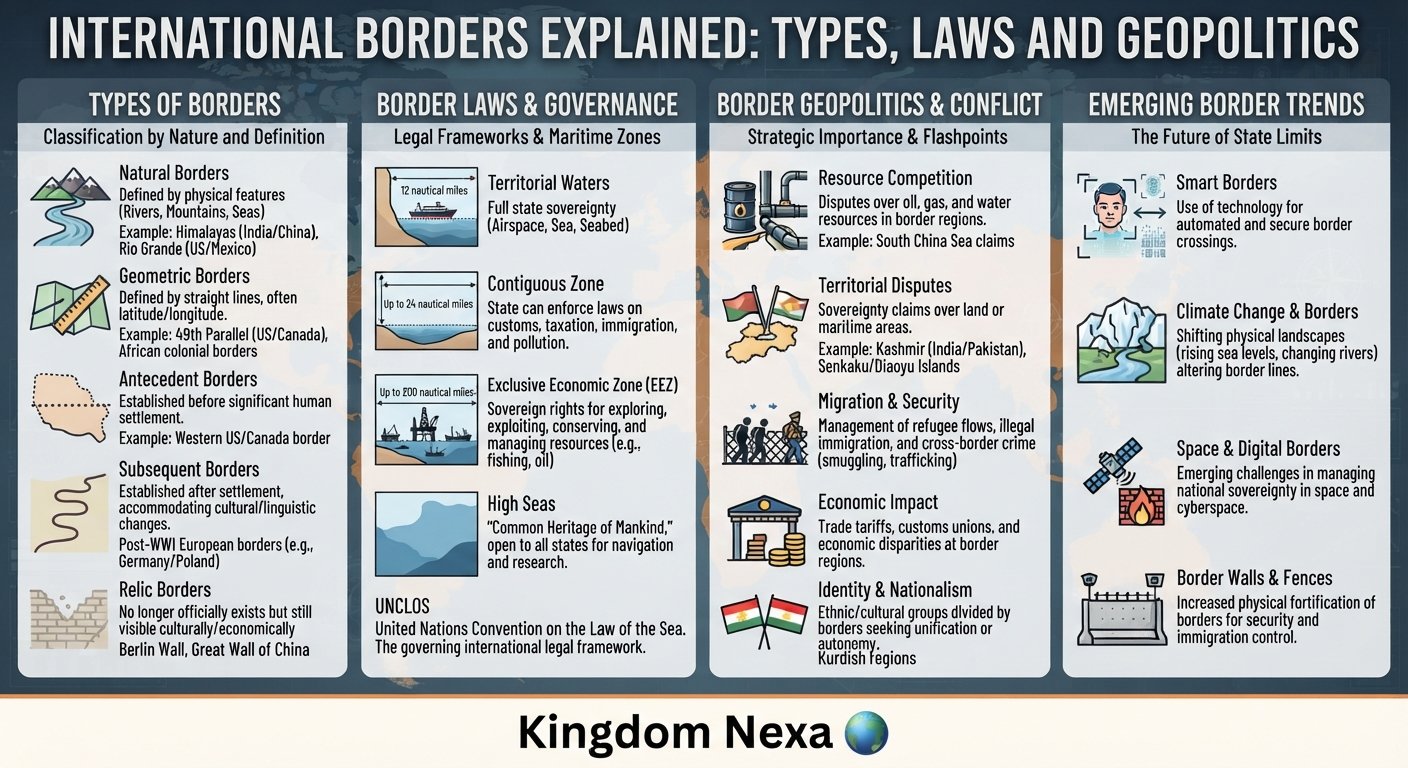
The Indo-Pacific is increasingly important to international security because it combines major economic centres, strategic sea lanes, nuclear-armed states, unresolved territorial disputes, and intense great-power competition.
The Taiwan Strait, South China Sea, Korean Peninsula, and wider maritime environment receive particular strategic attention.
The central security challenge is avoiding miscalculation while maintaining deterrence, freedom of navigation, economic connectivity, and diplomatic communication.
Africa and Fragile States
Security challenges in Africa vary considerably by country and region.
Sudan, the Sahel, the Horn of Africa, Somalia, the Democratic Republic of the Congo, South Sudan, and other areas face different combinations of armed conflict, political instability, terrorism, organized crime, humanitarian crises, and governance challenges.
The UN Security Council continued addressing several African security situations during 2026, including Sudan, South Sudan, the DRC, Central Africa, and the Sahel.
This demonstrates why international security cannot be understood exclusively through great-power rivalry.
International Law and the Security System
International law provides the legal framework within which states are expected to manage security disputes.
The UN Charter prohibits the threat or use of force against the territorial integrity or political independence of states, subject to established exceptions including self-defence and Security Council action.
International humanitarian law governs conduct during armed conflict. It seeks to protect civilians and restricts methods and means of warfare.
Why International Law Matters
International law cannot eliminate conflict, but it establishes rules, institutions, responsibilities, and mechanisms for accountability.
Its effectiveness depends partly on state compliance and the willingness of international institutions to enforce or support those rules.
The UN Secretary-General stated in January 2026 that the rule of law remains a cornerstone of global peace and security, while warning that respect for core principles of the UN Charter was under pressure.
This creates an important challenge: the international system depends not only on military power but also on shared expectations about acceptable state behaviour.
Climate, Resources and Human Security
Security risks increasingly extend into environmental and social areas.
Climate change can intensify existing vulnerabilities by contributing to water stress, food insecurity, displacement, infrastructure damage, and competition over resources.
Climate change does not automatically cause armed conflict. Political institutions, economic conditions, governance, demographic pressures, and existing disputes influence whether environmental stress becomes a security crisis.
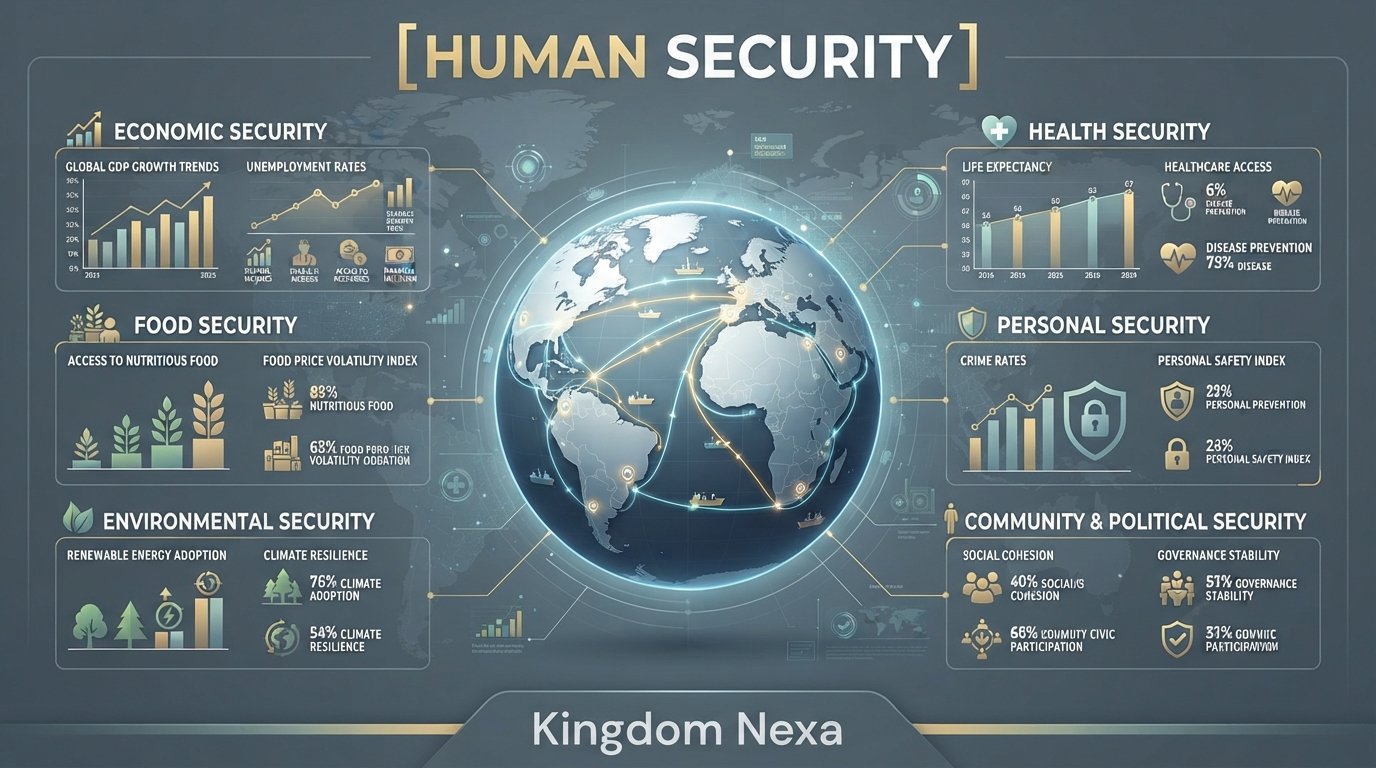
Human security also includes protection from threats to food, health, livelihoods, personal safety, and basic services.
A military-only understanding of International Security can therefore miss important drivers of instability.
The Role of Resilience in Modern Security
Deterrence alone cannot protect societies from every threat.
States increasingly need resilience: the ability to absorb disruption, maintain essential services, recover from attacks, and adapt to changing conditions.
Critical Infrastructure
Energy grids, telecommunications, ports, railways, pipelines, hospitals, financial networks, satellites, data centres, and water systems are increasingly viewed as security assets.
NATO’s 2026 resilience requirements specifically address physical attacks and sabotage, cyberattacks, emerging technologies, strategic economic dependencies, environmental shocks, and vulnerabilities created by dependence on space-based systems.
This illustrates how national resilience has become closely connected to international security.
What Are the Biggest Challenges Ahead?
Several structural challenges will shape the security environment.
First, great-power rivalry can create pressure across multiple regions simultaneously.
Second, nuclear modernization could complicate arms-control efforts and strategic stability.
Third, technology is advancing faster than international governance mechanisms in several areas, particularly AI and autonomous military systems.
Fourth, economic interdependence is becoming a source of both resilience and vulnerability.
Fifth, cyber and information operations can cross borders rapidly, making attribution and response difficult.
Sixth, regional conflicts can generate global consequences through migration, terrorism, commodity prices, trade routes, and geopolitical polarization.
Finally, institutional fragmentation can make collective responses harder precisely when coordinated action is most necessary.
What Could Happen Next?
Predicting international security outcomes with certainty is impossible. Several broad scenarios are nevertheless useful for understanding the range of possibilities.
Managed Competition
Major powers could maintain strategic competition while using diplomatic channels, crisis communication, arms-control mechanisms, and economic agreements to prevent direct confrontation.
Prolonged Fragmentation
Another possibility is continued geopolitical fragmentation, with competing security partnerships, technology ecosystems, trade arrangements, and financial systems developing around different centres of power.
Escalation Through Miscalculation
A regional crisis could escalate if military actions, cyber incidents, misinformation, or misunderstood signals lead governments to make decisions under severe time pressure.
Renewed Multilateral Cooperation
States could also strengthen international institutions and develop new rules for cyber operations, military AI, autonomous systems, space activities, nuclear risk reduction, and emerging technologies.
None of these scenarios is predetermined. Their likelihood depends on political decisions, economic conditions, diplomatic initiatives, technological developments, and the behaviour of governments and non-state actors.
Why International Security Matters to Ordinary People
International security may appear to concern governments and militaries, but its effects reach everyday life.
Wars can affect fuel and food prices. Cyberattacks can disrupt banking and healthcare. Maritime insecurity can increase shipping costs. Sanctions can alter trade and investment. Political instability can create refugee flows. Technology competition can affect access to advanced products and communications systems.
Security policy therefore has both strategic and human consequences.
For businesses, international security affects supply-chain planning, investment risk, insurance, cybersecurity, energy access, and market exposure.
It affects defence planning, diplomacy, economic policy, infrastructure resilience, and crisis management.
For citizens, it can influence economic stability, physical safety, employment, access to essential services, and confidence in institutions.
Frequently Asked Questions About International Security
What is International Security?
International Security is the study and practice of protecting states, societies, populations, and the international system from military, political, economic, technological, environmental, and other cross-border threats.
Why is International Security important?
It helps governments and international institutions understand conflict, prevent escalation, manage strategic competition, protect populations, and maintain stability in an interconnected world.
What are the main threats to International Security?
Major threats include interstate war, nuclear escalation, terrorism, cyberattacks, geopolitical rivalry, economic coercion, political instability, attacks on critical infrastructure, and certain technology-related risks.
What is the role of the United Nations in International Security?
The UN provides the principal multilateral framework for maintaining international peace and security. Its Security Council has primary responsibility for this function under the UN Charter.
How does NATO contribute to International Security?
NATO provides collective defence among its members and maintains deterrence through conventional, nuclear, missile-defence, cyber, and space capabilities.
How does artificial intelligence affect International Security?
AI can improve intelligence, defence, logistics, cyber protection, and decision support, but it can also create risks involving autonomous weapons, cyber operations, targeting, misinformation, and accelerated military decision-making.
What is the difference between national and international security?
National security focuses primarily on protecting an individual country and its interests. International security examines relationships and threats involving multiple states, institutions, societies, and transnational actors.
Is economic security part of International Security?
Yes. Trade dependencies, sanctions, energy supplies, financial networks, strategic resources, technology controls, and supply chains can all influence geopolitical stability.
What is the future of International Security?
The future is likely to involve a combination of traditional military deterrence and newer forms of resilience involving cyber systems, AI, space infrastructure, economic networks, critical infrastructure, diplomacy, and international law. The precise balance will depend on political and technological developments.
Conclusion
International Security has evolved from a narrow focus on military defence into a broad framework covering war, nuclear deterrence, diplomacy, economics, technology, cyber operations, environmental pressures, critical infrastructure, and human security.
The current environment is particularly complex because several risks are developing simultaneously. Armed conflicts continue to generate regional and global consequences, military spending remains high, nuclear arsenals are being modernized, cyber risks are expanding, and AI is creating new questions about military decision-making and international governance.
At the same time, international institutions remain important. The United Nations, regional organizations, alliances, governments, businesses, and civil society all possess tools that can contribute to conflict prevention and resilience.
The central challenge is therefore not simply how states can acquire more power. It is how they can manage competition, reduce miscalculation, preserve diplomatic channels, protect civilians, strengthen resilience, and maintain rules that reduce the risk of uncontrolled escalation.
In an increasingly interconnected world, International Security is ultimately about managing the relationship between power, technology, law, cooperation, and risk. Its future will depend on whether governments and institutions can adapt faster than the threats confronting them.