Introduction
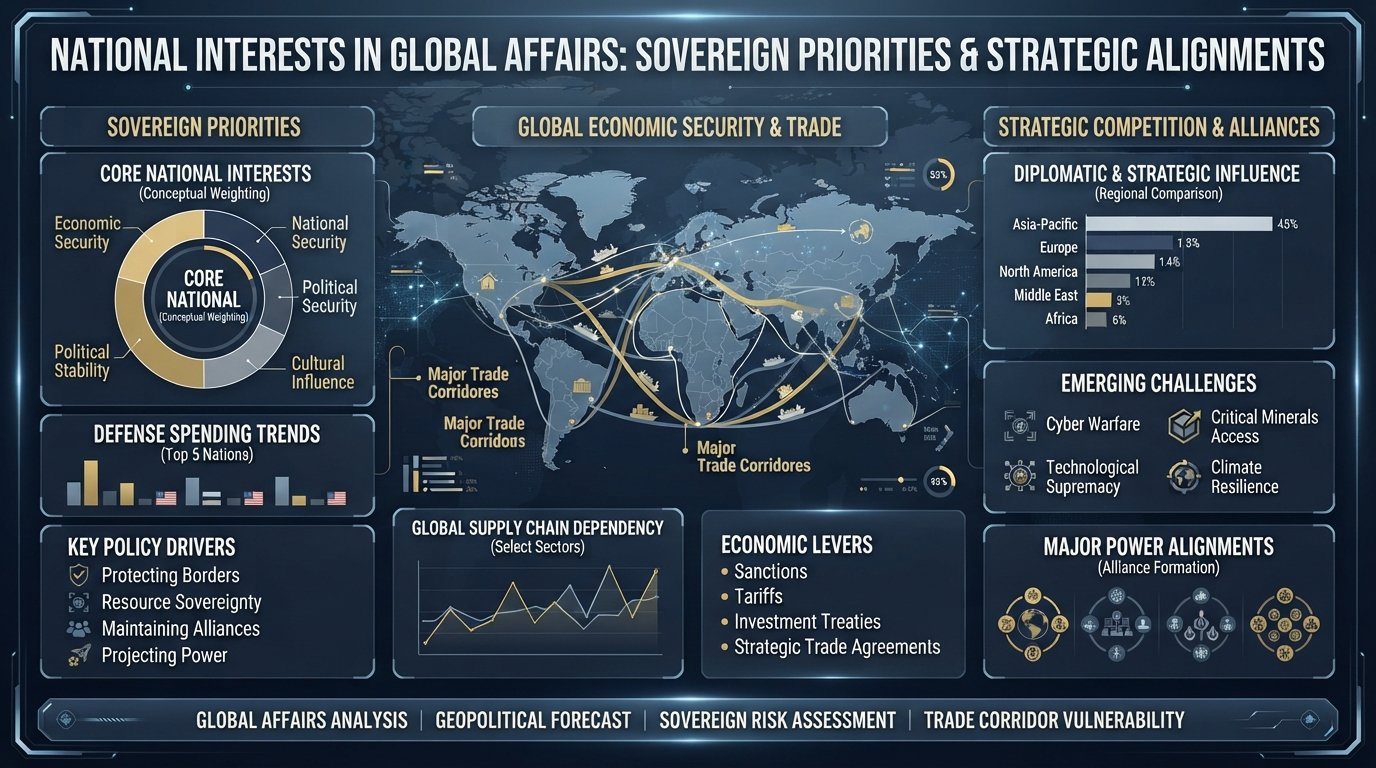
Every state enters the international arena with priorities it seeks to protect, advance, or sometimes reconcile with the interests of other countries. These priorities are commonly described as national interests in global affairs. They can involve national security, economic prosperity, territorial integrity, energy supplies, technological capabilities, diplomatic influence, political stability, and the welfare of citizens.
National interests are not limited to military power or competition between major powers. A country’s ability to secure energy, maintain access to international markets, protect critical infrastructure, manage migration, respond to pandemics, attract investment, or shape international rules can all become matters of national interest. Foreign policy is therefore closely connected to domestic priorities.
The concept has become especially important in the current international environment. Geopolitical competition, economic fragmentation, technological rivalry, energy-security concerns, armed conflicts, and changing military balances are forcing governments to reconsider how they define security and strategic autonomy. Global military expenditure reached an estimated $2.887 trillion in 2025, while international economic institutions continue to warn about the costs of geopolitical fragmentation.
Understanding national interests in global affairs therefore requires more than asking what a country wants. It requires examining who defines those interests, why they matter, what resources support them, what constraints governments face, and how national objectives interact with international law and the interests of other states.
What Are National Interests in Global Affairs?
National interest refers broadly to the objectives and conditions that a state considers important to its security, prosperity, sovereignty, political stability, and international position.
In practical terms, national interests answer a basic foreign-policy question:
What outcomes does a government seek internationally because it believes they are important to the country?
The exact definition differs between states and changes over time. A country dependent on imported energy may treat energy security as a strategic priority. A major exporting economy may emphasize open markets and secure trade routes. A state facing serious territorial threats may give greater weight to military deterrence and alliances.
The Council on Foreign Relations explains foreign policy as the way countries influence one another to protect and advance national interests and values, using political, economic, and military instruments.
National interest is therefore broader than foreign policy itself. National interest represents objectives; foreign policy is one of the principal means through which governments pursue them.
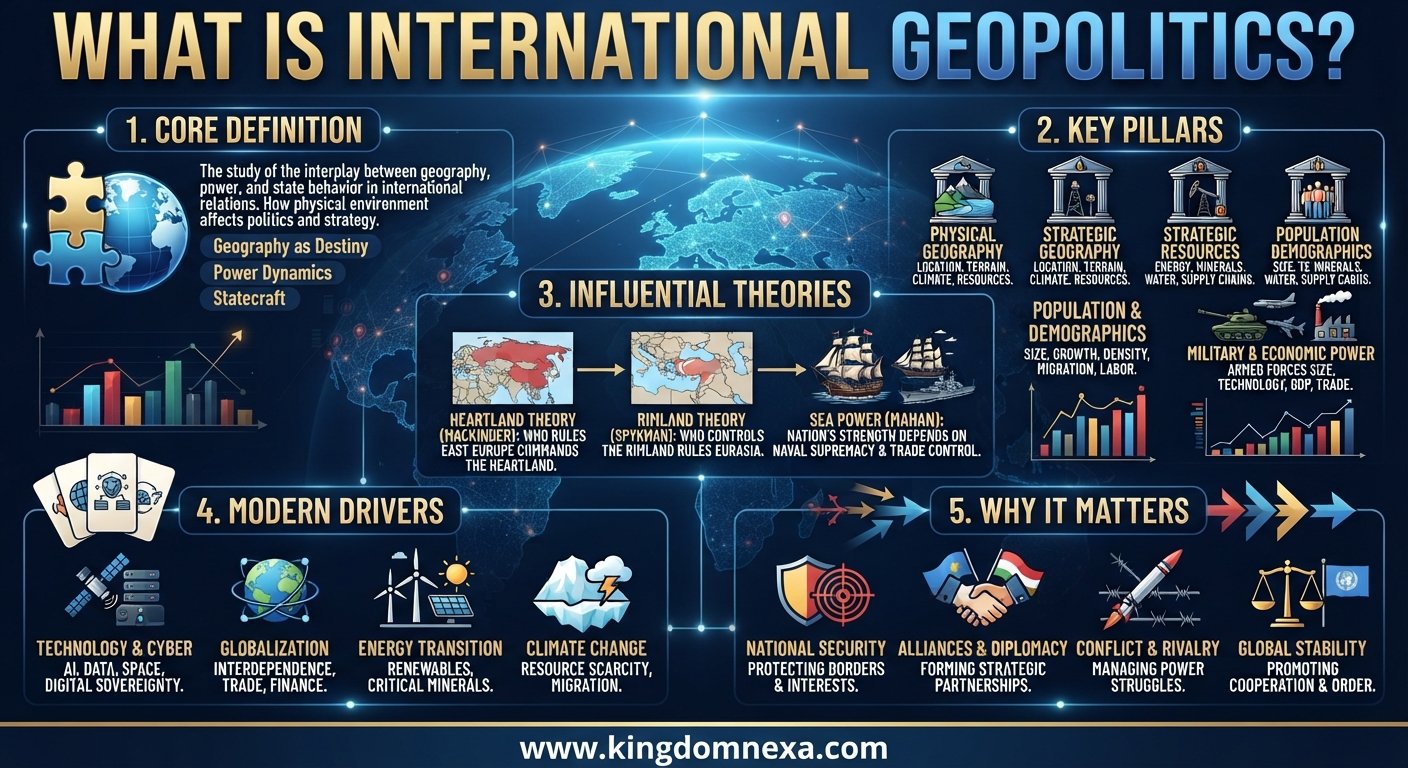
Core Components of National Interest
Although governments organize their priorities differently, national interests commonly include:
- National security: Protection against external military and security threats.
- Sovereignty: Preservation of independent decision-making and territorial integrity.
- Economic prosperity: Trade, investment, employment, growth, and financial stability.
- Energy security: Reliable and affordable access to energy.
- Technological security: Maintaining capabilities in strategic technologies and protecting critical infrastructure.
- Political stability: Preserving institutions and domestic order.
- Diplomatic influence: Building partnerships and shaping international decisions.
- Human security: Protecting populations from threats such as pandemics, food insecurity, and disasters.
- International status: Expanding diplomatic influence, prestige, or strategic leverage.
These interests frequently overlap. For example, protecting semiconductor supply chains can simultaneously be an economic, technological, military, and national-security objective.
Why Do National Interests Matter in International Relations?
National interests provide a framework for understanding why governments make particular foreign-policy choices.
States rarely make international decisions in isolation. A government must consider its security environment, economic resources, domestic politics, public expectations, alliances, geography, international law, and the likely reactions of other states.
A foreign-policy decision may therefore involve several competing interests.
For example, a government may want to maintain a profitable trading relationship with another country while simultaneously reducing strategic dependence on that country’s technology. Economic interests and security interests can pull policy in different directions.
This makes national interest a useful analytical concept because it highlights trade-offs rather than assuming that states have a single objective.
National Interests Are Not Always Permanent
National interests can change as circumstances change.
The end of the Cold War transformed the strategic environment for many countries. The COVID-19 pandemic demonstrated the national-security importance of health and supply-chain resilience. Russia’s full-scale invasion of Ukraine contributed to renewed European emphasis on defence and strategic resilience. More recently, critical minerals, artificial intelligence, cybersecurity, and advanced computing have become increasingly connected to national security.
The European Union’s Strategic Compass, for example, links security and defence with geopolitical competition, technological development, economic rivalry, disinformation, climate risks, resilience, and strategic partnerships.
National interests are therefore better understood as evolving priorities shaped by changing circumstances rather than as an unchanging list of national objectives.
Historical Evolution of National Interest
The concept of national interest has deep roots in the development of the modern state system.
European statecraft during the early modern period increasingly emphasized state survival, territorial security, economic power, and strategic balance. The idea of raison d’état, or reason of state, encouraged governments to prioritize the survival and interests of the state when conducting foreign policy.
During the nineteenth and twentieth centuries, nationalism, industrialization, imperial competition, and military modernization expanded the scope of national interests.
The two World Wars demonstrated the consequences of competition among powerful states. After 1945, the creation of the United Nations introduced a broader institutional framework in which sovereign states could pursue their interests while accepting international legal obligations.
The UN Charter establishes sovereign equality among members and requires states to settle international disputes peacefully. It also prohibits the threat or use of force against the territorial integrity or political independence of states, subject to the Charter’s legal framework.
During the Cold War, national interests were heavily influenced by the rivalry between the United States and Soviet Union. Alliances, nuclear deterrence, ideological competition, military bases, economic assistance, and proxy conflicts became major instruments of state strategy.
After the Cold War, globalization broadened the concept further. Trade, investment, multinational corporations, financial systems, energy networks, technological standards, climate policy, and global health became increasingly relevant to national prosperity and security.
Types of National Interests
There is no universally accepted classification system, but several categories are useful for geopolitical analysis.
Vital Interests
Vital interests are objectives that governments may regard as essential to national survival or fundamental security.
They commonly include:
- Territorial integrity
- Sovereignty
- Protection of the population
- National survival
- Prevention of catastrophic external threats
Because governments may associate vital interests with survival, they can be willing to devote substantial resources to protecting them.
Strategic Interests
Strategic interests are important objectives that influence a country’s long-term international position.
Examples include:
- Maintaining strategic access to important regions
- Securing major trade routes
- Developing advanced military capabilities
- Protecting critical technologies
- Diversifying energy supplies
- Maintaining important alliances
Strategic interests generally involve longer time horizons than immediate foreign-policy decisions.
Economic Interests
Economic interests include the conditions required for national prosperity.
These can involve:
- Export markets
- Foreign investment
- Secure supply chains
- Access to raw materials
- Energy supplies
- Financial stability
- Technology and intellectual property
- International transportation networks
Economic interests increasingly overlap with security policy. The IEA’s 2025 World Energy Outlook notes that energy security now extends beyond traditional fuel supplies to electricity systems, critical minerals, cyber risks, and technology supply chains.
Ideational and Values-Based Interests
States may also pursue interests connected with political values, international norms, human rights, democracy, development, cultural identity, or international institutions.
These interests can influence diplomacy even when they do not provide an immediate material benefit.
However, analysts should distinguish officially stated values from independently demonstrated policy behavior. Governments may describe policies in normative language while simultaneously pursuing security or economic objectives.
How Governments Pursue National Interests
Governments have a broad toolkit for advancing national interests.
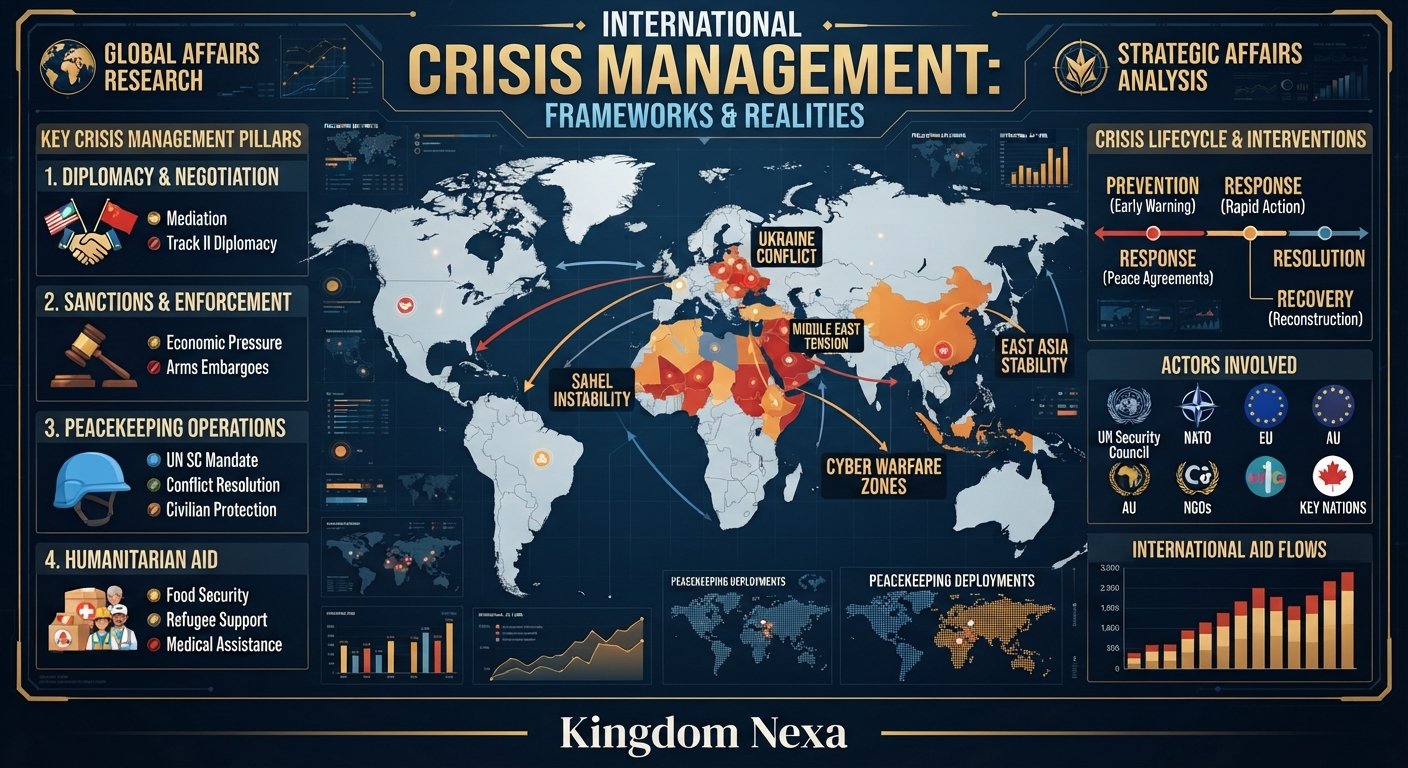
Diplomacy and Negotiation
Diplomacy remains one of the most important instruments.
States use bilateral negotiations, international organizations, summits, treaties, strategic dialogues, mediation, and diplomatic coalitions to pursue objectives without using force.
Diplomacy can also preserve communication between competing powers when broader relations are strained.
Alliances and Partnerships
Alliances allow states to pool resources and reduce security vulnerabilities.
For smaller and middle powers, partnerships can provide access to markets, technology, finance, defence capabilities, intelligence, or diplomatic support.
The EU’s Strategic Compass explicitly emphasizes partnerships with organizations and countries as part of its security strategy.
Economic Statecraft
Economic tools can become instruments of foreign policy.
These include:
- Tariffs
- Sanctions
- Export controls
- Investment screening
- Development assistance
- Trade agreements
- Financial restrictions
- Infrastructure investment
- Economic partnerships
The increasing use of these instruments illustrates the rise of geoeconomics, in which economic relationships become closely connected to strategic competition.
Military Power and Deterrence
Military capabilities can protect territorial interests, deter attacks, reassure allies, and influence strategic calculations.
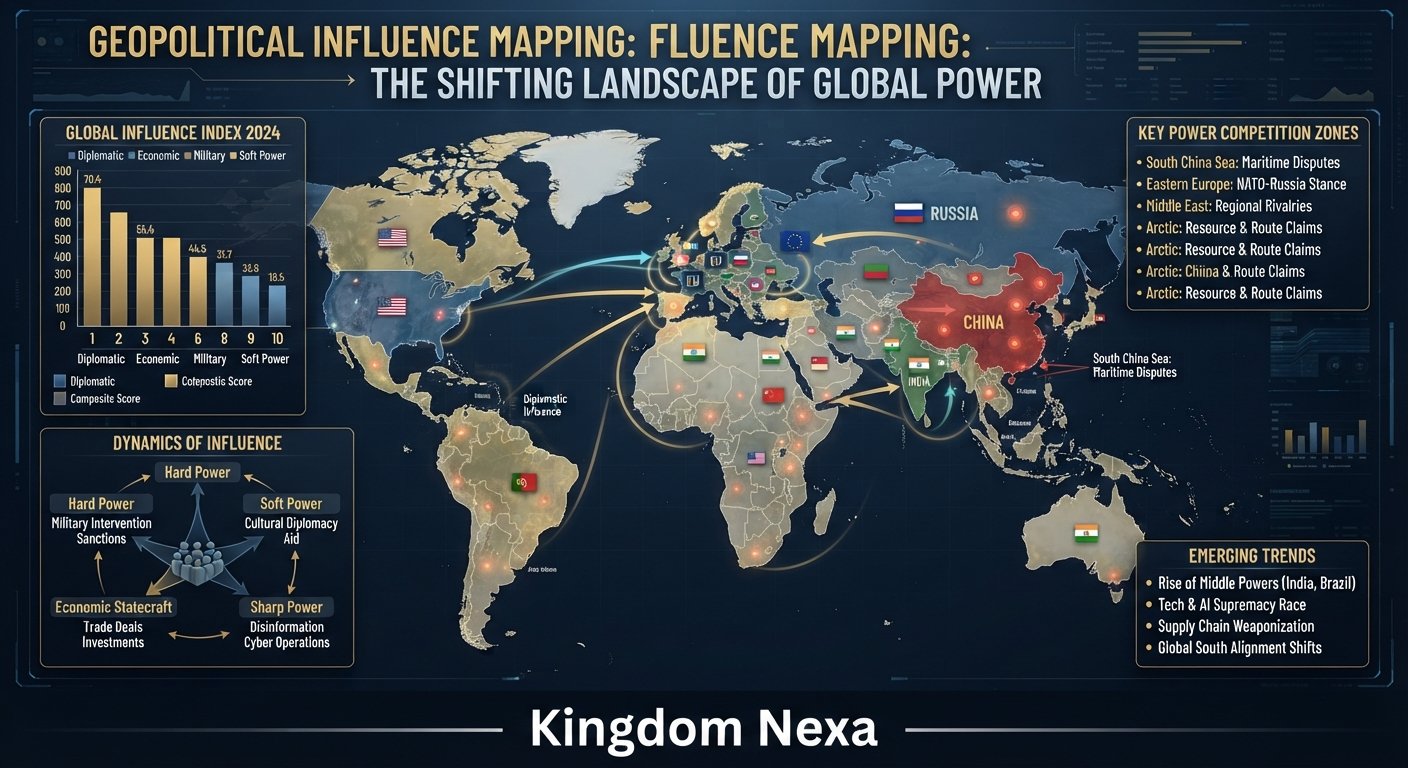
SIPRI estimates that global military expenditure reached $2.887 trillion in 2025, representing an 11th consecutive year of growth. Europe and Asia and Oceania recorded particularly strong increases that year.
Military power, however, is only one component of national power. Excessive defence spending can create economic opportunity costs, while military capabilities without diplomatic or economic support may have limited strategic utility.
Technology and Cyber Power
Technology has become an increasingly important element of national interest.
Artificial intelligence, semiconductors, satellites, telecommunications, quantum technologies, cybersecurity, drones, and advanced manufacturing can affect both economic competitiveness and military capabilities.
This creates new forms of strategic dependence. A country may possess military strength but remain vulnerable if it relies heavily on foreign technology, critical minerals, software, components, or communications infrastructure.
National Interests and the Current Global Environment
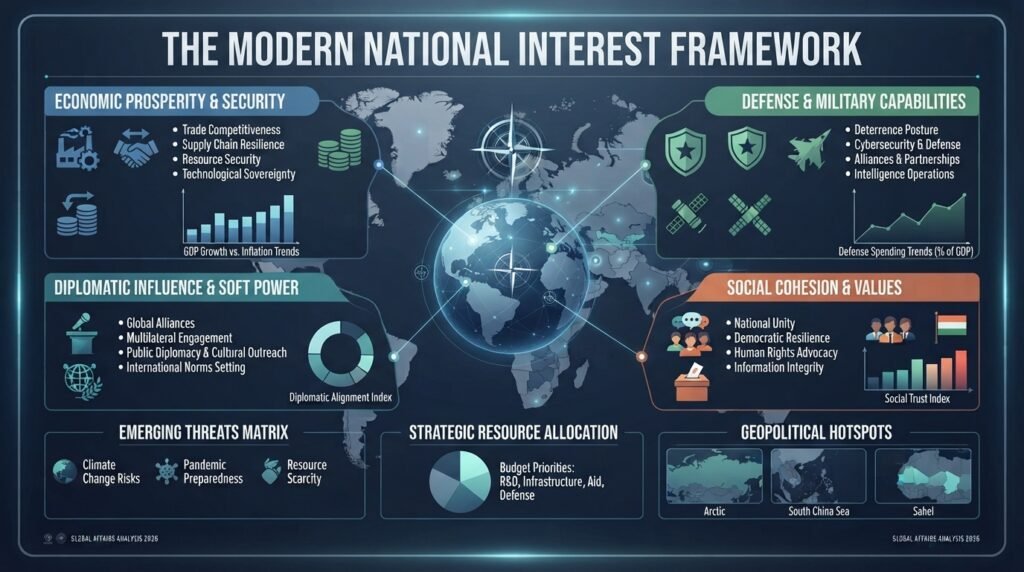
As of September 2026, national interests are being pursued in an international environment characterized by geopolitical competition, economic uncertainty, military rearmament, technological rivalry, and energy-security concerns.
Geoeconomic Competition
Economic interdependence has not disappeared, but it is increasingly influenced by strategic considerations.
The WTO’s 2026 World Trade Report warns that geopolitical fragmentation could produce substantial economic costs. Its simulations estimate that a highly fragmented global trading system could reduce global GDP by 5.1% and global exports by 18.6% relative to a more integrated baseline scenario.
This demonstrates a central dilemma of national interest: measures that improve resilience or strategic autonomy for one country can sometimes reduce efficiency or impose costs on other countries.
Energy Security
Energy remains a major intersection between economics and geopolitics.
The IEA’s 2025 outlook identifies energy security as a core national and economic-security issue, extending beyond oil and gas to electricity infrastructure, critical minerals, cyber threats, and clean-energy technologies.
Countries therefore increasingly seek:
- Diverse energy suppliers
- Domestic production
- Strategic reserves
- Alternative transport routes
- Renewable-energy capacity
- Critical-mineral access
- Resilient electricity systems
Energy policy can consequently affect diplomatic partnerships, trade relationships, industrial strategy, and national security simultaneously.
Defence and Strategic Competition
Military power is another important expression of national interest.
SIPRI’s 2026 data shows that global military expenditure increased by 2.9% in real terms during 2025. Europe increased spending by 14%, while Asia and Oceania increased spending by 8.1%.
These figures do not by themselves demonstrate the intentions of individual governments. They do, however, provide evidence of a broader pattern of increased defence expenditure and heightened concern about security environments.
Technology and Strategic Dependence
Technology is changing how governments define national security.
A semiconductor shortage can affect manufacturing. A cyberattack can disrupt critical infrastructure. Dependence on foreign telecommunications equipment can become a strategic concern. Restrictions on advanced computing technologies can influence military and industrial capabilities.
National interest has therefore expanded from controlling physical territory to protecting digital infrastructure, technological ecosystems, data, intellectual property, and strategic supply chains.
Domestic Politics and National Interest
National interests are not defined by geography or military strategy alone.
Domestic political institutions influence foreign-policy priorities. Governments must consider voters, businesses, military institutions, bureaucracies, regional interests, media environments, civil society, and political parties.
Economic conditions can also affect foreign policy. A government facing unemployment or inflation may prioritize trade, investment, energy prices, or economic protection.
At the same time, foreign policy can influence domestic politics. International crises may affect public opinion, defence spending, migration policy, energy costs, or national identity.
This creates a two-way relationship:
Domestic politics → shapes foreign policy → which changes the external environment → which feeds back into domestic politics.
Consequently, analysts should avoid treating the state as a completely unified actor.
National Interest, International Law and Cooperation
Pursuing national interests does not automatically conflict with international cooperation.
In fact, governments frequently pursue national interests through international institutions.
The UN provides a framework for diplomacy and collective security. The WTO establishes rules governing international trade. The IMF supports international monetary and financial stability. Regional organizations facilitate security, economic integration, and political cooperation.
Climate policy provides another important example.
Under the Paris Agreement, countries submit Nationally Determined Contributions (NDCs) describing their intended climate actions. The UNFCCC explains that these national plans form a central part of the international climate regime.
This illustrates an important feature of modern international relations: national interests and collective interests can overlap.
A country may reduce emissions because of domestic environmental concerns, economic opportunities, energy security, or international commitments. The same policy can simultaneously contribute to a global public good.
Case Studies: How National Interests Differ
India: Security, Prosperity and Strategic Autonomy
India’s Ministry of External Affairs describes security and prosperity as principal foreign-policy goals and emphasizes the importance of maintaining strategic space and autonomy while developing relations with major powers and neighboring states.
This illustrates how a major middle power can pursue cooperation with multiple partners while attempting to preserve independent decision-making.
European Union: Security, Resilience and Strategic Capacity
The EU’s Strategic Compass connects security with defence capability, resilience, technology, partnerships, crisis response, and strategic autonomy.
The EU’s approach also demonstrates that national or collective interests need not be pursued solely through military instruments. Economic policy, trade, technology, development assistance, diplomacy, and regulatory power can all contribute.
United Kingdom: Sovereignty, Security and Prosperity
The UK’s 2023 Integrated Review Refresh defines its core national interests around the sovereignty, security, and prosperity of the British people while also identifying an interest in an open and stable international order.
The example demonstrates how governments may define national interest as both protective and systemic: protecting the country while also supporting international conditions considered beneficial to national prosperity and security.
Climate and Health: Interests That Cross Borders
National interests are increasingly affected by issues that cannot be solved by one country acting alone.
Climate change, infectious diseases, cyber threats, financial instability, migration pressures, and supply-chain disruptions can cross borders rapidly.
WHO’s national health-security framework emphasizes country-owned planning while linking national preparedness with regional and global health security.
This creates a central paradox of twenty-first-century statecraft: countries may need international cooperation precisely because they are pursuing national security.
Major Challenges in Defining National Interests
National interest is useful, but it has limitations.
First, governments may disagree internally about what constitutes the national interest. Businesses may prioritize market access while security institutions emphasize strategic autonomy.
Second, short-term and long-term interests can conflict. A cheap foreign supply may benefit consumers today but create strategic vulnerability over time.
Third, national interests can conflict with those of other states. One country’s security measures may be interpreted by another as a threat, potentially producing a security dilemma.
Fourth, governments may use the language of national interest to justify policies whose benefits are disputed domestically or internationally. Analysts should therefore distinguish between a government’s stated national interest and independently assessed policy effects.
Finally, international problems increasingly require collective action. Climate change, pandemics, financial crises, cyber threats, and global supply chains cannot always be managed effectively through unilateral policies.
How to Analyze National Interests in Global Affairs
A practical framework can help students, journalists, researchers, and policymakers analyze a country’s foreign policy without assuming its motives.
Who?
Identify the government, institutions, political groups, businesses, military organizations, allies, and other stakeholders involved.
What?
Determine the stated objective and the concrete policy being pursued.
Why?
Examine security, economic, historical, domestic political, geographic, technological, and diplomatic factors.
Where?
Assess the strategic importance of geography, borders, trade routes, maritime spaces, resources, alliances, and regional organizations.
When?
Place current policies within their historical context and identify recent events that may have changed priorities.
How?
Examine the instruments being used: diplomacy, military power, sanctions, trade policy, development finance, alliances, technology policy, intelligence, or international institutions.
So What?
Assess the likely consequences for the country, neighboring states, international institutions, markets, and global stability.
What Next?
Develop multiple plausible scenarios while clearly separating evidence from uncertainty. Scenario analysis should not be presented as a prediction unless supported by appropriate evidence.
What Is the Future of National Interests in Global Affairs?
The future of national interest is likely to become increasingly multidimensional.
Traditional concerns such as territory, military security, sovereignty, and alliances will remain important. At the same time, technological capabilities, energy systems, critical minerals, supply chains, cyber infrastructure, climate resilience, health security, and economic competitiveness will increasingly influence strategic calculations.
The major question will not simply be whether globalization continues or ends. Instead, governments will have to determine where interdependence creates benefits and where dependence creates unacceptable vulnerability.
Economic fragmentation is already becoming a major policy concern. The IMF has warned that geopolitical fragmentation and renewed trade tensions could weaken economic growth and destabilize financial markets, while the WTO’s latest analysis highlights the economic costs of a more divided trading system.
At the same time, complete strategic autonomy is difficult for most countries. Even powerful states depend on international markets, technologies, resources, institutions, and partners.
The likely strategic environment will therefore involve a combination of competition, selective cooperation, diversification, resilience, and managed interdependence.
Frequently Asked Questions
What are national interests in global affairs?
National interests are the objectives and conditions that a state considers important to its security, sovereignty, prosperity, stability, and international position. They can include economic, military, diplomatic, technological, energy, environmental, and political priorities.
Why are national interests important in international relations?
They help explain why governments adopt particular foreign policies. National interests provide a framework for understanding decisions involving alliances, trade, diplomacy, military capabilities, energy, technology, and international institutions.
What are the main types of national interests?
Common categories include vital, strategic, economic, security-related, diplomatic, technological, environmental, and values-based interests. The importance assigned to each category varies by country and circumstances.
How do countries protect their national interests?
Countries use diplomacy, alliances, military capabilities, economic policy, trade agreements, sanctions, investment, technology policy, intelligence, international organizations, and other instruments of statecraft.
Can national interests conflict with international cooperation?
Yes. Governments may face situations where a policy produces short-term national benefits but creates costs for other states or global institutions. However, cooperation can also advance national interests by improving security, trade, health, energy resilience, or economic stability.
How does geography influence national interests?
Geography affects borders, natural resources, trade routes, maritime access, transportation corridors, strategic depth, neighboring relationships, and vulnerability to external threats. It is therefore a fundamental factor in geopolitical strategy.
Are national interests always based on security?
No. Security is important, but national interests can also involve economic growth, energy supplies, technological competitiveness, international influence, environmental protection, public health, and diplomatic objectives.
Can national interests change over time?
Yes. Changes in technology, leadership, economic conditions, wars, alliances, domestic politics, climate risks, and international power balances can change how governments define and prioritize national interests.
What is the difference between national interest and foreign policy?
National interest describes the objectives a government considers important for the country, while foreign policy refers to the strategies and actions used to pursue those objectives internationally.
Why is national interest difficult to measure?
National interest is partly analytical and partly political. Governments may define priorities differently, interests may conflict with one another, and some outcomes are difficult to quantify. Analysts therefore need to distinguish official statements from observable policies and measurable effects.
Conclusion
National interests in global affairs provide one of the most useful frameworks for understanding international relations. They explain why states protect their sovereignty, build alliances, compete for economic opportunities, secure energy supplies, develop advanced technologies, strengthen military capabilities, and participate in international institutions.
Yet national interest is not synonymous with military power or narrow self-interest. Modern national security increasingly depends on resilient supply chains, technological capabilities, economic stability, energy security, public health, environmental resilience, and diplomatic relationships.
The current international environment demonstrates the complexity of these relationships. Rising military expenditure, geopolitical competition, economic fragmentation, technological rivalry, and energy-security concerns are forcing governments to balance autonomy with interdependence.
For analysts, the central task is therefore not simply to ask what a country claims to want. A deeper assessment examines its stated objectives, material capabilities, domestic constraints, geographic circumstances, policy instruments, international obligations, and the consequences of its choices.
National interests ultimately operate within an international system where no state can pursue every objective simultaneously. The most consequential geopolitical decisions arise from the choices governments make among competing priorities—and from how those choices interact with the interests, institutions, and constraints of the wider international community.
Meta Description: