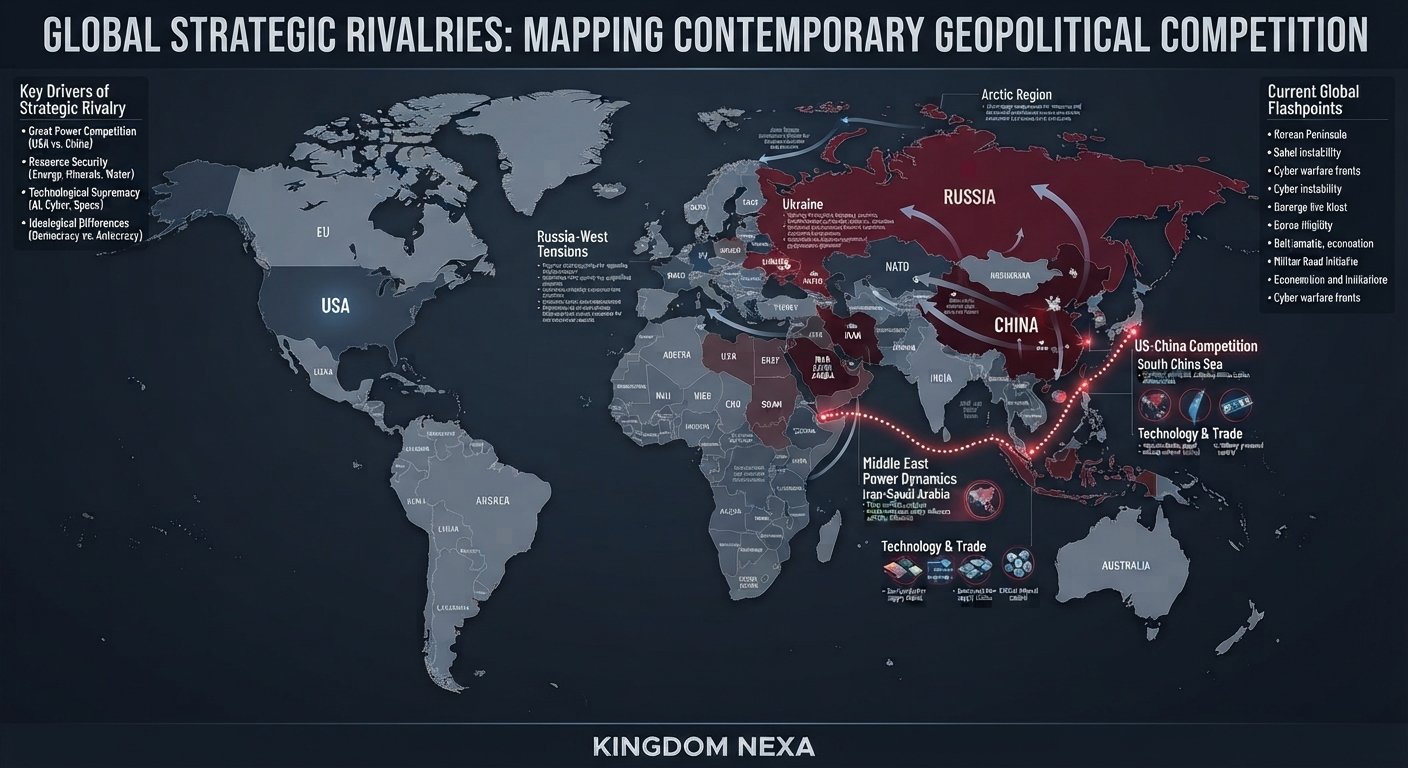
Strategic rivalries are among the most influential forces shaping international geopolitics. They determine how countries build alliances, develop military capabilities, compete for economic advantages, protect national interests, and influence the rules of the international system. From the competition between the United States and China to the confrontation between Russia and Western governments over European security, these rivalries affect far more than the countries directly involved. They influence global trade, energy markets, technological development, diplomatic negotiations, and the security of smaller states.
Unlike ordinary diplomatic disagreements, strategic rivalries involve sustained competition over power, security, regional influence, or the future international order. They can persist for decades, even when governments cooperate on specific issues such as trade, climate change, or counterterrorism. Some remain largely peaceful, while others contribute to arms races, proxy conflicts, economic restrictions, and direct military confrontation.
Understanding strategic rivalries requires examining their historical roots, geographical foundations, political objectives, economic relationships, and security calculations. It also requires distinguishing between competition that can be managed through diplomacy and tensions that risk escalating into conflict.
This article examines the meaning and causes of strategic rivalries, explores major contemporary examples, and analyzes their consequences for regional stability and global governance. It also considers how these competitions may evolve and what countries can do to reduce the risk of confrontation.

What Are Strategic Rivalries?
Strategic rivalries are prolonged competitions between states or other influential political actors over security, power, regional dominance, resources, international influence, or the rules governing the global order.
They typically involve a combination of military planning, diplomatic maneuvering, economic competition, technological development, alliance-building, and political signaling. Unlike a temporary dispute over a specific agreement, a strategic rivalry shapes how each side interprets the other’s long-term intentions.
For example, two countries may disagree over tariffs without becoming strategic rivals. However, when trade restrictions become connected to technological leadership, military security, industrial policy, and competition for global influence, the relationship may take on a broader strategic character.
Key Characteristics of Strategic Rivalries
Several characteristics distinguish strategic rivalries from routine international disagreements:
- Long-term competition: Each side anticipates continued rivalry rather than a quick resolution.
- Conflicting strategic objectives: One actor’s pursuit of greater security or influence may be viewed as a threat by another.
- Mutual suspicion: Governments interpret military deployments, economic policies, and diplomatic initiatives through the lens of competition.
- Multiple instruments of power: Competition extends beyond armed forces to finance, technology, trade, information, and diplomacy.
- Regional or global consequences: Actions taken by rival powers influence allies, neighboring states, businesses, and international institutions.
Not every rivalry possesses all these characteristics to the same degree. Some are predominantly military, while others center on economic influence, territorial disputes, political ideology, or competing visions of international governance.
Strategic Rivalry vs. Strategic Competition
The terms are closely related, but they are not identical in every context. Strategic competition is a broad description of efforts to advance national interests against competing actors. Strategic rivalry usually implies a more enduring relationship in which each side’s policies are substantially influenced by the other.
A rivalry does not necessarily mean that war is inevitable. Rival states may negotiate agreements, maintain diplomatic relations, trade with one another, and cooperate where their interests overlap.
The essential distinction is that strategic rivals can cooperate on particular problems while continuing to compete over their long-term position and influence.
Why Do Strategic Rivalries Emerge?
Strategic rivalries rarely result from one cause alone. They develop when historical grievances, security concerns, political ambitions, economic interests, and changing power relationships reinforce one another.
Competition for Power and International Influence
States seek to protect their independence, preserve their influence, and shape international decisions. When one country grows economically or militarily, established powers may worry that the existing balance of power will change.
Rising powers, meanwhile, may seek greater representation in international institutions, increased regional influence, or fewer restrictions on their strategic choices.
These objectives can produce friction even when neither side initially intends to start a conflict.
Security Dilemmas and Military Buildups
A security dilemma occurs when measures taken by one state to improve its security make another state feel less secure.
For example, a government might expand its missile defenses or deploy additional forces to deter an attack. A rival may interpret those measures as preparation for offensive operations and respond by strengthening its own military capabilities.
Both governments may describe their actions as defensive. Nevertheless, the resulting cycle of military expansion can increase insecurity on both sides.
Historical Grievances and Territorial Disputes
Past wars, colonial experiences, unresolved borders, and contested historical narratives can shape national threat perceptions for generations.
Territorial disputes are particularly difficult because governments may associate land with national identity, strategic depth, natural resources, access to the sea, or domestic political legitimacy.
Historical grievances do not automatically cause rivalry, but political leaders can use them to justify strategic competition or resist compromise.
Economic and Technological Competition
Economic interdependence does not eliminate geopolitical rivalry. States may compete for access to energy, critical minerals, semiconductor manufacturing, shipping routes, markets, and advanced technologies.
Governments may also restrict exports, screen foreign investments, impose sanctions, or support domestic industries when they believe economic dependencies could create national-security vulnerabilities.
As a result, trade and investment increasingly operate as both sources of mutual benefit and potential instruments of strategic pressure.
How Have Strategic Rivalries Evolved Throughout History?
Strategic rivalries have changed alongside the international system. Their underlying drivers—security, influence, territory, wealth, and political legitimacy—remain familiar, but the methods used to pursue these objectives have evolved.
Historical Timeline of Major Strategic Rivalries
1800s
The Great Game
Britain and the Russian Empire competed for influence across Central Asia, including territories surrounding Afghanistan. Geography, imperial security, and access to strategic routes drove the rivalry.
1914–1918
First World War
Rival alliances, militarization, imperial competition, and the July Crisis contributed to a war that transformed European and global power relationships.
1947–1991
Cold War
The United States and the Soviet Union competed through nuclear deterrence, ideological rivalry, military alliances, technological achievements, economic influence, and proxy conflicts.
1991–2000s
Post-Cold War transition
The Soviet Union’s dissolution left the United States in a position of exceptional global influence, while regional conflicts and disputes over the European security order continued.
2010s–2026
Multipolar pressures and renewed competition
US–China competition, Russia’s war against Ukraine, regional power contests, economic security policies, and technological rivalry have become central features of international affairs.
What the Cold War Teaches About Strategic Rivalries
The Cold War demonstrates how strategic competition can remain intense without becoming a direct, full-scale war between the principal nuclear powers.
Washington and Moscow developed opposing military alliances, accumulated nuclear arsenals, supported competing political systems, and sought influence across Asia, Africa, Latin America, and the Middle East. The Cuban Missile Crisis of 1962 illustrated how quickly a regional confrontation could create a global nuclear emergency.
At the same time, diplomacy produced mechanisms to manage risk. Arms-control agreements, communication channels, and negotiations helped establish limits on certain forms of competition.
The lesson is not that nuclear weapons guarantee peace. Rather, deterrence may discourage direct attacks while leaving states exposed to miscalculation, proxy warfare, coercion, and escalation.
What Are the Major Strategic Rivalries in the World Today?
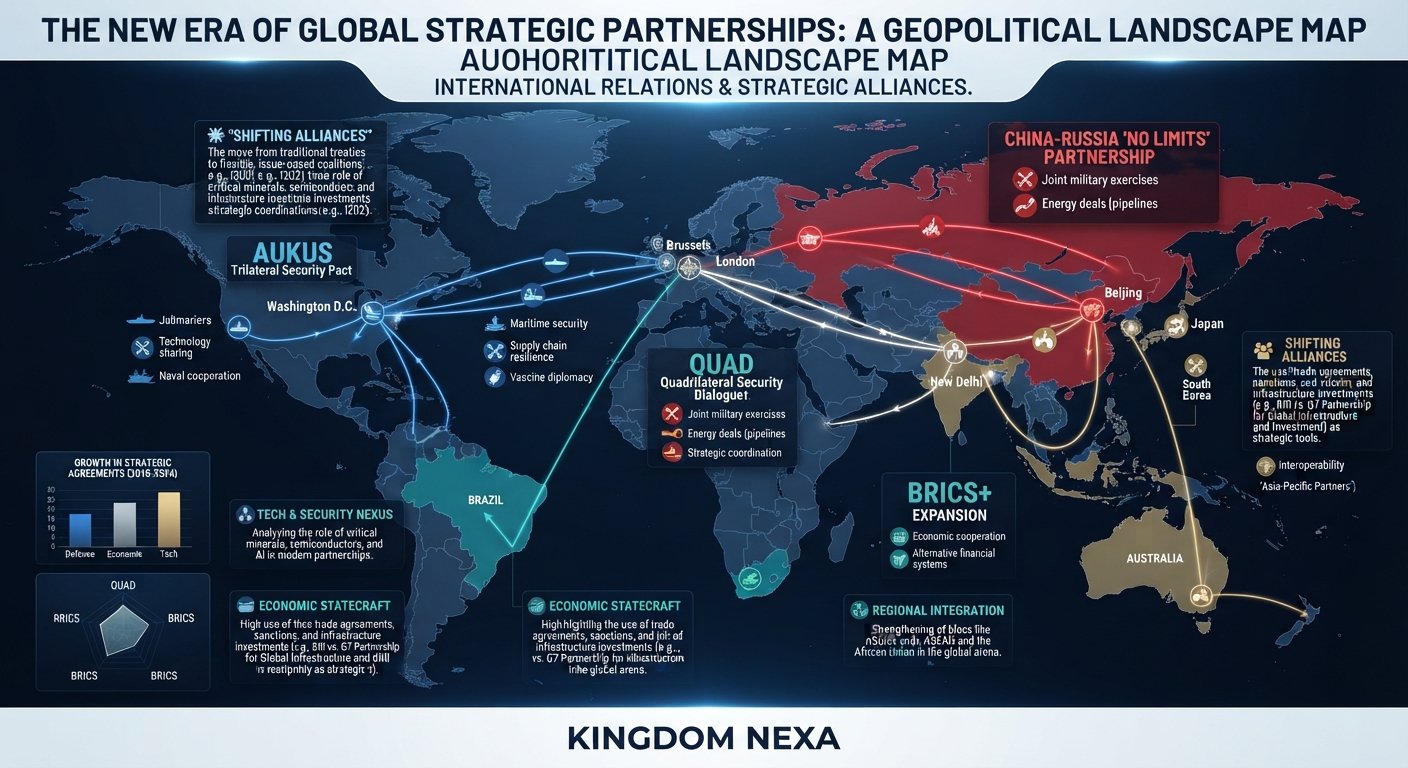
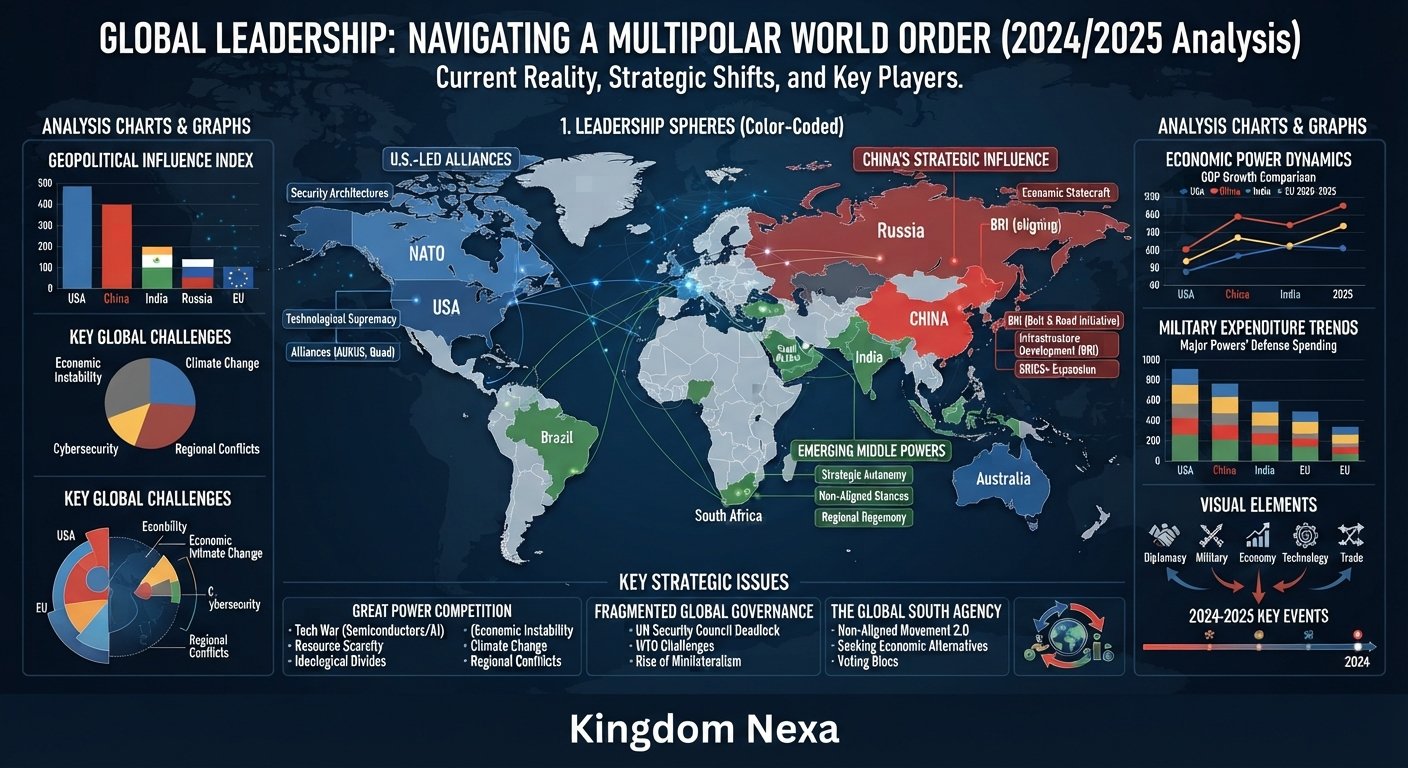
As of October 9, 2026, strategic competition is not organized around a single worldwide divide. Several overlapping rivalries operate simultaneously, with different actors, objectives, and levels of intensity.
United States and China: Competition for Global Influence
The rivalry between the United States and China is a defining feature of contemporary geopolitics. It involves military power, economic leadership, advanced technology, regional influence, international institutions, and competing approaches to global governance.
The United States seeks to maintain its security commitments, preserve its influence in the Indo-Pacific, protect critical technologies, and sustain partnerships with allies such as Japan, South Korea, Australia, and the Philippines.
China seeks to protect its sovereignty as defined by Beijing, strengthen its economic and technological capabilities, expand its international influence, and oppose what it considers external interference in its core interests. Taiwan remains a particularly sensitive issue, while maritime disputes in the South China Sea create additional friction.
The competition includes semiconductor export controls, industrial subsidies, investment restrictions, military deployments, and diplomatic engagement with countries across the Global South.
Neither side’s interests are entirely incompatible. Both have reasons to preserve trade, financial stability, and communication channels. The challenge is to prevent competition from becoming an assumption that every action by the other side is hostile.
Taiwan is an especially serious potential flashpoint because Beijing claims the island as part of China, while Taiwan operates under its own government. The United States maintains unofficial relations with Taiwan and has a domestic legal framework for supporting its defensive capabilities. Differing views on the island’s future, military signaling, and crisis management create a risk of escalation.
Russia and the West: European Security and Strategic Deterrence
Russia’s war against Ukraine has profoundly affected relations between Moscow and Western governments. NATO identifies Russia as its most significant direct threat, a position expressed in its 2022 Strategic Concept. Russia, meanwhile, presents NATO’s enlargement and military posture as threats to its security. These competing claims do not erase the legal and political consequences of Russia’s invasion of Ukraine.
The rivalry encompasses territorial security, sanctions, military assistance, energy policy, nuclear signaling, cyber operations, and the future European security architecture.
NATO members have reinforced deterrence and defense, while Russia has continued to rely on military power and strategic partnerships. The relationship also extends beyond Europe through cooperation and competition involving China, Iran, North Korea, and other countries.
The central danger is escalation between nuclear-armed Russia and NATO members. Misinterpreted military movements, attacks affecting alliance territory, or a breakdown in crisis communication could widen a conflict.
A durable settlement would require addressing security concerns while respecting Ukraine’s sovereignty and the applicable principles of international law.
India and China: Border Security and Asian Power
India and China are major Asian powers whose relationship combines economic links with unresolved territorial tensions and strategic competition.
The disputed Himalayan border has experienced serious confrontations, including the deadly clash in the Galwan Valley in June 2020. Subsequent negotiations have sought to reduce tensions and manage military deployments, although progress on specific arrangements does not necessarily resolve the underlying boundary dispute.
India seeks to protect its territorial claims, strengthen its regional position, and prevent strategic encirclement. China seeks to defend its own claims, preserve its border security, and maintain influence across Asia.
The rivalry also intersects with the Indian Ocean, infrastructure development, trade, and India’s participation in groupings such as the Quad, which includes the United States, Japan, Australia, and India.
Despite their disagreements, both countries have incentives to prevent prolonged instability along their border. Their economic size and regional importance mean that deterioration in relations could affect investment, regional security, and wider Asian diplomacy.
India and Pakistan: Nuclear Deterrence and Regional Stability
The India–Pakistan rivalry remains one of South Asia’s most consequential security challenges. Its foundations include the legacy of partition in 1947, the Kashmir dispute, competing national narratives, cross-border security concerns, and a history of wars and military crises.
Both countries possess nuclear weapons. Nuclear deterrence raises the potential cost of full-scale war, but it does not eliminate the risk of conventional conflict, terrorist attacks, miscalculation, or escalation during a crisis.
The rivalry also affects Afghanistan, regional connectivity, trade, domestic politics, and the security calculations of outside powers.
Effective risk reduction depends on credible communication channels, military-to-military contacts, restraint during crises, and mechanisms to investigate incidents. Sustainable improvement would also require political engagement on long-standing disputes.
The broader lesson is that strategic stability depends not simply on military capability but on how governments manage uncertainty and communicate red lines.
Iran, Israel, and Wider Middle Eastern Rivalries
Middle Eastern strategic competition involves overlapping disputes over national security, regional influence, deterrence, armed groups, missile capabilities, nuclear concerns, and control of strategically important routes.
Iran seeks to deter external threats and maintain regional influence. Israel prioritizes its security against missile attacks, armed groups, and perceived existential threats. Gulf states pursue their own security, economic diversification, and diplomatic interests, which do not always align with those of other regional actors.
The rivalry has included direct confrontations, indirect conflict, and competition involving partners and non-state armed groups. The United States also plays a major role through regional partnerships, military deployments, diplomacy, and sanctions.
The consequences extend well beyond the region. Instability can disrupt oil and gas supplies, threaten shipping, raise insurance costs, and increase economic uncertainty. Diplomatic engagement can reduce some risks, but durable stability depends on addressing security concerns without deepening cycles of retaliation.
Other Important Strategic Competitions
Several additional rivalries shape regional and international affairs:
- North and South Korea: Military deterrence, North Korea’s nuclear and missile programs, and competing political systems sustain a high-risk confrontation.
- Japan and China: Maritime disputes, historical tensions, military modernization, and competition for influence in East Asia affect regional security.
- Turkey and Greece: Maritime boundaries, airspace, Cyprus, and Eastern Mediterranean energy interests periodically strain relations between the NATO members.
- Arctic strategic competition: Russia, NATO members, and other interested powers monitor military access, shipping routes, infrastructure, and natural resources as the region changes.
- African regional power competition: Governments and external partners compete for influence through security cooperation, mineral access, infrastructure, and investment, although African states also pursue independent priorities and regional solutions.
These examples demonstrate why a single explanation cannot account for all strategic rivalries. Their origins, power balances, and opportunities for peaceful management differ substantially.
How Do Strategic Rivalries Affect Military and Economic Security?
Strategic rivalries influence far more than diplomatic relations. They affect defense budgets, investment decisions, international trade, technological innovation, and the daily lives of people far from the principal countries involved.
Military Spending and Nuclear Deterrence
Military modernization is one of the clearest indicators of intensifying security competition. Governments invest in air defense, naval forces, missiles, intelligence systems, cyber capabilities, and nuclear forces to deter threats or strengthen their bargaining position.
According to the Stockholm International Peace Research Institute (SIPRI), global military expenditure reached an estimated $2.887 trillion in 2025, an increase of 2.9% in real terms over 2024. Spending rose for the eleventh consecutive year. Europe recorded a 14% increase, while expenditure in Asia and Oceania rose by 8.1%.
Global military expenditure, 2025
$2.887 trillion
Annual real-terms growth
2.9%
Share of world GDP
2.5%
Source: SIPRI, Trends in World Military Expenditure 2025, published April 2026. Figures are estimates.
Rising expenditure does not automatically prove that a country intends to initiate war. It may reflect deterrence, an ongoing conflict, alliance commitments, replacement of aging equipment, or concerns about a rival’s capabilities.
However, sustained military expansion can increase threat perceptions and divert public resources from health, education, infrastructure, and other priorities.
Nuclear weapons add another layer of complexity. They can discourage direct attacks through the threat of catastrophic retaliation, yet they also increase the consequences of mistaken warnings, accidental escalation, and failed crisis management.
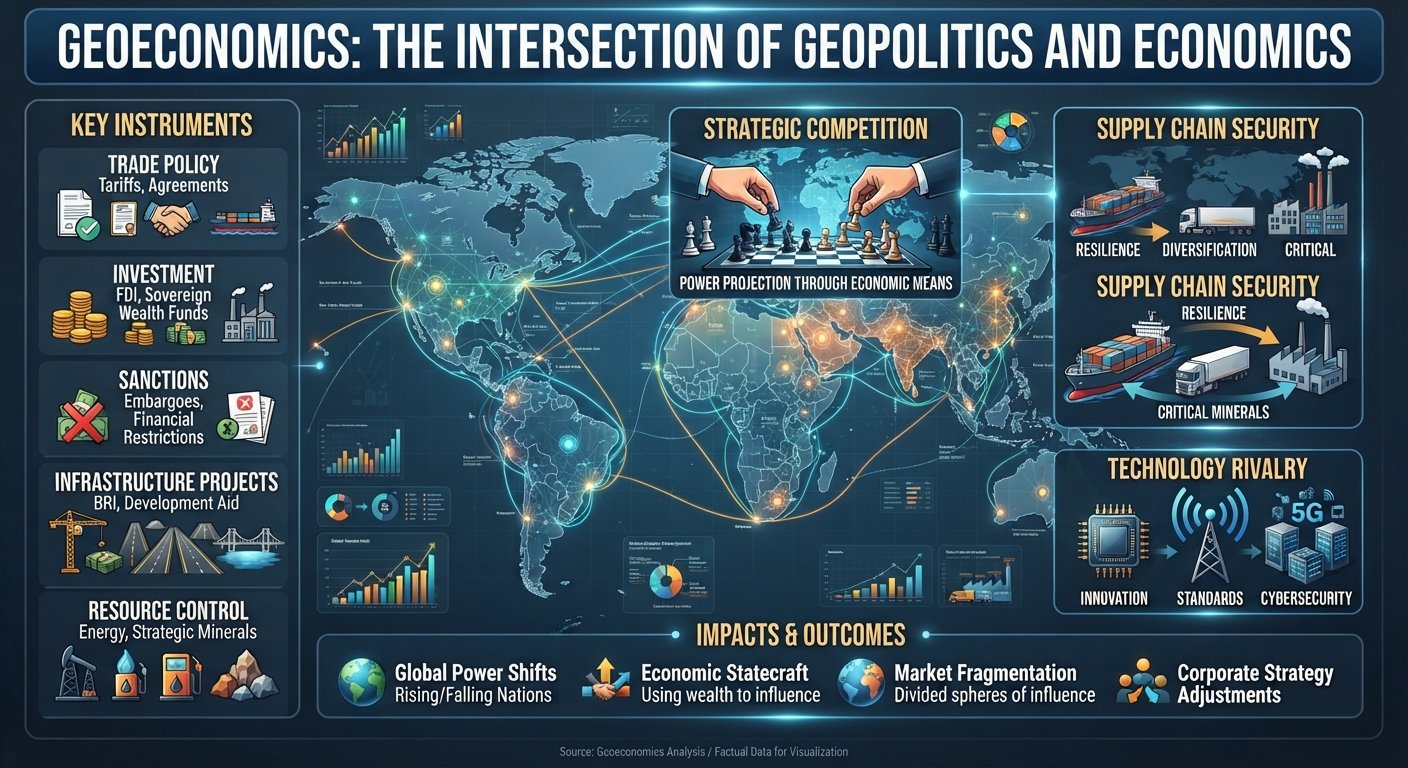
Economic Rivalry, Sanctions, and Supply Chains
Economic interdependence creates opportunities for cooperation but can also produce strategic vulnerabilities.
Governments may use sanctions, tariffs, export controls, investment screening, and restrictions on financial transactions to influence rivals. These measures can impose costs, constrain access to sensitive technologies, and signal political resolve.
Their effectiveness varies. Sanctions may change incentives or limit resources, but they can also encourage alternative trading networks, domestic substitution, and closer cooperation among targeted countries.
The International Monetary Fund has examined how US–China trade tensions are changing international trade patterns. Its 2025 research finds that trade can be redirected through intermediary economies, while warning that fragmentation can create vulnerabilities and longer-term costs.
For businesses, strategic rivalry can mean higher compliance costs, uncertain market access, disrupted supply chains, and pressure to diversify production. For consumers, it can mean higher prices or reduced availability of some goods.
Smaller economies may gain investment when companies relocate production, but they may also face pressure to align with competing economic blocs.
Technology as an Instrument of Geopolitical Power
Technology has become a central arena of strategic competition because it supports economic productivity, military capability, intelligence collection, and political influence.
Key areas include:
- Semiconductors and artificial intelligence: Advanced chips and computing infrastructure influence both commercial innovation and military applications.
- Cybersecurity: States seek to protect critical infrastructure while developing intelligence and cyber capabilities.
- Space systems: Satellites support communications, navigation, surveillance, and early-warning systems.
- Drones and autonomous systems: Uncrewed platforms are changing reconnaissance, battlefield operations, and defense planning.
- Digital infrastructure: Telecommunications networks, cloud services, and data governance can create strategic dependencies.
Technological restrictions can slow a rival’s access to important capabilities, but they may also encourage domestic innovation and the development of competing standards.
The long-term contest is therefore not simply about who invents a particular technology first. It also concerns manufacturing capacity, skilled labor, access to resources, research institutions, reliable energy, and the ability to translate innovation into practical advantages.
What Role Do Alliances and International Organizations Play?
Alliances and international institutions shape the choices available to strategic rivals. They can strengthen deterrence, provide negotiation channels, establish common rules, or become arenas for competing political priorities.
Alliances and Collective Security
Alliances allow states to coordinate defense planning, share intelligence, conduct military exercises, and signal that aggression against one member may provoke a collective response.
NATO is a prominent example of a collective-defense alliance. Its strategic assessments influence defense planning among members and affect how Russia and other external actors evaluate European security.
Other partnerships, including the US alliances in East Asia and the Quad, address different security concerns and do not all carry identical treaty obligations.
Alliances may discourage aggression by increasing its expected costs. However, they can also intensify rivalries if opposing governments perceive them as efforts to encircle or constrain them.
The United Nations and International Law
The United Nations provides a forum for diplomacy, mediation, humanitarian coordination, and collective responses to threats to international peace and security.
The UN Charter requires member states to settle disputes peacefully and generally prohibits the threat or use of force against another state’s territorial integrity or political independence, subject to recognized legal exceptions, including lawful self-defense under Article 51 and measures authorized by the Security Council.
International law does not eliminate strategic competition, but it establishes legal standards against which state conduct can be assessed.
Enforcement remains difficult when major powers disagree or when permanent members of the Security Council use their vetoes. Nevertheless, treaties, international courts, diplomatic negotiations, and monitoring arrangements can provide mechanisms for managing disputes.
The effectiveness of these institutions depends on political cooperation, respect for legal obligations, and the willingness of states to accept constraints on their conduct.
How Do Domestic Politics Shape Strategic Rivalries?
Foreign policy is not determined solely by military strength or geography. Domestic political pressures often influence how governments define threats, negotiate compromises, and respond to international crises.
Nationalism may make territorial concessions politically costly. Elections can encourage leaders to adopt tougher public positions, particularly when opponents portray diplomacy as weakness. Security agencies, defense industries, businesses, and influential political groups may also shape strategic priorities.
Economic difficulties can have contradictory effects. Governments under pressure may seek foreign cooperation to support growth, or they may emphasize external threats to mobilize domestic support.
Public opinion matters, but it does not always translate directly into policy. Leaders may face competing demands for national security, economic stability, international prestige, and restraint.
Understanding these domestic factors helps explain why seemingly reasonable diplomatic proposals sometimes fail. An agreement may offer strategic benefits but remain politically unacceptable to one or both governments.
What Are the Main Risks of Strategic Rivalries?
The most serious risks arise when competition becomes difficult to control.
Escalation and Miscalculation
Military exercises, surveillance operations, cyber incidents, and ambiguous signals can be misinterpreted. In a crisis, leaders may feel compelled to respond quickly before they fully understand an opponent’s intentions.
Proxy Conflicts and Humanitarian Harm
Rival powers may support opposing governments or armed groups rather than fight one another directly. Such involvement can prolong conflicts, increase civilian suffering, and complicate peace negotiations.
Global Economic Fragmentation
If states divide trade, finance, and technology into competing blocs, businesses may lose economies of scale and access to markets. Vulnerable countries can suffer from disrupted energy supplies, reduced investment, and rising borrowing costs.
Weakening International Cooperation
Strategic rivalry can obstruct cooperation on climate change, public health, nuclear non-proliferation, maritime security, and humanitarian emergencies. Problems that require collective action become harder to solve when states distrust one another.
Misinformation and Cyber Threats
Disinformation campaigns and cyber operations can undermine public confidence, damage infrastructure, and intensify hostility. Determining responsibility for a cyber incident can be difficult, increasing the risk of retaliation based on incomplete evidence.
What Is the Future of Strategic Rivalries?
The future cannot be predicted with certainty, but three broad scenarios help clarify the choices facing governments.

Rival powers continue competing but maintain communication channels, negotiate limited agreements, and cooperate on shared risks. This outcome requires political discipline and practical mechanisms to prevent crises from escalating.

Add to Favorites
Scenario 2: Intensified economic and technological fragmentation
Governments impose additional restrictions, diversify supply chains, strengthen industrial policies, and reduce dependence on strategic competitors. Competition remains below the threshold of direct war but becomes more expensive and disruptive.

Scenario 3: Escalation into a major crisis
A regional confrontation, miscalculated military action, or breakdown in diplomacy triggers a wider security emergency. The economic and humanitarian consequences could extend far beyond the original conflict.
These are analytical possibilities, not predictions with assigned probabilities. Actual outcomes will depend on leadership decisions, military developments, domestic politics, economic pressures, and the strength of diplomatic institutions.
The most constructive approach is to improve crisis communication, preserve arms-control mechanisms where possible, maintain diplomatic engagement, and strengthen institutions that support peaceful dispute resolution.
Frequently Asked Questions About Strategic Rivalries
1. What is a strategic rivalry in international relations?
A strategic rivalry is a prolonged competition between states or other influential actors over security, power, regional influence, resources, or the international order. It can involve military, economic, diplomatic, and technological instruments.
2. What causes strategic rivalries between countries?
Strategic rivalries commonly emerge from competing security interests, shifts in the balance of power, territorial disputes, historical grievances, ideological differences, and competition for economic or technological advantages.
3. What is the difference between strategic rivalry and geopolitical competition?
Geopolitical competition broadly describes efforts to gain influence or advance interests through geography, resources, alliances, and political power. Strategic rivalry generally implies a sustained relationship in which competing actors consistently shape their policies around one another.
4. What are the major strategic rivalries in the world today?
Prominent examples include US–China competition, Russia–Western tensions over European security, India–China border and regional competition, India–Pakistan rivalry, and Iran–Israel confrontation. Other regional competitions also influence global affairs.
5. Do strategic rivalries always lead to war?
No. Strategic rivalries can persist for decades without direct war between the principal rivals. Diplomacy, deterrence, economic interdependence, crisis communication, and arms-control agreements can help prevent escalation, although none guarantees peace.
6. How do strategic rivalries affect the global economy?
They can alter trade flows, investment, energy markets, sanctions policies, technology access, and supply chains. Some countries benefit temporarily from relocated investment, while others experience higher costs, uncertainty, and reduced market access.
7. How do nuclear weapons affect strategic rivalries?
Nuclear weapons can deter direct attacks because the potential consequences of escalation are catastrophic. However, they also create risks involving miscalculation, accidental launches, coercive signaling, and the escalation of conventional conflicts.
8. What role do alliances play in strategic rivalries?
Alliances coordinate defense, share intelligence, and strengthen deterrence. They can reassure members but may also intensify competition when rival states view them as threats to their own security or influence.
9. Can strategic rivalries be resolved peacefully?
Yes, although resolution may take time. Confidence-building measures, negotiations, economic agreements, legal mechanisms, and mutually acceptable security arrangements can reduce tensions. Some rivalries are managed rather than fully resolved.
10. Why should students and policymakers study strategic rivalries?
Studying strategic rivalries helps explain foreign-policy decisions, military spending, international crises, trade restrictions, and alliance formation. It also supports better political-risk assessments and more informed decisions about diplomacy, investment, and security.
Conclusion:
Strategic rivalries are a central feature of international geopolitics because they shape how governments pursue security, influence, prosperity, and political objectives. Their consequences extend from military deterrence and regional conflicts to technology markets, global supply chains, and international institutions.
Contemporary competition is particularly complex because states can be economic partners in one area and strategic opponents in another. The United States and China, Russia and Western governments, and rival powers across Asia and the Middle East illustrate different forms of this relationship.
The central challenge is not necessarily to eliminate every disagreement. It is to prevent competition from becoming uncontrolled confrontation. Effective diplomacy, credible deterrence, respect for international law, resilient economic relationships, and reliable crisis communication can help reduce risks while allowing states to protect legitimate interests.
Ultimately, understanding strategic rivalries means looking beyond immediate headlines to the historical grievances, geographical realities, domestic pressures, and long-term calculations that shape international behavior. The ability of governments to manage these forces will help determine whether the international system moves toward greater stability or deeper fragmentation.