International negotiations shape the rules, relationships, and agreements that govern the modern world. From preventing armed conflict and managing strategic rivalries to negotiating trade arrangements and addressing climate change, governments use diplomacy to protect national interests while seeking solutions to problems that cross borders. The outcomes can influence global security, economic stability, technological development, and the lives of millions of people.
International negotiations are structured diplomatic interactions through which countries, international organizations, and other relevant actors attempt to reconcile competing interests, resolve disputes, or establish mutually acceptable commitments. They may take place privately between two governments or through multilateral forums involving dozens or even hundreds of participants.
However, successful negotiations require much more than meetings and formal statements. Their outcomes depend on political incentives, bargaining power, historical relationships, domestic constraints, international law, economic interdependence, and the credibility of proposed commitments.
In today’s interconnected and strategically competitive international system, understanding how negotiations work is essential for students, researchers, policymakers, business leaders, and geopolitical analysts. This article examines their meaning, historical development, principal actors, negotiating strategies, legal foundations, real-world examples, major challenges, and possible future directions, using authoritative sources available as of October 9, 2026.
Editorial note: The analysis distinguishes established institutional facts from strategic interpretation and future possibilities. Negotiation outcomes and diplomatic positions can change rapidly.
Visual concept: a world map and diplomatic conference table connected to five stages: defining interests, setting the agenda, bargaining and compromise, drafting an agreement, and verifying implementation. Include subtle symbols for trade, security, climate, and international law.
Suggested alt text: “Five stages of international negotiations, from defining national interests to implementing agreements.”
What Are International Negotiations?
International negotiations are formal or informal processes in which representatives of sovereign states, international organizations, or other relevant parties communicate and bargain to reach agreements on issues of shared concern or conflicting interest.
The central purpose is to identify whether an acceptable arrangement exists despite differences in objectives, resources, values, or political priorities. Negotiations may produce legally binding treaties, political declarations, ceasefire arrangements, trade commitments, technical standards, or informal understandings.
For example, two neighboring countries might negotiate water-sharing arrangements to manage a river that crosses their borders. Governments participating in climate negotiations might agree on reporting procedures and emissions targets, while opposing parties in an armed conflict may negotiate prisoner exchanges or humanitarian access.
Essential Characteristics of International Negotiations
Several features distinguish international negotiations from ordinary discussions:
- Multiple interests: Each participant has objectives that may overlap or conflict with those of other parties.
- Strategic bargaining: Participants assess concessions, alternatives, costs, and potential benefits.
- Political constraints: Negotiators must often satisfy domestic laws, political institutions, public opinion, and governing coalitions.
- Uncertainty: Parties may lack reliable information about each other’s intentions, capabilities, or willingness to compromise.
- Implementation requirements: Agreements must be translated into actions, procedures, and sometimes domestic legislation.
International negotiations do not always produce complete agreement. They may result in limited cooperation, a temporary suspension of hostilities, a framework for further discussions, or a decision to continue negotiations later.
Historical Development of International Negotiations
Diplomatic bargaining predates the modern state system. Ancient civilizations used envoys, marriage alliances, tribute arrangements, and peace agreements to manage relations with neighboring powers.
Over time, diplomacy became more institutionalized as states developed permanent representatives, written agreements, and established procedures for communication.
From Traditional Diplomacy to Multilateral Negotiations
The Peace of Westphalia in 1648 is commonly associated with the development of the modern European state system. Although it did not single-handedly create modern sovereignty, it marked an important stage in the evolution of interstate diplomacy.
The Congress of Vienna of 1814–1815 demonstrated how major powers could negotiate a broader political settlement after a major European war. Its diplomacy emphasized the balance of power, territorial arrangements, and coordination among leading states.
The twentieth century transformed international negotiations. The First World War exposed the consequences of failed crisis management, while the League of Nations represented an early attempt to organize collective security. The United Nations, established in 1945, created a broader institutional framework for international cooperation and peaceful dispute settlement.
The Cold War added nuclear deterrence, arms control, alliance politics, and summit diplomacy to the negotiating process. Meanwhile, decolonization expanded participation in international institutions, and economic globalization increased the need for agreements on trade, finance, public health, and environmental protection.
Important Turning Points
- 1648: The Peace of Westphalia helped shape the European interstate order.
- 1814–1815: The Congress of Vienna demonstrated great-power diplomatic coordination.
- 1919: The League of Nations emerged from the post-First World War settlement.
- 1945: The United Nations Charter established a global framework for international cooperation and peaceful dispute settlement.
- 1947: The General Agreement on Tariffs and Trade helped establish a framework for postwar trade negotiations.
- 1968: The Nuclear Non-Proliferation Treaty was opened for signature, creating a central framework for international nuclear non-proliferation.
- 1995: The World Trade Organization began operating, institutionalizing a comprehensive multilateral trading framework.
- 2015: The Paris Agreement established a global climate framework based on nationally determined contributions.
These developments illustrate a broader transformation: international negotiations evolved from arrangements dominated by powerful states into increasingly complex processes involving international organizations, developing countries, scientific institutions, businesses, and civil society.
Who Participates in International Negotiations?
The participants depend on the issue, the legal framework, and the political interests involved.
States and Government Representatives
National governments remain the principal actors in most interstate negotiations. Heads of state and government may conduct high-level diplomacy, while foreign ministers, diplomats, trade officials, military representatives, and technical specialists handle detailed discussions.
Different government departments can have competing priorities. A foreign ministry may prioritize regional stability, while a trade ministry seeks market access and a defense establishment emphasizes security guarantees. Effective negotiating teams coordinate these positions before entering formal talks.
International Organizations and Mediators
Organizations such as the United Nations, World Trade Organization, European Union, African Union, and Association of Southeast Asian Nations provide different forums for consultation, bargaining, mediation, or rule-making.
Third-party mediators can help parties communicate when direct discussions are politically difficult. The United Nations describes preventive diplomacy and mediation as tools for helping parties address disputes before they escalate.
A mediator generally facilitates communication rather than imposing a settlement. The parties retain responsibility for deciding whether to accept the proposed outcome.
Non-State Actors
Corporations, industry associations, humanitarian organizations, research institutions, and civil society groups may influence negotiations through technical expertise, lobbying, public campaigns, financing, or implementation capacity.
Their roles differ from those of states. A private company may participate in consultations on digital trade or supply-chain standards, but it does not automatically possess the treaty-making authority of a government.
In conflicts involving armed non-state groups, negotiations may also require difficult questions about representation, legitimacy, security guarantees, and compliance.
Why Do Countries Negotiate?
International negotiations emerge when unilateral action is inadequate, excessively costly, or less beneficial than cooperation.
Protecting National Interests
Governments seek to protect territorial integrity, political independence, economic prosperity, national security, and international influence. Negotiations offer a means of pursuing these objectives without relying exclusively on coercion.
However, national interests are not fixed or identical across administrations. Economic pressures, elections, leadership changes, public opinion, and shifts in the international balance of power can change a government’s negotiating position.
Managing Conflict and Strategic Rivalry
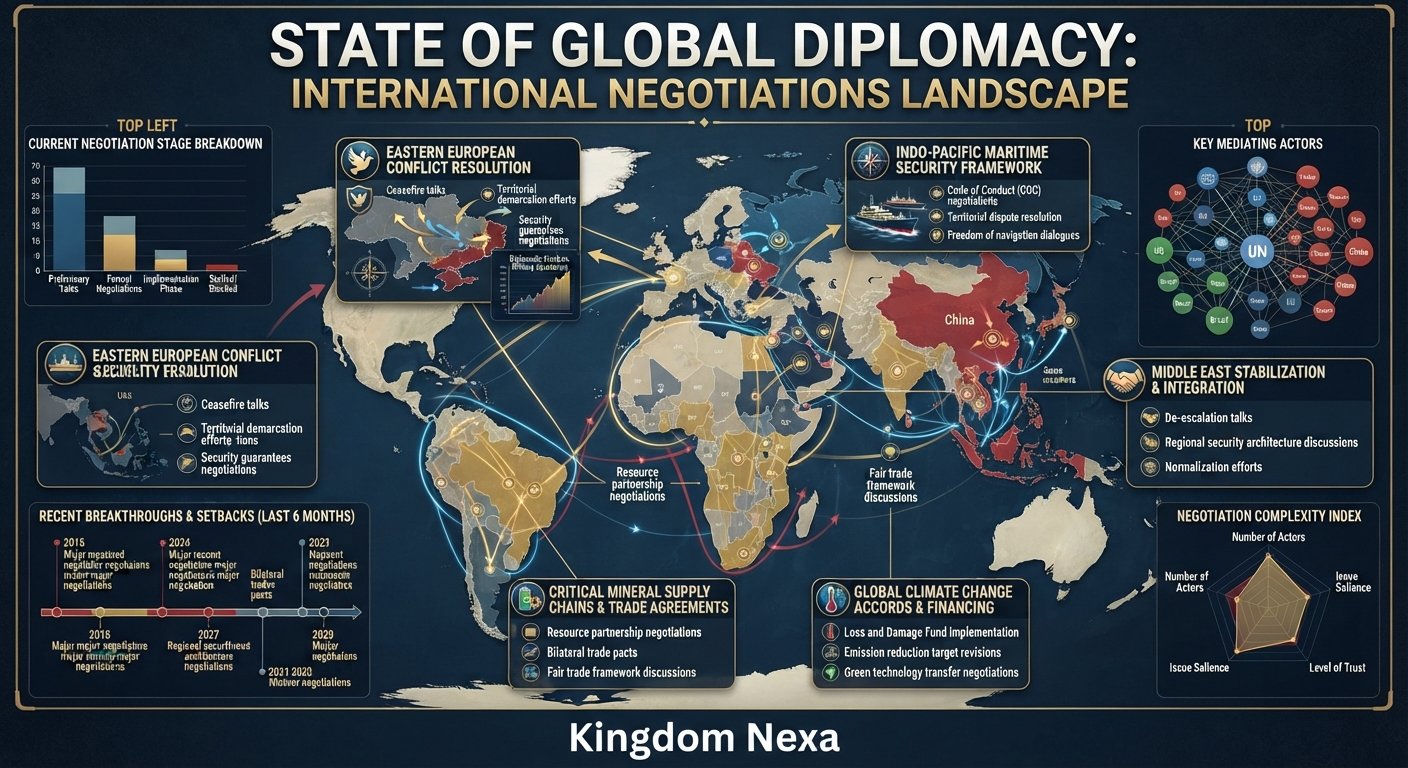
Countries may negotiate to prevent military escalation, establish communication channels, exchange detainees, create ceasefires, or reduce the risk of accidental confrontation.
In such circumstances, negotiations do not necessarily resolve the underlying political dispute. Their immediate objective may be to manage risks and create space for subsequent diplomacy.
Expanding Economic Opportunities
Trade and investment negotiations can reduce barriers, clarify regulations, improve market access, and establish predictable conditions for cross-border business.
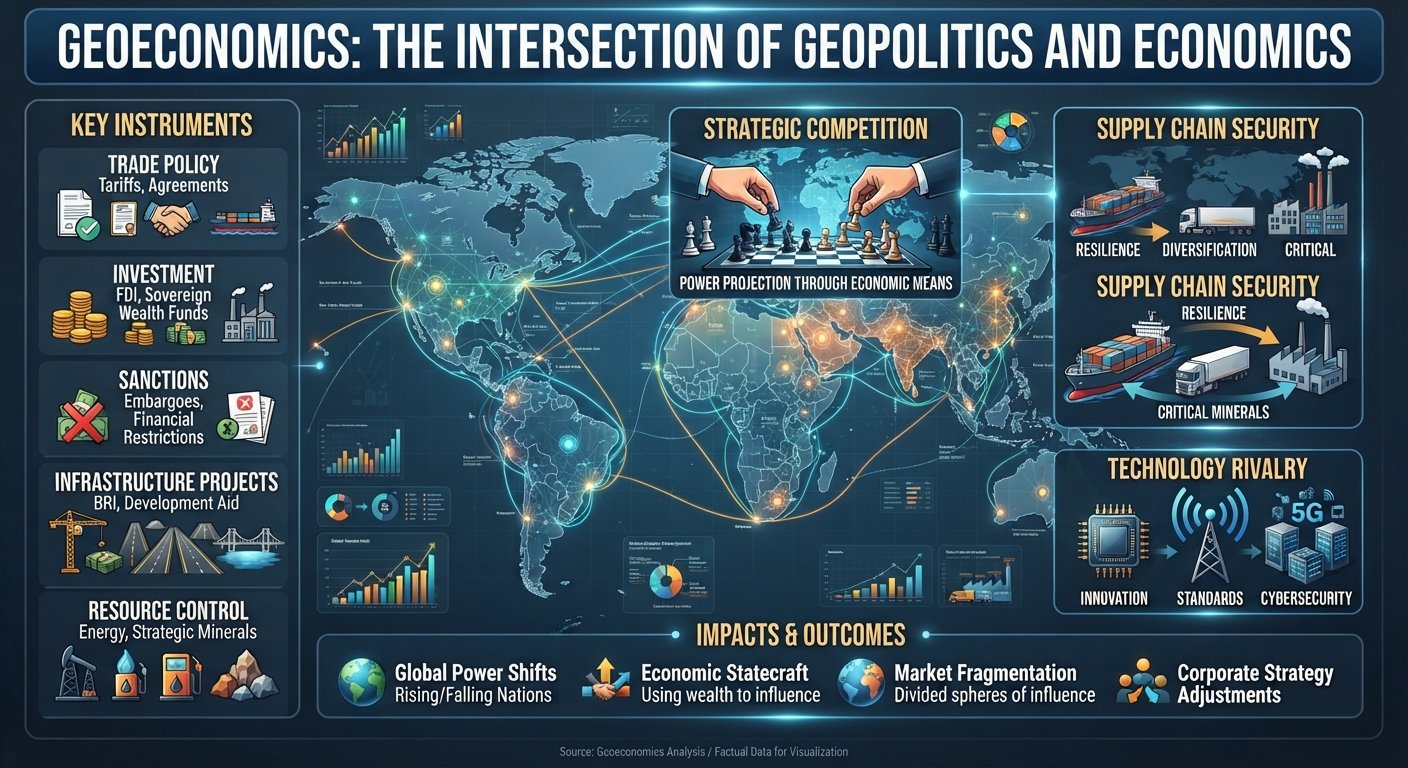
Governments may also negotiate over energy supplies, critical minerals, transport corridors, digital services, intellectual property, and technology transfer.
Economic cooperation, however, can become a source of leverage. States may use tariffs, sanctions, export controls, or access to strategic resources to influence another government’s decisions.
Addressing Problems Beyond National Borders
Climate change, pandemics, maritime pollution, cyber threats, and transnational crime cannot always be managed effectively through isolated national policies.
International negotiations allow governments to coordinate standards, share information, distribute responsibilities, and establish common procedures. Their effectiveness depends on whether the resulting commitments are sufficiently ambitious, equitable, and implementable.
How Do International Negotiations Work?
Although negotiating procedures vary, most complex diplomatic processes follow a recognizable sequence.
1. Preparation and definition of interests
Each side identifies its objectives, minimum acceptable outcome, priorities, constraints, and alternatives if talks fail. Strong preparation includes research, scenario planning, and consultation with relevant domestic institutions.
2. Agenda-setting and participation
The parties agree on the issues to be discussed, the format of meetings, who may participate, and how decisions will be made. Agenda-setting matters because deciding which questions come first can influence the eventual outcome.
3. Bargaining and exploration of options
Negotiators exchange proposals, clarify disagreements, test compromises, and seek trade-offs. Informal consultations may help parties explore sensitive options before making public commitments.
4. Drafting and approval
Legal experts and technical specialists translate political understandings into precise language. The parties settle definitions, obligations, exceptions, deadlines, dispute procedures, and mechanisms for entry into force.
5. Implementation and verification
Parties carry out their commitments, report progress, resolve disagreements, and assess compliance. Depending on the agreement, implementation may involve inspections, monitoring systems, regular reviews, or independent dispute settlement.
These stages are not always linear. Negotiations can return to earlier issues when a new government takes office, an unexpected security development occurs, or the parties discover that a proposed commitment cannot be implemented.
Bilateral and Multilateral Negotiations
Bilateral negotiations involve two principal parties. They can be comparatively flexible because fewer participants must agree, although significant power imbalances may complicate bargaining.
Multilateral negotiations involve three or more parties, often within an institutional framework. They can establish wider rules and distribute responsibilities across many countries, but reaching agreement becomes more difficult when interests and domestic constraints differ.
Some processes combine both approaches. A country may negotiate privately with another government while participating in a broader regional or international forum.
Formal and Informal Diplomacy
Formal negotiations produce documented proposals, agreed minutes, treaties, or other official outcomes. Informal diplomacy creates opportunities to exchange ideas, clarify intentions, and explore compromises without immediately committing governments to a public position.
Both can be valuable. Confidential discussions may enable politically sensitive concessions, but excessive secrecy can weaken accountability and public trust.
Major Strategies Used in International Negotiations
Negotiators use different strategies depending on their objectives, the distribution of power, the level of trust, and the costs of failure.
Distributive and Integrative Bargaining
Distributive bargaining treats a limited resource as something the parties must divide. A negotiation over a fixed financial contribution, a quota, or a territorial arrangement may involve intense competition over who receives what.
Integrative bargaining searches for options that improve the outcome for multiple parties. For example, two countries disputing access to a shared river might negotiate seasonal water allocations, data sharing, drought-response procedures, and joint infrastructure investments rather than focus exclusively on fixed annual quantities.
The distinction is useful, but real negotiations often combine both approaches. Parties may cooperate on technical matters while competing over costs, control, or political recognition.
Compromise, Reciprocity, and Package Deals
A compromise allows each side to secure some priorities while accepting limitations elsewhere. Reciprocity links concessions to corresponding actions by the other party, helping negotiators demonstrate that cooperation is not simply a unilateral sacrifice.
Package deals connect several issues so that concessions in one area can be balanced by gains in another. For instance, a trade agreement might combine market access, customs procedures, investment protections, and safeguards for sensitive domestic industries.
Package bargaining can unlock progress, but it may also make agreements harder to understand and implement if the commitments become excessively complicated.
Leverage, Credible Commitments, and Alternatives
Negotiating leverage comes from factors such as market size, military capabilities, geographic position, access to resources, coalition support, or the ability to withhold cooperation.
A useful analytical concept is the best alternative to a negotiated agreement, often abbreviated as BATNA. It describes what a party can realistically do if no deal is reached.
A government with viable alternative suppliers may be less willing to accept unfavorable energy terms. A country facing severe economic disruption from a prolonged dispute may have a stronger incentive to reach an agreement quickly.
Leverage is not the same as success. Excessive pressure can encourage resistance, undermine trust, or push another party toward rival alliances. Effective negotiators assess not only what they can compel but also what the other side can accept and sustain.
Mediation and Confidence-Building
Mediation introduces a third party to facilitate communication, explore compromises, or help parties overcome deadlock. Confidence-building measures can include hotlines, information exchanges, advance notification of military exercises, or limited humanitarian arrangements.
These steps are especially important when mistrust is high. They can reduce uncertainty and create opportunities for broader negotiations without requiring an immediate resolution of every underlying disagreement.
Real-World Examples of International Negotiations
International agreements demonstrate how bargaining works across different geopolitical settings. They also show that reaching an agreement and implementing it are separate challenges.
The Paris Agreement and Climate Diplomacy
The Paris Agreement was adopted by 195 Parties at the UN climate conference in Paris on December 12, 2015, and entered into force on November 4, 2016. As of January 27, 2026, the UN Framework Convention on Climate Change listed 194 Parties to the agreement.
The agreement reflects the challenge of reconciling different national circumstances. Countries vary in their historical emissions, economic capacity, energy systems, development priorities, and vulnerability to climate impacts.
Rather than imposing identical national emissions targets, the Paris framework relies on nationally determined contributions, periodic reporting, and a five-year cycle intended to encourage progressively stronger action.
Geopolitical significance: Climate negotiations connect environmental protection with energy security, industrial competitiveness, development finance, technology transfer, and questions of fairness between developed and developing countries.
The agreement also illustrates a central limitation of diplomacy: international commitments must be supported by domestic policies, financing, and sustained political action to produce their intended results.
World Trade Organization Dispute Settlement
The World Trade Organization provides a rules-based framework for addressing disputes between member governments over trade obligations.
According to the WTO, members had submitted 631 requests for consultations by the end of 2024. Consultations represent an initial stage in the dispute settlement process, rather than 631 separate final judgments.
Geopolitical significance: Trade negotiations demonstrate the relationship between economic interdependence and political power. Governments seek predictable market access but may also prioritize industrial policy, national security, or protection for politically sensitive sectors.
Negotiated settlements can limit economic damage, although persistent disagreements over subsidies, market access, and strategic industries may continue even when individual disputes are resolved.
The United Nations and Peace Negotiations
The UN Charter establishes peaceful settlement as a central principle of international relations. Article 33 identifies negotiation, enquiry, mediation, conciliation, arbitration, judicial settlement, regional arrangements, and other peaceful means as options for resolving disputes that threaten international peace and security.
The UN can support peace processes through good offices, special envoys, mediation expertise, and logistical assistance. Its involvement does not guarantee agreement, particularly when parties believe that continued fighting, coercion, or delay will improve their bargaining positions.
Geopolitical significance: Peace negotiations are affected by military developments, external sponsors, security guarantees, questions of accountability, territorial claims, and the political survival of the parties.
A ceasefire may reduce immediate violence without resolving the conflict’s underlying causes. Durable settlements generally require credible implementation arrangements and sufficient political acceptance among those expected to comply.
Multilateral Treaty Diplomacy in 2026
Current treaty activity provides a useful illustration of continuing international cooperation despite geopolitical competition.
During the United Nations Treaty Event held from September 22 to 25, 2026, states undertook 36 actions concerning multilateral treaties, with representatives from 22 states participating. The UN reported that the Convention against Cybercrime received 13 signatures during the event, bringing its total to 95 signatures at that point. It remained open for signature until December 31, 2026. The same event marked the BBNJ Agreement reaching 101 ratifications.
These developments show that states continue to negotiate and adopt common frameworks on issues such as cybercrime, ocean biodiversity, disarmament, human rights, and environmental protection.
However, treaty signatures and ratifications are distinct legal steps. A signature does not necessarily mean that a treaty has entered into force for that state or that every obligation is already applicable to it. The treaty’s own provisions and the applicable rules of international law determine the consequences.
The Role of International Law and Institutions
International negotiations operate within a legal and institutional environment that influences how agreements are formed, interpreted, and implemented.
The United Nations Charter
The UN Charter establishes the sovereign equality of UN members and requires members to settle international disputes by peaceful means in accordance with the Charter. It also prohibits the threat or use of force against the territorial integrity or political independence of states, subject to the Charter’s legal framework.
These principles provide an important foundation for diplomacy, but their application can be disputed in specific cases. Legal arguments, political interests, and factual disagreements may overlap, so claims about the legality of a particular action require careful examination.
Treaties and Binding Commitments
The Vienna Convention on the Law of Treaties, adopted in 1969 and in force since January 27, 1980, provides a major framework for treaty law. The UN Treaty Collection recorded 119 parties to the Convention as of October 9, 2026.
Treaties may define obligations, conditions for entry into force, procedures for amendment or withdrawal, and methods of dispute resolution. Whether a specific commitment is legally binding depends on its form, the parties’ intentions, the applicable law, and the instrument’s terms.
Political declarations and joint statements can also influence expectations and behavior, even when they do not create the same legal obligations as treaties.
The Influence of Institutional Rules
International organizations shape negotiations through membership rules, voting procedures, consensus practices, technical expertise, and established dispute settlement mechanisms.
The UN Security Council, for example, has responsibilities relating to international peace and security. The WTO deals with trade rules, while the UN climate process provides a framework for negotiating and reviewing international climate action.
Institutional procedures can improve predictability and provide smaller states with a platform to present their interests. Yet institutional design can also constrain outcomes: consensus requirements, veto powers, and complex approval procedures may prevent agreement even when many participants support compromise.
Economic, Security, and Technological Dimensions
International negotiations increasingly combine traditional diplomacy with economic policy, military risk management, and technological governance. These issues rarely remain confined to a single ministry or policy area.
Economic Interdependence and Sanctions
Trade, finance, energy, and supply chains create incentives for cooperation. Countries benefit from access to foreign markets and resources, but dependencies can also create vulnerabilities.
Negotiations may therefore address tariff reductions, investment rules, critical-mineral supplies, energy transit, export controls, and sanctions relief. A government might offer improved market access in exchange for changes to another country’s policy, while seeking safeguards against excessive dependence.
Sanctions complicate bargaining because their effectiveness depends on enforcement, international coordination, economic exposure, and the target government’s ability to adapt. They can create incentives for negotiation, but they may also harden positions or increase mistrust.
The central challenge is to distinguish temporary negotiating leverage from a sustainable settlement that provides sufficient incentives for compliance.
Military Security and Strategic Stability
In security negotiations, governments often seek to reduce uncertainty about military intentions and prevent disputes from escalating into armed conflict.
Potential arrangements include arms-control agreements, military hotlines, incident-prevention protocols, verification procedures, and confidence-building measures. Their credibility depends on whether participants believe the other side will honor commitments and whether violations can be detected.
Geography is important. Border disputes, maritime chokepoints, shared waterways, and strategically located infrastructure can influence what each party considers an acceptable settlement.
Security agreements also face a dilemma: a measure that reassures one government may appear threatening to another. Effective negotiations must account for these competing perceptions rather than assume that a concession will automatically improve mutual security.
Technology, Cybersecurity, and Artificial Intelligence
Technological change is expanding the agenda of international diplomacy. Governments increasingly negotiate over cybersecurity, cross-border data flows, artificial intelligence, semiconductor supply chains, satellite systems, telecommunications infrastructure, and emerging military technologies.
The challenge is particularly difficult when technologies develop faster than legal frameworks. States may disagree over how to define responsible behavior, protect sensitive information, verify compliance, or balance security with commercial innovation.
Cybersecurity agreements also raise attribution problems. Investigators may struggle to establish who was responsible for an incident, while governments may disagree about the evidence needed to justify a response.
In this environment, technical standards, information-sharing arrangements, incident-reporting protocols, and confidence-building measures can provide practical starting points even when a comprehensive political agreement remains out of reach.
Domestic Politics and the Limits of Diplomatic Compromise
International negotiations are conducted by representatives who must often secure domestic approval for their decisions. A proposal that appears reasonable internationally may be unacceptable to a governing coalition, parliament, influential industry, or public constituency.
Elections, Nationalism, and Public Opinion
Election cycles can shorten negotiating time horizons. Governments may avoid visible concessions before elections or seek agreements that demonstrate diplomatic success to domestic audiences.
Nationalism can further restrict flexibility when territorial integrity, historical grievances, national identity, or sovereignty are involved. Leaders may face political criticism for accepting compromises that opponents portray as weakness.
Public opinion can also support negotiations, particularly when societies face the human or economic costs of prolonged conflict. Its influence depends on the political system, media environment, transparency of the process, and public understanding of the alternatives.
Ratification and Implementation at Home
In many treaty systems, signing an agreement is not the final step. A state may need to complete ratification or other domestic procedures before becoming bound by the treaty, depending on the instrument and its constitutional arrangements.
Governments may also need to enact legislation, allocate budgets, change regulations, or establish new administrative bodies.
These requirements should be considered during negotiations rather than treated as an afterthought. An agreement that cannot secure domestic approval or adequate resources may remain ineffective even if diplomats reach a formal understanding.
Major Challenges Facing International Negotiations
Despite their importance, negotiations often fail to deliver timely or durable results.
- Conflicting strategic objectives: Parties may value fundamentally different outcomes and see little reason to compromise.
- Power asymmetry: A stronger party may attempt to dictate terms, while a weaker party may distrust guarantees that appear difficult to enforce.
- Mistrust and misinformation: Conflicting narratives, inaccurate intelligence, and uncertainty about intentions can obstruct compromise.
- Domestic political constraints: Leaders may be unable to accept proposals that would trigger opposition or threaten their political position.
- Spoilers and excluded actors: Groups outside a negotiating process may have incentives to undermine a settlement, especially when they expect to lose influence.
- Verification difficulties: Some commitments, particularly those involving military capabilities or cyber activity, are difficult to monitor independently.
- Unequal distribution of benefits: An agreement may generate overall gains while imposing concentrated costs on particular countries, communities, or industries.
- Weak enforcement: Even clearly written commitments can be undermined when parties lack incentives, capacity, or credible consequences for non-compliance.
These obstacles are connected. A poorly designed verification mechanism can deepen mistrust, while a settlement that ignores domestic political realities may collapse after a leadership change.
What Makes an International Agreement Successful?
A durable agreement generally needs more than a signed document. It should address the interests that brought the parties to the table and define realistic obligations.
Useful design principles include:
- Clear language: Specify responsibilities, deadlines, exceptions, and definitions.
- Reciprocal incentives: Make compliance more attractive than continued confrontation or evasion.
- Credible monitoring: Establish appropriate reporting, verification, or review procedures.
- Dispute resolution: Provide channels for handling disagreements before they threaten the entire agreement.
- Domestic feasibility: Ensure that participating governments can secure the legal authority, resources, and political support required.
- Adaptability: Include review procedures where conditions or technical knowledge may change.
Not every agreement needs identical enforcement arrangements. A technical standard, a ceasefire, and a climate treaty face different risks and therefore require different mechanisms.
The appropriate test is whether the agreement’s design matches its objectives, risks, and political context.
The Future of International Negotiations
The future of international diplomacy will be shaped by strategic competition, economic fragmentation, climate pressures, technological change, and evolving international institutions. Several developments are likely to influence how negotiations are conducted, although their precise effects remain uncertain.
A More Competitive and Multipolar Environment
As influence becomes distributed across multiple major and regional powers, negotiations may become harder to coordinate. States will continue to pursue alliances and partnerships while protecting their freedom to act independently.
This could increase the importance of smaller coalitions and regional agreements. However, overlapping initiatives may also produce inconsistent rules or competing institutional arrangements.
Climate, Resources, and Shared Infrastructure
Water scarcity, energy transitions, critical minerals, maritime resources, and climate adaptation will create further demand for international coordination.
Negotiators will need to address not only the distribution of benefits but also financing, technology access, environmental protection, and the allocation of risk. Agreements will be more credible when their obligations reflect practical capacity and when affected communities are meaningfully considered.
Artificial Intelligence and Digital Diplomacy
AI tools may help diplomats summarize documents, translate languages, compare proposals, and identify areas of possible compromise. These applications could make large, technically complex negotiations more manageable.
However, AI-generated errors, confidentiality risks, biased analysis, and uncertainty about the origin of digital content create new problems. Human judgment, secure information handling, and independent verification will remain important.
Flexible Coalitions and Institutional Reform
When universal agreement proves difficult, groups of willing states may pursue narrower arrangements on issues such as cybersecurity, trade, or environmental protection. Such arrangements can produce progress, but they may exclude important stakeholders or weaken global consistency.
At the same time, debates over representation and decision-making in international institutions will influence perceptions of legitimacy. A negotiation process is more likely to retain support when participants believe that their interests are heard and that the rules are applied fairly.
The central uncertainty is whether diplomatic institutions can adapt quickly enough to changing power relationships while maintaining credible commitments and broad participation.
Frequently Asked Questions About International Negotiations
1. What is the main purpose of international negotiations?
Their main purpose is to reconcile competing interests, manage disputes, coordinate policies, and reach mutually acceptable agreements. These agreements can address security, trade, environmental issues, territorial disputes, or other matters requiring international cooperation.
2. What are the main types of international negotiations?
The principal types include bilateral negotiations between two parties, multilateral negotiations involving several parties, formal treaty negotiations, informal diplomatic consultations, trade negotiations, security negotiations, and peace negotiations. The appropriate format depends on the issue and the participants.
3. What are the five stages of international negotiations?
A useful general model includes preparation, agenda-setting, bargaining, drafting and approval, and implementation with verification. In practice, these stages often overlap or repeat as circumstances change.
4. What is the difference between bilateral and multilateral negotiations?
Bilateral negotiations involve two principal parties and can offer greater procedural flexibility. Multilateral negotiations involve three or more parties and can establish broader international rules, but reconciling more interests usually makes agreement more complex.
5. Why do international negotiations fail?
They may fail because of incompatible objectives, mistrust, power imbalances, domestic political opposition, disputed facts, weak incentives, or disagreement over verification. Negotiations can also fail when leaders believe that confrontation will produce a better result than compromise.
6. What role does the United Nations play in international negotiations?
The UN provides diplomatic forums, supports mediation, assists peace processes, and helps states develop multilateral agreements. Its Charter identifies negotiation and other peaceful means as methods for settling disputes that threaten international peace and security.
7. Are international agreements legally binding?
Some are legally binding treaties, while others are political declarations or non-binding understandings. Their legal status depends on the instrument’s terms, the parties’ intentions, applicable international law, and relevant entry-into-force requirements.
8. How does international law affect negotiations?
International law can establish rights, obligations, procedures, and limits on state conduct. Treaty law helps determine how agreements are formed and interpreted, while specialized legal frameworks govern areas such as trade, maritime affairs, and climate cooperation.
9. How do international negotiations affect the global economy?
They can influence tariffs, market access, investment, sanctions, energy supplies, technology transfers, and supply-chain resilience. Successful agreements may improve predictability, while unresolved disputes can raise costs and increase economic uncertainty.
10. What is the difference between negotiation and mediation?
Negotiation involves the parties communicating and bargaining directly or through their representatives. Mediation involves a third party helping them communicate, identify options, and explore possible compromises. A mediator ordinarily facilitates an outcome rather than imposing one.
Conclusion:
International negotiations remain one of the most important instruments for managing competition and cooperation in global affairs. They allow states to pursue national interests, reduce the risks of conflict, establish international rules, and address problems that cannot be solved effectively through unilateral action.
Their effectiveness depends on preparation, bargaining strategy, credible commitments, domestic political support, international law, and practical implementation. The Paris Agreement illustrates how countries can establish a shared framework despite different national priorities, while trade dispute settlement demonstrates the importance of predictable procedures for managing economic disagreements. Peace negotiations, meanwhile, show both the potential of diplomacy and the difficulty of sustaining agreements when mistrust and conflicting strategic objectives persist.
The wider geopolitical lesson is that reaching an agreement is not the same as achieving a durable settlement. Lasting results require commitments that parties can realistically implement, mechanisms for addressing disputes, and sufficient incentives to continue cooperating when circumstances change.
As strategic competition, technological risks, climate pressures, and economic interdependence reshape international relations, international negotiations will remain essential to the management of global uncertainty. Their ultimate value lies not in eliminating every disagreement, but in creating credible ways to manage differences without allowing them to become more damaging.