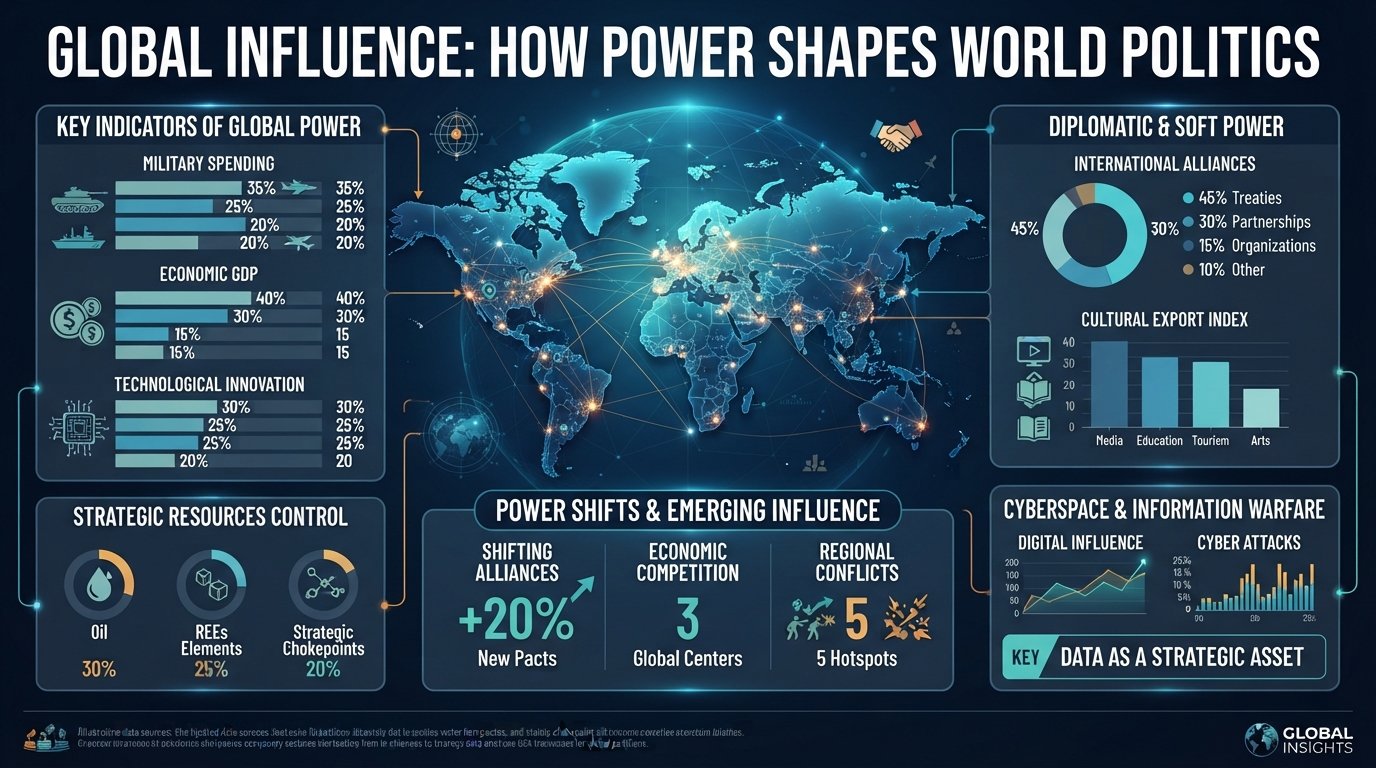
Global Influence is one of the most important concepts for understanding how the international system works. Countries do not shape world affairs through military strength alone. Economic size, diplomatic relationships, technological capabilities, cultural attraction, financial networks, strategic geography, international institutions, and the ability to build coalitions can all determine how much influence an actor exercises beyond its borders.
The meaning of influence has also changed. In earlier eras, control of territory, armies, navies, and colonies was central to international power. Today, influence can flow through semiconductor supply chains, financial markets, digital platforms, universities, energy infrastructure, development finance, international organizations, and global cultural industries.
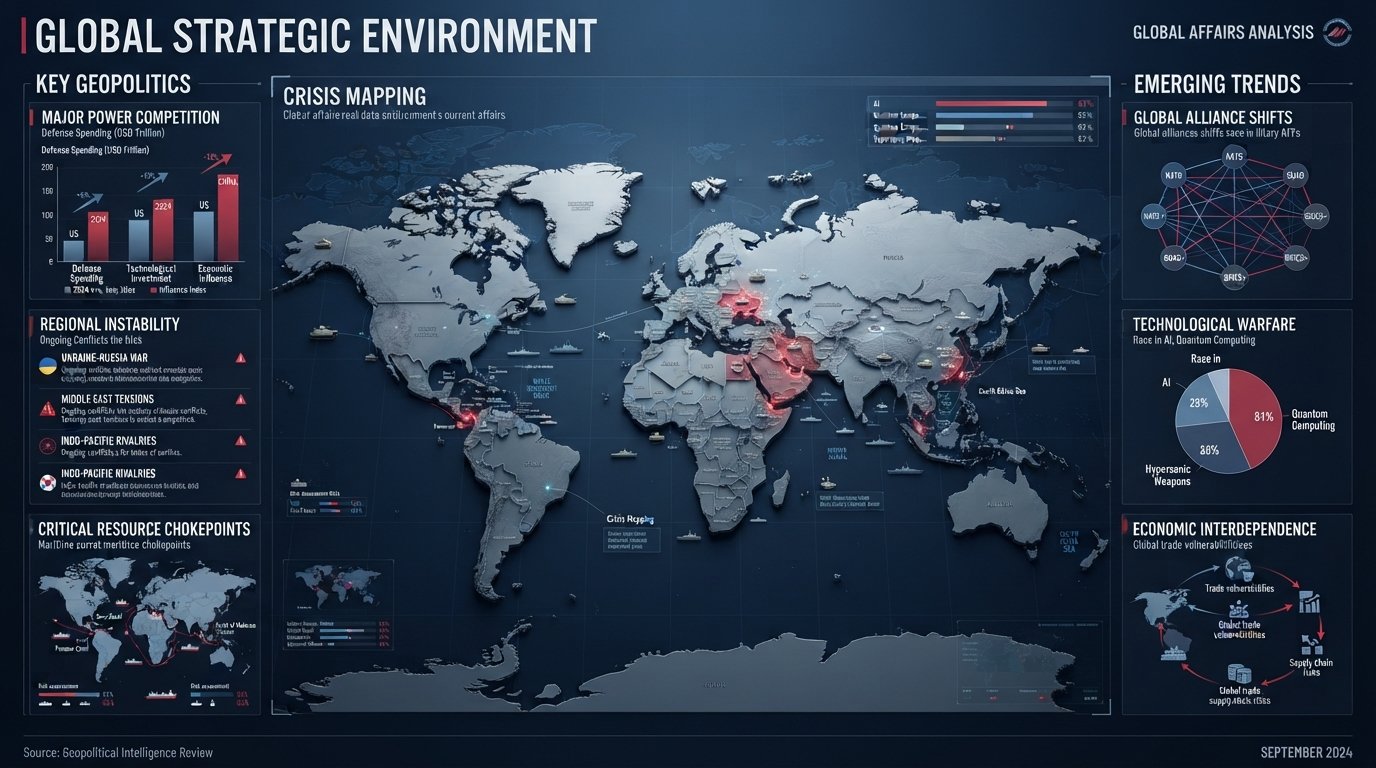
As of September 2026, the international environment is characterized by overlapping forms of competition rather than a single source of power. Economic fragmentation, military rearmament, technological competition, changing alliances, and new investment patterns are reshaping relationships among major and middle powers. The IMF projects global growth of 3.0% in 2026 and 3.4% in 2027, while warning that conflict and financial repricing remain important risks. (IMF)
This article explains what Global Influence means, how it is created, how it differs from power, and why economics, diplomacy, military capabilities, technology, culture, institutions, and geography increasingly interact.
What Is Global Influence?
Global Influence is the ability of a country, institution, organization, company, or other actor to shape international decisions, behavior, norms, perceptions, or outcomes beyond its own borders.
Influence does not necessarily mean direct control. A country may influence another government’s decisions through trade, security partnerships, diplomatic pressure, investment, technology, or public diplomacy without formally controlling that government’s policies.
A useful analytical distinction is:
- Power refers to capabilities and resources.
- Influence refers to the ability to use those capabilities to affect others.
- Control implies a much stronger and more direct ability to determine outcomes.
- Soft power emphasizes attraction and persuasion.
- Hard power emphasizes coercion, inducements, and material capabilities.
Modern geopolitical influence therefore depends not only on what a state possesses but also on how effectively it converts those resources into international outcomes.
Global Influence vs. Global Power
Global power and global influence are closely related but are not identical.
A country can possess substantial economic or military resources but achieve limited influence in a particular diplomatic dispute. Conversely, a smaller country may exercise considerable influence in a specialized area because of its geography, financial system, technological expertise, diplomatic networks, or control over a strategic resource.
This is why measuring influence through a single indicator can be misleading.
Contemporary analytical frameworks increasingly combine economic, military, technological, institutional, and soft-power variables. For example, the 2026 BCG Institute Power Index examines more than 50 indicators across economic, military, and soft-power dimensions, while also considering strategic technologies and governing institutions as important enablers. (BCG)
How Global Influence Has Evolved
Global influence has changed substantially across historical periods.
Imperial and Colonial Influence
During the nineteenth and early twentieth centuries, influence was strongly associated with territorial expansion, military power, naval supremacy, colonial administration, and control over trade routes and resources.
European imperial powers could project authority across continents because military capabilities were combined with commercial networks, administrative institutions, finance, and maritime infrastructure.
The Bipolar Cold War System
After the Second World War, international influence became increasingly organized around the rivalry between the United States and Soviet Union.
Military alliances, nuclear deterrence, competing economic systems, ideological competition, foreign aid, intelligence networks, diplomacy, and proxy conflicts became major instruments of influence.
The creation and expansion of NATO illustrates how alliances can amplify national capabilities. NATO currently has 32 members and makes decisions through consensus among its sovereign members. (NATO)
The Post-Cold War Period
The collapse of the Soviet Union created a period in which U.S. economic, military, technological, and institutional capabilities were unusually prominent in the international system.
Globalization simultaneously expanded the influence of markets, multinational corporations, international institutions, financial centers, and global communications.
The Emerging Multipolar Environment
The current system is more complicated. Economic capabilities are distributed across multiple regions, military power is increasingly contested, technological capabilities are becoming strategically important, and middle powers have greater opportunities to diversify partnerships.
Recent research describes a world in which economic, military, and soft-power resources are distributed across multiple actors rather than concentrated in one dimension. (BCG)
The Main Sources of Global Influence


Economic Influence
Economic strength is one of the most durable foundations of international influence.
Large economies can influence global markets through:
- Trade
- Foreign direct investment
- Development finance
- Banking and capital markets
- Currency use
- Energy exports
- Industrial capacity
- Consumer markets
- Supply-chain integration
Economic interdependence can create influence because countries become dependent on particular markets, suppliers, infrastructure, technologies, or financial systems.
The latest UNCTAD World Investment Report illustrates this changing landscape. Global foreign direct investment increased 6% to approximately $1.6 trillion in 2025, but investment remained highly concentrated. More than 80% of global FDI went to the world’s top 20 host economies, while strategic sectors accounted for 44% of global greenfield project values. (Investment Policy Hub)
This concentration gives major markets and strategic industries geopolitical significance.
Financial Influence
Financial systems can generate influence that extends well beyond conventional trade.
The international role of a currency depends on factors including:
- Market depth
- Financial stability
- Legal institutions
- Central-bank credibility
- Capital-market liquidity
- International trade usage
- Investor confidence
The U.S. dollar remains central to the global reserve system. According to IMF COFER data, the dollar represented 56.77% of global official foreign-exchange reserves in the fourth quarter of 2025, compared with 20.25% for the euro and 1.95% for the Chinese renminbi. (IMF Data)
These figures describe reserve composition, not a complete measure of financial influence. Nevertheless, reserve-currency status can provide significant international financial advantages and create channels through which monetary and financial developments affect other economies.
Military Influence
Military capability remains a major source of geopolitical influence.
It includes more than the number of soldiers or weapons. Important factors include:
- Force projection
- Naval and air capabilities
- Missile systems
- Nuclear deterrence
- Intelligence and surveillance
- Cyber capabilities
- Space systems
- Logistics
- Overseas deployments
- Defense-industrial capacity
- Alliance interoperability
SIPRI estimates that global military expenditure reached $2.887 trillion in 2025, an increase of 2.9% in real terms and the eleventh consecutive annual increase. The United States, China, and Russia together accounted for approximately 51% of global military expenditure. (SIPRI)
Military influence, however, does not automatically translate into diplomatic influence. Alliances, political objectives, legitimacy, economic sustainability, and the willingness of partners to cooperate can determine whether military capabilities produce the desired geopolitical outcome.
Diplomatic Influence
Diplomatic influence is the ability to persuade, negotiate, coordinate, mediate, build coalitions, and shape international agendas.
A country can increase diplomatic influence through:
- Extensive diplomatic representation
- Long-term partnerships
- Mediation
- Development assistance
- Participation in international organizations
- Treaty networks
- Regional leadership
- Multilateral coalition-building
International institutions also create opportunities for influence.
The UN Security Council, for example, has 15 members, including five permanent members—China, France, Russia, the United Kingdom, and the United States. (United Nations)
Permanent membership provides institutional access to one of the most important bodies dealing with international peace and security.
Soft Power and Cultural Influence
The concept of soft power, associated with political scientist Joseph Nye, focuses on achieving influence through attraction rather than coercion.
Sources can include:
- Culture
- Education
- Science
- Media
- Sports
- Tourism
- Political values
- Foreign policy credibility
- International reputation
Cultural influence can sometimes operate independently of government policy. Films, music, universities, sporting events, consumer brands, social media, and entertainment can shape perceptions of countries.
The 2026 Global Soft Power Index, for example, evaluates perceptions across 193 UN member states using a survey of more than 150,000 respondents in over 100 countries. Its methodology illustrates how influence can be examined through reputation, familiarity, international relations, business, education, culture, governance, media, and other dimensions. (Brand Finance)
Technological Influence
Technology has become a central component of Global Influence.
Strategic technologies include:
- Artificial intelligence
- Semiconductors
- Cloud computing
- Cybersecurity
- Quantum computing
- Satellites
- Telecommunications
- Robotics
- Drones
- Advanced manufacturing
Technological leadership can create influence because other countries may depend on foreign technology, intellectual property, software ecosystems, infrastructure, or specialized components.
The WIPO Global Innovation Index 2025 evaluates approximately 140 economies across numerous innovation indicators. It placed China within the global top ten for the first time, while the United States remained among the leading innovation economies. (WIPO)
Technology therefore increasingly operates as both an economic asset and a strategic instrument.
Geography and Global Influence
Geography remains fundamental despite the growth of digital connectivity.
A country’s location can influence its strategic importance through:
- Maritime chokepoints
- Major ports
- Energy corridors
- Border locations
- Natural resources
- Arable land
- River systems
- Access to major markets
- Proximity to conflict zones
Strategic geography can give smaller countries disproportionate influence.
A country located along an important energy corridor, for example, may have bargaining power that is greater than its economic size would suggest. Likewise, countries controlling important maritime routes can become strategically significant to international trade.
Modern geopolitical power therefore involves controlling or influencing flows—of goods, money, energy, people, data, and technology—as well as territory itself. The European Council on Foreign Relations has highlighted these interconnected flows as an important feature of contemporary geopolitical power. (European Council on Foreign Relations)
Who Exercises Global Influence?
Global Influence is not restricted to superpowers.
Major Powers
Large states generally possess multiple sources of influence simultaneously. Their economic size, military capabilities, technological resources, diplomatic networks, and institutional participation can reinforce one another.
The United States and China illustrate how economic and technological relationships increasingly overlap with strategic competition. IMF estimates put China’s real GDP growth at 5.0% in 2025 and project 4.5% growth in 2026, while the IMF’s 2026 assessment of the United States reported 2% growth in 2025 and projected modestly faster growth in 2026. (IMF)
These figures should not be interpreted as a complete measurement of national influence. Economic growth is only one component of geopolitical capability.
Middle Powers
Middle powers can exert influence through coalition-building, diplomacy, specialized capabilities, regional leadership, trade, development assistance, or institutional expertise.
Examples include countries such as India, Japan, Türkiye, Indonesia, Brazil, Australia, South Korea, Canada, Saudi Arabia, and others.
Their importance often comes from their ability to cooperate with multiple major powers rather than permanently aligning with only one.
International Organizations
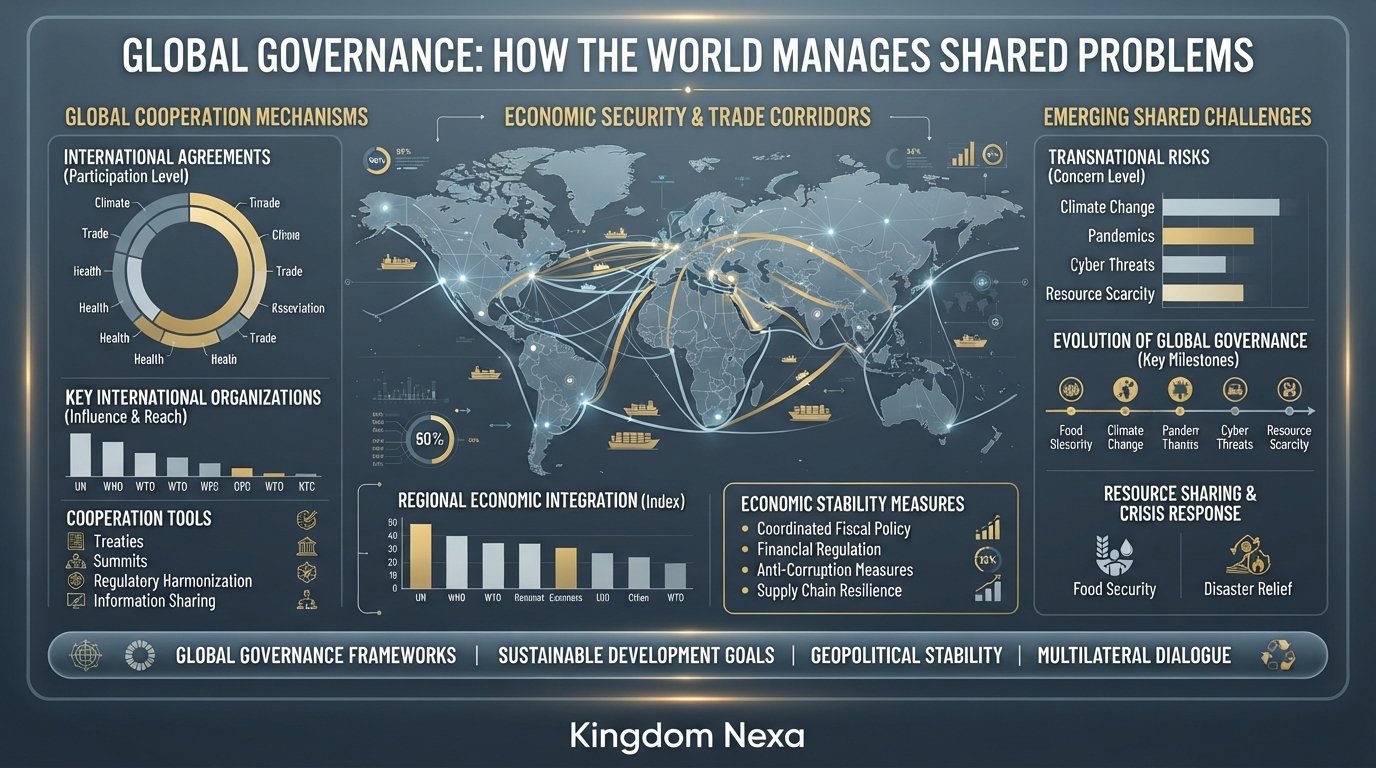
Organizations such as the UN, IMF, World Bank, WTO, NATO, EU, and regional organizations can shape rules and coordinate collective action.
Their influence is different from state power because it depends heavily on institutional authority, member-state participation, funding, legitimacy, and implementation capacity.
Multinational Corporations
Large corporations can influence international affairs through investment, technology, employment, infrastructure, supply chains, and consumer behavior.
Technology companies are especially important because digital platforms can operate across borders and influence information flows without being conventional geopolitical actors.
Economic Interdependence and the New Geopolitics
Globalization has not eliminated geopolitical competition. Instead, economic interdependence can itself become a source of leverage.
Countries may use:
- Export controls
- Tariffs
- Sanctions
- Investment restrictions
- Technology controls
- Supply-chain diversification
- Resource agreements
- Market access
as instruments of economic statecraft.
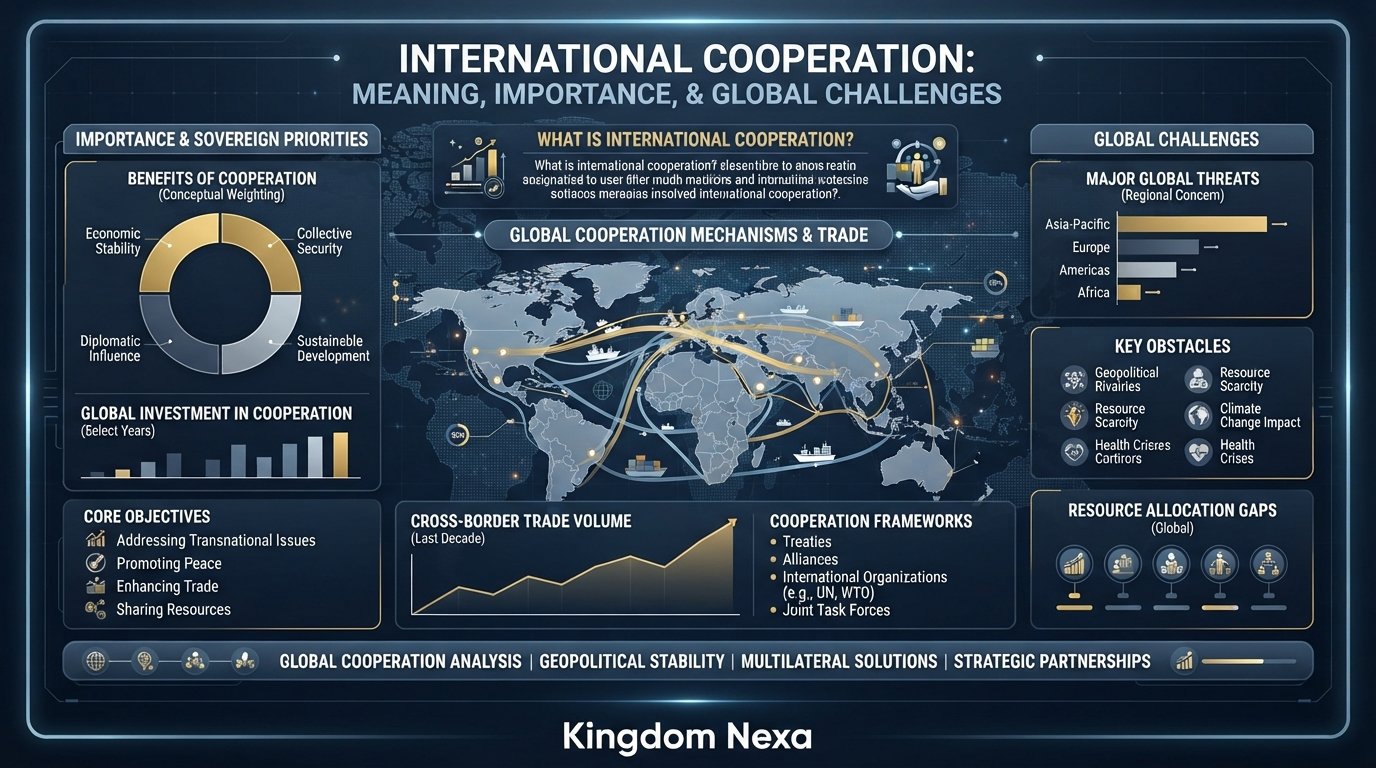
UNCTAD reported in 2026 that geopolitical tensions and economic-security concerns are increasingly affecting cross-border investment decisions. Companies and governments are paying greater attention to supply-chain resilience, strategic technologies, and market access. (UNCTAD)
This creates a central paradox: countries seek the economic benefits of interdependence while simultaneously trying to reduce strategic vulnerabilities created by that same interdependence.
Technology Is Reshaping Global Influence
Artificial intelligence is becoming particularly important because it connects economic competitiveness, military capabilities, scientific research, information systems, and industrial productivity.
The IMF’s July 2026 outlook noted that AI-related investment was helping offset some of the economic effects of war, while also identifying technological and geopolitical risks to the global economy. (IMF)
Trade patterns are also changing. McKinsey Global Institute reported in 2026 that semiconductors and data-center equipment accounted for approximately one-third of global trade growth in 2025, reflecting the growing importance of AI-related supply chains. (McKinsey & Company)
This means influence can increasingly emerge from control over the technological ecosystem rather than ownership of traditional physical resources alone.
The Role of Alliances and Strategic Partnerships
No major country operates entirely alone.
Alliances can multiply national capabilities by combining:
- Military resources
- Intelligence
- Technology
- Financial resources
- Diplomatic coordination
- Industrial capacity
- Logistics
- Market access
NATO’s current structure demonstrates the importance of alliance networks. The organization has 32 members and maintains relationships with numerous non-member partners and international organizations. (NATO)
At the same time, partnerships outside traditional alliances have become increasingly significant. Countries may cooperate on energy, trade, infrastructure, defense, technology, or finance without forming a formal military alliance.
The result is an international system characterized by overlapping networks rather than simple blocs.
Regional Dynamics of Global Influence
Indo-Pacific
The Indo-Pacific has become central to global influence because it combines major economies, critical shipping routes, technological production, strategic waterways, and military competition.
China, India, Japan, Australia, South Korea, ASEAN members, the United States, and other actors all possess different interests in the region.
The region’s importance extends beyond security. Semiconductor production, manufacturing, energy trade, shipping, and digital infrastructure give Indo-Pacific economic relationships worldwide consequences.
Europe
Europe combines substantial economic, regulatory, diplomatic, and technological capabilities with extensive alliance relationships.
European influence often operates through institutions and market regulation as well as conventional statecraft.
Middle East
The Middle East remains strategically significant because of energy resources, maritime routes, security partnerships, investment capital, religious and cultural connections, and its geographic position between Europe, Asia, and Africa.
Global South
Countries across Africa, Latin America, Asia, and the Middle East increasingly have greater room to diversify economic and diplomatic partnerships.
This does not mean that all developing countries act as a unified bloc. Their interests differ substantially. But their combined demographic weight, resource base, markets, and diplomatic significance can affect the behavior of major powers.
International Law and Global Influence
International law provides both constraints and opportunities for geopolitical influence.
The UN Charter establishes principles concerning sovereignty, peaceful settlement of disputes, and the use of force. International treaties, maritime law, humanitarian law, and other legal frameworks similarly influence state behavior.
However, legal rules do not operate independently of political power. Their effectiveness depends on institutions, domestic implementation, international cooperation, and enforcement mechanisms.
The Security Council illustrates this tension. It has primary responsibility for international peace and security, but its permanent members possess veto power that can prevent collective action on contentious issues. (United Nations)
Therefore, Global Influence involves not only creating rules but also shaping how international rules are interpreted, implemented, and institutionalized.
Current Global Influence: What Is Changing in 2026?
Several trends are particularly important as of September 2026.
First, economic power is becoming more fragmented, even though major economies remain highly interconnected. The IMF continues to identify trade-policy uncertainty and geopolitical tensions as significant risks to the global outlook. (IMF)
Second, military spending is increasing across several regions. SIPRI reported particularly strong increases in Europe and Asia and Oceania during 2025. (SIPRI)
Third, technology is becoming inseparable from geopolitics. AI, semiconductors, data infrastructure, cybersecurity, and advanced manufacturing increasingly influence economic and national-security decisions. (McKinsey & Company)
Fourth, investment is becoming more strategically concentrated. UNCTAD’s 2026 investment report found that global FDI growth was heavily influenced by major projects and strategic sectors. (Investment Policy Hub)
Fifth, alliances and partnerships are adapting. States increasingly seek resilience by diversifying defense suppliers, trading relationships, energy sources, and technology partners.
These developments suggest that influence is becoming more networked and multidimensional.
Risks and Challenges
Global Influence can generate stability when countries use it to create cooperation, deter aggression, support international institutions, or provide global public goods.
It can also create risks.
Major challenges include:
- Strategic competition
- Economic fragmentation
- Arms races
- Sanctions escalation
- Supply-chain disruption
- Cyber conflict
- Information manipulation
- Technology dependence
- Resource competition
- Institutional paralysis
- Miscalculation between major powers
A particularly important challenge is that economic and security systems are increasingly interconnected. A dispute over technology can become a trade dispute; a trade dispute can affect investment; an investment restriction can affect industrial capacity; and industrial competition can have military implications.
Future Scenarios for Global Influence
Predicting the future international system with certainty is impossible. Several broad scenarios are nevertheless useful analytical possibilities.
A More Competitive Multipolar System
Influence could become increasingly distributed among several major powers and regional coalitions. Middle powers could gain bargaining space by maintaining relationships with multiple centers of power.
Strategic Economic Blocs
Trade and investment could become more closely aligned with security relationships. Technology standards, semiconductor supply chains, critical minerals, and financial infrastructure could increasingly divide into partially overlapping ecosystems.
Networked Interdependence
Another possibility is that geopolitical competition increases while global economic integration continues. Countries could simultaneously compete strategically and cooperate commercially where mutual economic interests remain strong.
Current trade evidence already shows this complexity. McKinsey’s 2026 analysis found that global trade continued to grow in 2025 despite major geopolitical tensions, while trade relationships increasingly reflected geopolitical proximity. (McKinsey & Company)
Greater Importance of Middle Powers
Middle powers may gain additional influence if major powers need partners to secure supply chains, regional access, diplomatic support, technology cooperation, or energy supplies.
The outcome will depend heavily on domestic stability, economic performance, diplomatic flexibility, technological capabilities, and the ability to build coalitions.
Frequently Asked Questions About Global Influence
What is Global Influence?
Global Influence is the ability of a state or other actor to shape international decisions, behavior, perceptions, institutions, or outcomes beyond its own borders.
What are the main sources of Global Influence?
The major sources include economic strength, military capability, diplomacy, technology, soft power, financial influence, strategic geography, institutional participation, and alliance networks.
What is the difference between hard power and soft power?
Hard power relies primarily on coercion or material inducements, such as military capabilities or economic pressure. Soft power emphasizes attraction, persuasion, credibility, culture, values, and diplomacy.
Can a small country have Global Influence?
Yes. Smaller countries can have disproportionate influence because of strategic geography, specialized technology, financial importance, diplomatic networks, natural resources, mediation capabilities, or control of important infrastructure.
Why is technology important to Global Influence?
Technology can create economic advantages, military capabilities, supply-chain leverage, and dependence on specific platforms or infrastructure. AI, semiconductors, telecommunications, satellites, and cybersecurity are particularly significant.
How do alliances increase influence?
Alliances allow countries to pool military, economic, technological, intelligence, diplomatic, and logistical resources. They can therefore amplify capabilities that would be smaller if exercised independently.
Does economic power automatically create geopolitical influence?
No. Economic resources provide capabilities, but influence also depends on diplomacy, institutions, credibility, military power, domestic conditions, strategic relationships, and the ability to convert resources into desired outcomes.
Why does geography still matter in the digital age?
Physical geography continues to determine access to ports, energy resources, borders, maritime routes, transportation corridors, and strategic locations. Digital connectivity has added new dimensions rather than eliminated geographic constraints.
Is Global Influence becoming more multipolar?
Several indicators point toward greater distribution of capabilities across multiple states and regions, but “multipolar” is an analytical description rather than a precise measurement. Different dimensions of power remain distributed differently, so economic, military, technological, and diplomatic polarity should be examined separately. (BCG)
Conclusion
Global Influence is best understood as a multidimensional capacity to shape international behavior and outcomes. Military strength remains important, but it is only one part of the equation. Economic scale, financial systems, technology, diplomacy, alliances, culture, institutions, strategic geography, and control over critical networks can all create international leverage.
The current international environment demonstrates why no single measure can fully explain geopolitical influence. Military expenditure is rising, investment is becoming more strategically concentrated, AI is transforming economic competition, and countries are adjusting alliances and supply chains to manage geopolitical risk. (SIPRI)
For students, researchers, policymakers, and business leaders, the most useful approach is therefore to examine who possesses resources, how those resources are converted into influence, where dependencies exist, which institutions mediate relationships, and what constraints limit each actor’s choices.
Ultimately, Global Influence is not simply about who is strongest. It is about who can shape the environment in which other actors make decisions—and how effectively that influence can be sustained as the international system changes.