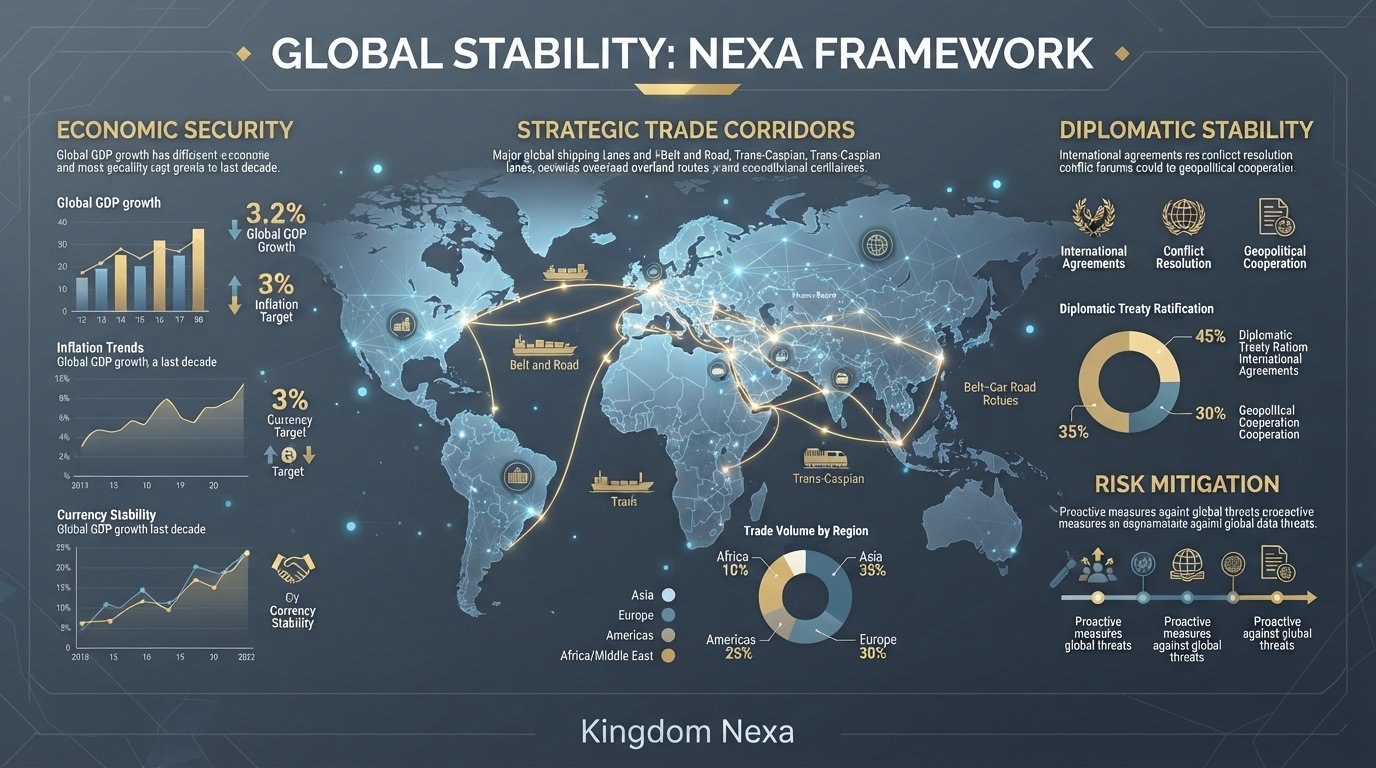
Global stability is not simply the absence of war. It is the ability of states, international institutions, economies, and societies to manage disputes without allowing them to escalate into wider crises. In 2026, that ability is under significant pressure.
The international system is experiencing several overlapping stresses: interstate rivalry, prolonged armed conflicts, rising military expenditure, nuclear modernization, economic fragmentation, climate risks, technological disruption, and large-scale forced displacement. UCDP recorded 65 conflicts involving states in 2025, the highest number in its dataset since 1946, while 13 reached its threshold for war. (Uppsala University) At the same time, global military spending reached an estimated $2.887 trillion in 2025, according to SIPRI. (SIPRI)
Yet instability does not mean that the international system is inevitably collapsing. Diplomatic institutions, international law, trade arrangements, alliances, regional organizations, humanitarian systems, and new efforts to reform global governance continue to provide mechanisms for cooperation.
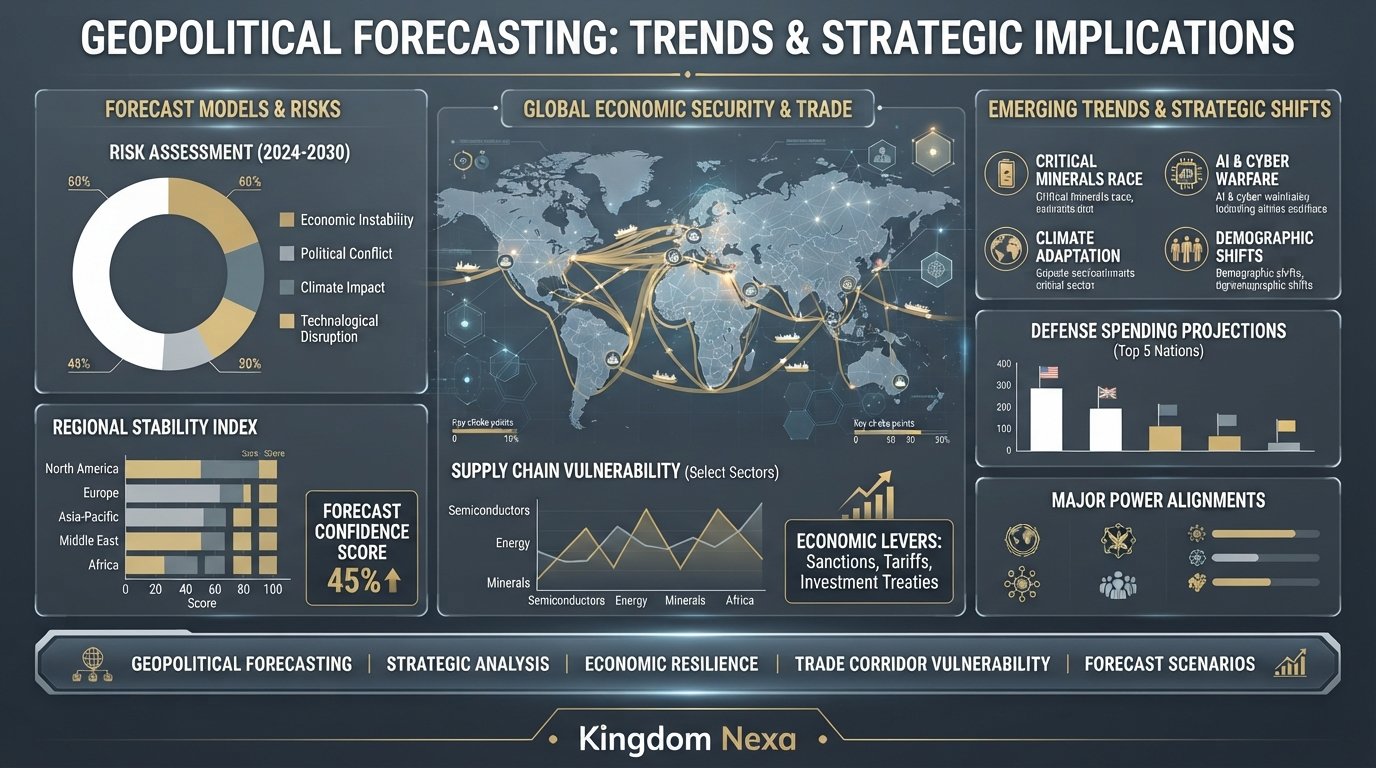
This article examines what global stability means, why it is under pressure in 2026, how security and economic developments interact, and what conditions could strengthen international stability in the years ahead.

What Is Global Stability?
Global stability refers to a condition in which international disputes, competition, economic shocks, security threats, and political disagreements are managed through institutions, diplomacy, deterrence, and established rules rather than uncontrolled escalation.
It does not require every country to share the same political system or strategic interests. Competition between major powers can exist alongside relative stability when communication channels remain open and states have incentives to avoid catastrophic escalation.
A stable international system generally depends on several interacting elements:
- Effective diplomacy and crisis communication
- Respect for international law
- Credible deterrence
- Functional international institutions
- Predictable economic relationships
- Conflict-prevention mechanisms
- Nuclear risk management
- Resilient societies and economies
- Cooperation on transnational problems
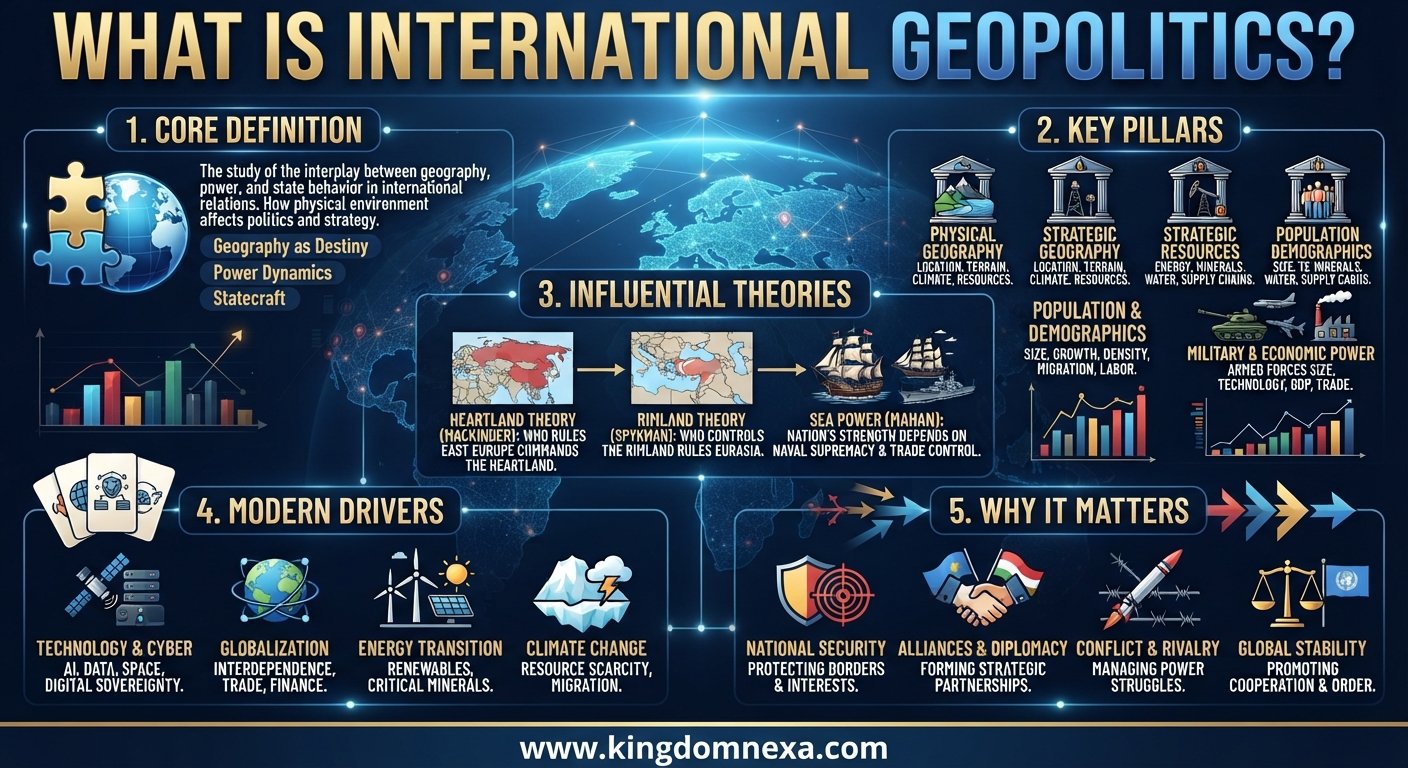
Global stability is therefore better understood as a system of risk management than as permanent peace.
Stability, Peace, and Security Are Not the Same
Peace usually describes the absence or reduction of armed conflict. Security concerns protection from threats. Stability is broader.
A country can experience domestic peace while facing severe economic or environmental instability. Similarly, great powers may avoid direct war while engaging in intense competition through sanctions, technology restrictions, cyber operations, proxy relationships, and military deployments.
This distinction is increasingly important because contemporary geopolitical competition extends well beyond conventional battlefields.
Why Global Stability Matters in 2026
The consequences of instability rarely remain confined to the countries where a crisis begins.
A conflict can disrupt energy markets, shipping routes, food supplies, migration patterns, investment decisions, and international diplomacy. A regional confrontation involving nuclear-armed states can create risks far beyond its immediate geography.
The global economy also remains interconnected despite increasing geopolitical fragmentation. The IMF projects global growth of 3.0% in 2026 and 3.4% in 2027, while warning that renewed conflict and financial-market repricing remain downside risks. (IMF)
This creates an important paradox: economic interdependence can discourage major conflict, but it can also transmit the consequences of geopolitical crises rapidly across borders.
The Current State of Global Stability
As of September 2026, several trends provide a useful picture of the international environment.
Armed Conflict Has Become More Numerous and Complex
UCDP recorded 65 conflicts involving states during 2025, including 13 classified as wars. It also recorded approximately 244,600 deaths from organized violence, making 2025 the second-deadliest year in its dataset since the 1994 genocide in Rwanda. (Uppsala University)
These figures do not mean that every part of the world is equally unstable. Conflict remains geographically concentrated. However, the combination of interstate tensions, civil wars, armed groups, political violence, and cross-border involvement creates a complicated security environment.
ACLED’s 2026 assessment similarly identifies continuing pressure across regions including the Middle East, Ukraine, Sudan, Myanmar, the Sahel, the Red Sea, Latin America, and South Asia. Its methodology evaluates political violence according to factors including deadliness, danger to civilians, geographic diffusion, and the number of armed groups involved. (ACLED)
Military Spending Continues to Rise
Military expenditure provides another indicator of the security environment.
SIPRI estimates that global military spending reached $2.887 trillion in 2025, an inflation-adjusted increase of 2.9% over 2024 and the 11th consecutive annual increase. Military expenditure represented about 2.5% of global GDP. (SIPRI)
European military spending rose particularly sharply, while spending also increased in Asia and Oceania. The pattern reflects governments responding to perceived security risks, although higher military spending itself does not automatically demonstrate greater or lesser global stability.
Nuclear Risks Are Increasingly Important
Nuclear deterrence remains one of the central foundations of strategic stability among major powers, but the nuclear environment has become more complicated.
SIPRI estimated that the nine nuclear-armed states possessed approximately 12,187 nuclear warheads at the beginning of 2026, with about 9,745 in military stockpiles potentially available for use. All nine continued nuclear modernization programs during 2025. (SIPRI)
The expiration of New START in February 2026 also removed an important bilateral framework governing U.S. and Russian strategic nuclear forces. SIPRI has described the broader arms-control environment as deteriorating, while noting the lack of a clear successor framework. (SIPRI)
For global stability, the concern is not simply the number of weapons. Transparency, communication, crisis-management mechanisms, command-and-control reliability, and arms-control arrangements all influence escalation risks.
What Are the Main Threats to Global Stability?
Global instability does not come from one source. Several pressures increasingly interact with one another.
Great-Power Competition
Strategic competition among the United States, China, Russia, European powers, and other influential states is reshaping international relations.
Competition occurs across military, economic, technological, diplomatic, and institutional domains. The consequences can be seen in defense policies, semiconductor controls, industrial policy, sanctions, supply-chain restructuring, maritime competition, and competing approaches to international institutions.
The challenge is not competition itself. States have competed throughout modern history.
The central stability question is whether competition remains bounded by communication, deterrence, rules, and mechanisms that reduce the probability of catastrophic miscalculation.
Regional Wars and Protracted Conflicts
Wars in different regions can affect global stability through several channels.
They can:
- Generate refugee movements
- Disrupt commodity markets
- Increase defense spending
- Encourage arms transfers
- Produce proxy competition
- Damage international institutions
- Increase terrorism and organized crime risks
- Create opportunities for escalation between external powers
The humanitarian dimension is particularly significant. UNHCR reported that at the end of 2025 approximately 117.8 million people were forcibly displaced worldwide, including refugees, asylum-seekers and internally displaced people affected by conflict, violence, persecution and related causes. (UNHCR)
Economic Fragmentation
Globalization has not disappeared, but geopolitical considerations increasingly influence trade and investment.
Governments are pursuing supply-chain resilience, strategic autonomy, export controls, industrial subsidies, technology restrictions, and diversification of critical imports.
The WTO’s 2026 World Trade Report illustrates the potential economic cost of fragmentation. Its modeling estimates that a highly geo-fragmented trading system could reduce global GDP by 5.1% and global exports by 18.6% compared with a more integrated baseline scenario. (World Trade Organization)
These are model-based scenarios, not forecasts of what will necessarily happen. They nevertheless demonstrate why economic fragmentation matters to global stability.
Climate Change and Resource Pressure
Climate change is increasingly relevant to geopolitical risk because environmental shocks can interact with existing economic and political vulnerabilities.
The WMO’s 2025 climate assessment found that 2015–2025 were the 11 hottest years on record, while 2025 was approximately 1.43°C above the 1850–1900 average. Extreme weather events continued to disrupt societies and interconnected economies. (World Meteorological Organization)
Climate change does not mechanically cause wars. The relationship is more complicated. Drought, food insecurity, displacement, infrastructure damage, and competition over resources can intensify existing political and economic pressures.
Technological Competition
Technology is becoming a central component of geopolitical power.
Artificial intelligence, autonomous systems, drones, cyber capabilities, satellites, quantum technologies, advanced semiconductors, and digital infrastructure are changing both civilian economies and military strategy.
The challenge for global stability is that technological development often moves faster than international governance.
AI can improve early-warning systems, logistics, intelligence analysis, and disaster response. It can also increase the speed of decision-making during crises and introduce new risks involving cyber operations, autonomous weapons, misinformation, and escalation.
The 2024 UN Pact for the Future and its Global Digital Compact reflect growing recognition that digital technologies require international cooperation and governance. (United Nations)
How Geography Shapes Global Stability
Geography remains fundamental despite technological change.
Strategic stability is strongly influenced by:
- Maritime chokepoints
- Border regions
- Energy-producing areas
- Critical mineral deposits
- Major shipping routes
- Mountain passes
- River systems
- Strategic islands
- Undersea cables
- Space infrastructure
The Red Sea, for example, demonstrates how instability in a geographically concentrated area can affect international commerce.
Likewise, competition in the Indo-Pacific involves maritime geography, trade routes, military bases, island chains, and proximity between major powers.
Geography does not determine political outcomes, but it creates constraints and opportunities that policymakers must consider.
The Role of Alliances and Deterrence
Alliances remain important mechanisms for preventing or managing security crises.
NATO provides one prominent example. At the June 2025 Hague Summit, its members committed to a new defense-investment framework involving 5% of GDP annually by 2035, including at least 3.5% for core defense requirements and up to 1.5% for broader defense- and security-related investments. (NATO)
By July 2026, NATO reported progress toward that longer-term commitment and emphasized defense production, resilience, innovation, and greater responsibility among European Allies and Canada. (NATO)
From a stability perspective, alliances can strengthen deterrence by increasing the expected cost of aggression. At the same time, alliance commitments can create escalation risks if a local crisis expands into a confrontation involving multiple states.
The effectiveness of deterrence therefore depends not only on military capability but also on communication, political credibility, escalation management, and clarity about strategic objectives.
International Institutions and Global Stability
International institutions remain essential even when major powers disagree.
United Nations
The UN provides diplomatic forums, peacekeeping mechanisms, humanitarian coordination, international legal frameworks, and opportunities for negotiation.
Its limitations are also significant. The Security Council’s structure reflects the distribution of power after the Second World War, creating recurring disagreements over reform, representation, and the use of veto power.
The Pact for the Future, adopted in September 2024, explicitly calls for stronger multilateralism and Security Council reform. (United Nations)
International Financial Institutions
The IMF, World Bank, and related institutions help countries manage financial crises, development challenges, debt pressures, and economic shocks.
Economic stability contributes to geopolitical stability because severe financial crises can weaken governments, increase social pressures, and reduce the capacity of states to provide essential services.
World Trade Organization
The WTO remains important because predictable trade rules can reduce the risk that economic disagreements become broader geopolitical confrontations.
Its 2026 analysis emphasizes that stronger multilateral cooperation can generate substantially better economic outcomes than fragmented trading arrangements. (World Trade Organization)
International Law and Global Stability
International law provides a framework for regulating relations between states and protecting civilians during armed conflict.
The UN Charter establishes core principles concerning sovereignty, the use of force, and international cooperation. International humanitarian law regulates conduct during armed conflict, including protections for civilians and other persons not participating in hostilities.
The ICRC’s 2026 Humanitarian Outlook emphasizes that contemporary conflicts are becoming more complex and that respect for international humanitarian law remains under severe pressure. It reports that around 130 armed conflicts existed in 2024, more than twice the level recorded 15 years earlier. (ICRC)
International law cannot eliminate geopolitical rivalry. Its importance lies partly in establishing standards against which state behavior can be assessed and diplomatic negotiations can be conducted.
The Humanitarian Dimension of Global Stability
Security cannot be measured exclusively through military indicators.
A stable international environment also requires societies capable of absorbing shocks.
Forced displacement illustrates this point. UNHCR reported that 68.7 million people were internally displaced by conflict and violence at the end of 2025, while 41.6 million refugees were recorded globally. (UNHCR)
Humanitarian crises can generate secondary effects, including pressure on neighboring states, disrupted education, lost livelihoods, political polarization, and long-term development setbacks.
This is why humanitarian policy is connected to strategic stability rather than being entirely separate from it.
Economic Interdependence: Stabilizer or Vulnerability?
Economic interdependence can discourage conflict because countries have something to lose from severe disruption.
Trade creates commercial constituencies that benefit from stability. Investment creates long-term relationships. Shared infrastructure can create incentives for cooperation.
But interdependence can also create vulnerabilities.
A country heavily dependent on one supplier for energy, critical minerals, food, semiconductors, or strategic technology may face significant risks during a geopolitical crisis.
The emerging policy response is therefore not simply “more globalization” or “less globalization.” Many governments are seeking resilient interdependence—maintaining international economic connections while reducing excessive dependence on strategically vulnerable supply chains.
A Timeline of Major Developments Shaping Current Global Stability
Several developments help explain the present environment:
1945 — United Nations established: A new multilateral system was created after the Second World War.
1947–1991 — Cold War: Bipolar competition between the United States and Soviet Union structured global security.
1991 — Soviet Union dissolved: The international system entered a period dominated by U.S. power and expanding globalization.
2001 — September 11 attacks: Counterterrorism became a major component of international security.
2008 — Global financial crisis: Economic vulnerabilities demonstrated the interconnectedness of national economies.
2014 — Russia’s annexation of Crimea: European security dynamics changed substantially.
2020 — COVID-19 pandemic: Global supply chains, public health systems, and international coordination faced extraordinary pressure.
2022 — Russia’s full-scale invasion of Ukraine: European security, energy markets, sanctions policy, and defense planning underwent major changes.
2024 — UN Pact for the Future: Governments adopted a broad framework for updating global cooperation and governance. (United Nations)
2025 — Global military spending reached a new record: SIPRI estimated worldwide military expenditure at $2.887 trillion. (SIPRI)
2026 — Nuclear and geopolitical risks remain prominent: SIPRI reports continuing nuclear modernization, while UCDP records a historically high number of state-involved conflicts. (SIPRI)
What Could Strengthen Global Stability?
No single policy can guarantee stability. A combination of measures is more realistic.
Strengthening Crisis Communication
Direct communication between rival states can reduce the risk that accidents, misinterpretations, or military incidents escalate.
Hotlines, military-to-military contacts, diplomatic channels, and strategic dialogues become particularly important when trust is low.
Renewing Arms-Control Mechanisms
The changing nuclear environment makes arms-control dialogue increasingly relevant.
Even when comprehensive disarmament is politically unrealistic, agreements involving transparency, verification, risk reduction, communication, and crisis management can contribute to strategic predictability.
Reforming Global Institutions
The international system faces a representation problem because economic and political power has changed considerably since 1945.
The UN Pact for the Future explicitly recognizes the need to make global governance more representative and effective. (United Nations)
Maintaining Open but Resilient Trade
Global stability benefits from economic relationships that remain predictable while recognizing legitimate national-security concerns.
Diversifying supply chains without creating unnecessary economic blocs can reduce vulnerability while preserving the benefits of international commerce.
Governing Emerging Technologies
International cooperation on AI, cyber operations, autonomous systems, space activities, and digital infrastructure will become increasingly important.
The challenge is to develop rules without preventing beneficial technological innovation.
Investing in Conflict Prevention
Preventing a crisis is generally less costly than managing a full-scale war.
Early-warning systems, mediation, development assistance, institution-building, humanitarian access, and regional diplomacy can reduce the probability that political disputes become violent.
Future Scenarios for Global Stability
The future cannot be predicted with certainty, but several broad scenarios are plausible.
Managed Multipolar Competition
In this scenario, major powers remain strategic competitors but maintain communication and selective cooperation.
Trade becomes more diversified, military deterrence remains strong, and international institutions are gradually adapted rather than abandoned.
This would represent competition without uncontrolled systemic breakdown.
Deepening Geopolitical Fragmentation
A more fragmented scenario would involve competing economic and security blocs, weaker global institutions, more sanctions, technological separation, and increasingly regionalized trade.
The WTO’s modeling illustrates how economically costly such fragmentation could become. (World Trade Organization)
Renewed Multilateral Cooperation
A third possibility involves governments recognizing that problems such as climate change, financial instability, pandemics, AI governance, nuclear risks, and maritime security cannot be effectively managed through national action alone.
The Pact for the Future provides an existing institutional framework that could support such cooperation, although implementation ultimately depends on national governments. (United Nations)
These scenarios are analytical possibilities rather than predictions. Actual developments will depend on decisions by governments, economic conditions, conflicts, technological changes, and unexpected events.
Frequently Asked Questions About Global Stability
What is global stability?
Global stability is the capacity of the international system to manage conflicts, competition, economic shocks, and security threats without allowing them to escalate into wider or catastrophic crises.
Why is global stability important?
Global stability affects international peace, trade, investment, energy security, migration, humanitarian conditions, economic growth, and the ability of governments to cooperate on global challenges.
What are the biggest threats to global stability?
Major pressures include armed conflict, great-power rivalry, nuclear risks, economic fragmentation, climate change, cyber threats, technological competition, political instability, and humanitarian crises.
Is global stability declining?
Several indicators show increased pressure on the international system. UCDP recorded a historically high number of state-involved conflicts in 2025, while SIPRI reported record global military expenditure. These indicators demonstrate heightened security pressures, but they do not by themselves establish that every dimension of global stability is deteriorating. (Uppsala University)
How does nuclear weapons proliferation affect global stability?
Nuclear weapons can contribute to deterrence between states, but nuclear modernization, weakened arms-control arrangements, reduced transparency, and crisis escalation can increase strategic risks. SIPRI reported continued modernization by all nine nuclear-armed states in 2025. (SIPRI)
What role does the United Nations play in global stability?
The UN provides mechanisms for diplomacy, peacekeeping, humanitarian coordination, international law, development cooperation, and collective security. Its effectiveness depends heavily on member-state cooperation.
Can economic interdependence improve global stability?
Yes, economic interdependence can create incentives for cooperation. However, excessive strategic dependence can also create vulnerabilities, which is why many governments increasingly emphasize supply-chain resilience.
How does climate change affect global stability?
Climate change can increase economic, humanitarian, and resource pressures. Extreme weather can damage infrastructure, disrupt food and water systems, and increase displacement, particularly where institutions are already weak. WMO reports that 2015–2025 were the hottest 11 years on record. (World Meteorological Organization)
What can countries do to improve global stability?
Countries can strengthen diplomacy, crisis communication, arms-control mechanisms, international institutions, resilient trade relationships, humanitarian cooperation, conflict prevention, and responsible technology governance.
Conclusion
Global stability in 2026 is shaped by a complicated combination of competition and cooperation.
The international system faces historically high levels of state-involved conflict, record military expenditure, renewed nuclear risks, economic fragmentation, climate pressures, technological disruption, and large-scale displacement. (Uppsala University)
Yet instability is not the same as inevitable systemic collapse. States continue to trade, negotiate, form alliances, use international institutions, participate in diplomatic processes, and cooperate on problems that cannot be solved independently.
The central challenge for global stability is therefore not eliminating geopolitical competition. Competition is a permanent feature of international relations. The more practical objective is ensuring that competition remains manageable.
That requires credible deterrence without uncontrolled arms races, economic resilience without unnecessary fragmentation, technological innovation accompanied by responsible governance, and international institutions capable of adapting to a changing distribution of power.
The future of global stability will ultimately depend on whether major powers and smaller states can preserve mechanisms for communication, cooperation, restraint, and crisis management while adapting the international system to a more complex and increasingly interconnected world.