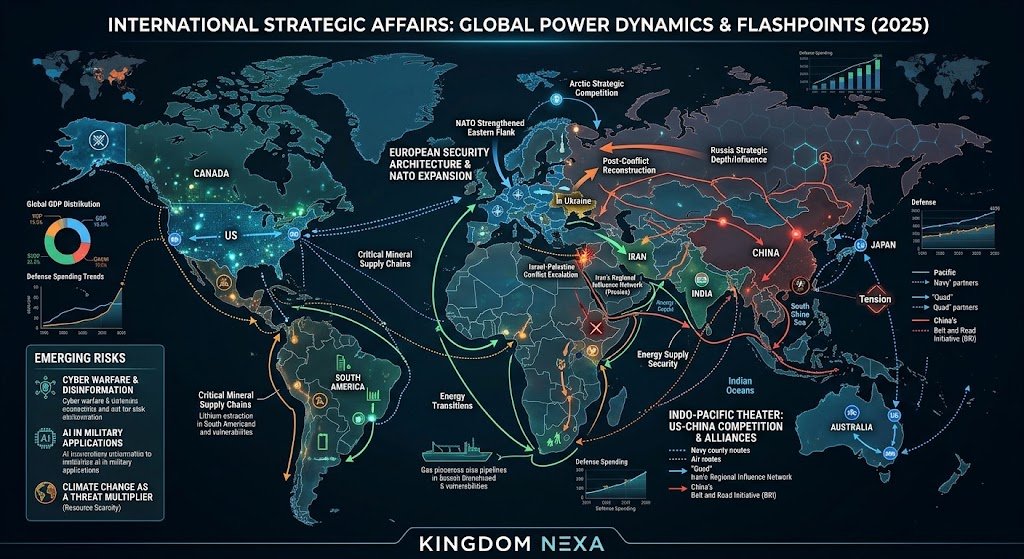
Political outcomes rarely depend on a single speech, election, diplomatic meeting, or policy decision. They emerge from the interaction of power, public opinion, institutions, economic interests, competing priorities, and the choices of political actors. Understanding these relationships requires more than observing events as they unfold. It requires examining the strategy behind decisions and the conditions that determine whether those decisions succeed.
Political Strategy is the process of defining political objectives and coordinating resources, policies, alliances, communication, and actions to achieve them. It operates in domestic politics, international diplomacy, national security, economic governance, and competition between states. Political parties use strategy to build public support and win elections, while governments use it to implement policies, negotiate agreements, manage crises, and protect national interests.
In international geopolitics, strategic choices can influence regional stability, trade relationships, military deterrence, technological competition, and the balance of power. Yet strategy is not simply about gaining influence. It also involves understanding constraints, anticipating reactions, managing risks, and deciding which objectives are realistically achievable.
This article explains the meaning, historical development, key components, practical applications, major challenges, and future direction of political strategy in an increasingly interconnected world, using established concepts and developments relevant as of October 2026.
What Is Political Strategy?
Political strategy is the deliberate process of identifying objectives, understanding the political environment, mobilising resources, and coordinating decisions to influence political outcomes over time.
It differs from a collection of short-term political tactics. A strategy establishes the overall direction, while tactics are the specific actions used to advance it. For example, a government may adopt a strategy to strengthen energy security, using diplomatic agreements, infrastructure investment, regulatory reforms, and international partnerships as supporting measures.
Political strategy operates at several levels:
- Domestic strategy: Elections, public policy, governance, coalition building, and institutional reform.
- Regional strategy: Cooperation, competition, trade agreements, and security arrangements among neighbouring countries.
- International strategy: Diplomacy, alliances, economic statecraft, deterrence, and the pursuit of national interests.
- Organisational strategy: Decisions by political parties, advocacy groups, international organisations, and other influential institutions.
A sound strategy connects objectives to realistic capabilities. It also recognises that other actors have their own interests and may respond in unexpected ways.
The Historical Evolution of Political Strategy
Political strategy has evolved alongside changes in government, military power, economic systems, communications, and international relations.
Ancient political thought
Ancient political thinkers examined leadership, conflict, alliances, and the relationship between power and state survival. Sun Tzu’s The Art of War, traditionally dated to ancient China, emphasised understanding opponents, adapting to circumstances, and achieving objectives without unnecessary conflict.
In ancient Greece, political competition and alliance formation illustrated how geography, institutions, and rival interests influenced collective decisions.
Renaissance and early modern statecraft
During the Renaissance, Niccolò Machiavelli’s The Prince, published in 1532, explored political authority, leadership, and the practical challenges of maintaining power. His work remains influential in discussions of political realism, although it should not be treated as a complete guide to modern democratic governance.
The development of centralised states subsequently increased the importance of taxation, diplomacy, standing armies, administrative capacity, and carefully negotiated alliances.
The nineteenth and twentieth centuries
Industrialisation transformed political strategy by linking national power to production, transport, financial systems, technological innovation, and overseas trade.
The two world wars demonstrated the importance of coordinating military operations, industrial resources, public communication, and diplomacy. After 1945, nuclear deterrence and superpower rivalry made strategic calculation central to international security.
Political strategy in the digital era
Globalisation, social media, cyber capabilities, artificial intelligence, and instantaneous communication have expanded both the opportunities and risks facing political actors.
Modern strategies must account for domestic public opinion, international markets, technological dependencies, and the rapid spread of information. Decisions that once remained primarily domestic can now have immediate diplomatic and economic consequences.
The Core Elements of an Effective Political Strategy
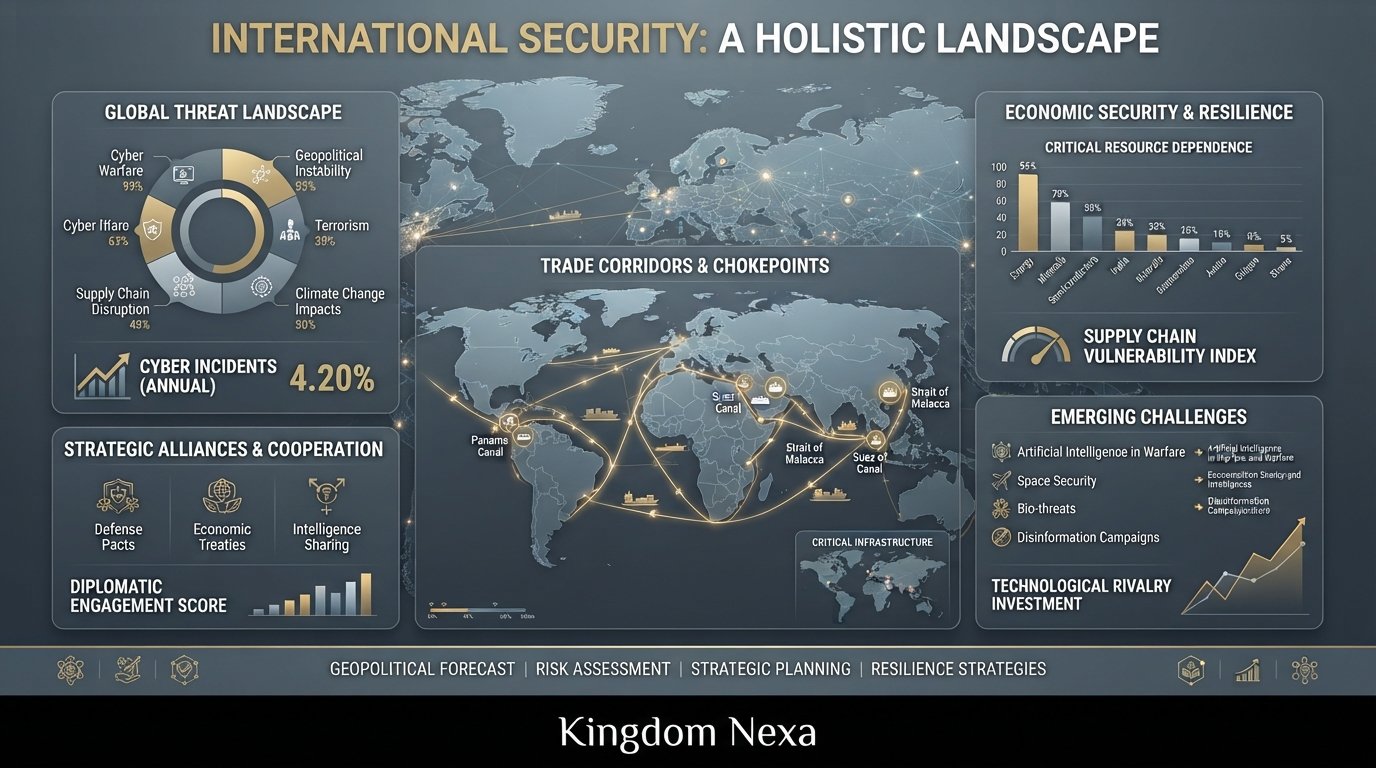
Infographic: Political strategy combines objectives, stakeholders, resources, actions, and measurable outcomes. The accompanying visual illustrates how these elements connect through feedback and adaptation.
1. Clear objectives
Define the desired outcome and distinguish essential goals from secondary priorities. Objectives should be specific enough to guide decisions and realistic enough to remain achievable.
2. Stakeholder analysis
Identify allies, opponents, institutions, affected communities, and potential mediators. Assess their interests, influence, resources, and likely responses.
3. Resources and capabilities
Evaluate financial resources, institutional authority, public support, diplomatic relationships, technology, administrative capacity, and available time.
4. Coordinated actions
Select appropriate policy instruments, diplomatic initiatives, legislation, communication, negotiations, and partnerships.
5. Evaluation and adaptation
Track progress, assess unintended consequences, and adjust the approach when evidence or circumstances change.
These elements work together rather than operating as isolated stages. A government may possess substantial resources but fail to achieve its goals because its objectives are unclear, its partners disagree, or its policies generate resistance.
Effective strategy therefore requires coordination between political leadership, institutions, resources, and implementation.
Major Tools of Political Strategy
Political actors use different instruments depending on their objectives, authority, and operating environment. The most effective approaches often combine several tools.
Diplomacy and negotiation
Diplomacy enables governments to communicate interests, negotiate agreements, manage disputes, and build partnerships. Negotiations may involve trade, borders, security guarantees, climate policy, or access to strategic resources.
Successful diplomacy requires understanding the other side’s incentives and identifying arrangements that both parties can accept. Agreements are more durable when commitments are credible and implementation mechanisms are clear.
Legislation and public policy
Laws, regulations, budgets, and administrative reforms translate political objectives into institutional action. A strategy to improve economic competitiveness, for example, may require education reforms, infrastructure investment, competition policy, and predictable regulation.
Policy design must consider implementation capacity, legal constraints, public acceptance, and distributional effects. Announcing an ambitious objective does not guarantee that institutions can deliver it.
Public communication and political legitimacy
Political leaders use speeches, public consultations, press briefings, and digital communication to explain decisions and build support.
Credibility is essential. Communication that contradicts observable outcomes can weaken public trust, while misinformation may create short-term advantages at the cost of long-term institutional confidence.
Coalition building and alliances
Coalitions allow political actors to combine resources and influence. Within governments, coalition agreements can help parties establish shared priorities. Internationally, alliances can support collective security, diplomatic coordination, and economic cooperation.
However, partners rarely share identical interests. Effective coalition management requires consultation, compromise, burden-sharing, and realistic expectations.
Economic and technological instruments
Trade agreements, investment incentives, development assistance, sanctions, export controls, and access to strategic technologies can advance political objectives.
These measures can influence behaviour, but their effectiveness depends on enforcement, international coordination, available alternatives, and the costs imposed on all parties. Economic pressure may encourage negotiation in one case and strengthen resistance in another.
Political Strategy in International Geopolitics
In international relations, strategy is shaped by geography, national interests, relative power, economic interdependence, and the decisions of other states. Governments must balance domestic priorities with external commitments and anticipate how their actions may change the behaviour of competitors and partners.
Great-power competition
The United States, China, Russia, the European Union, India, and other influential actors pursue different combinations of security, economic development, technological leadership, and diplomatic influence.
Their strategic approaches include alliance management, industrial policy, military modernisation, infrastructure investment, and engagement with international institutions. The objectives and instruments vary across governments and over time.
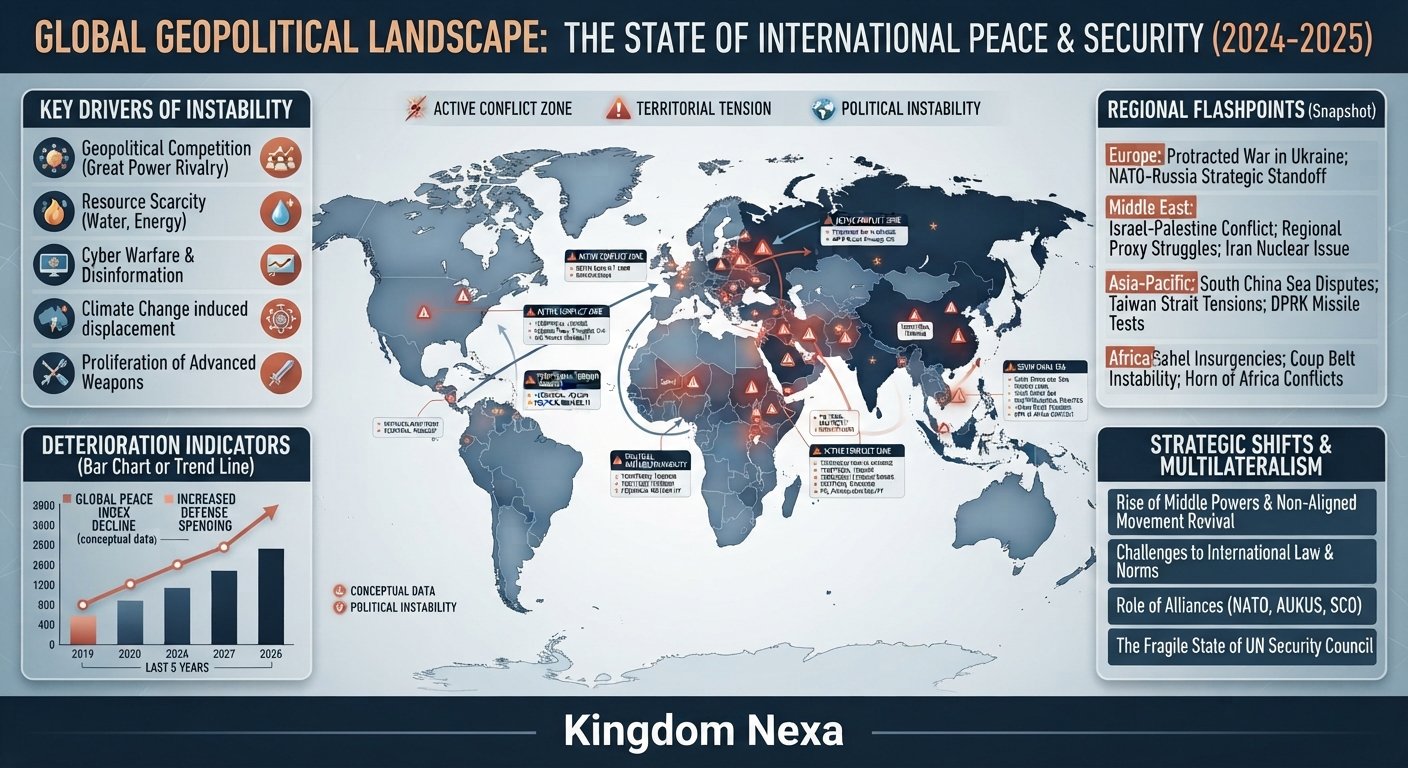
The World Economic Forum’s Global Risks Report 2026, published in January 2026, identified geoeconomic confrontation as the leading risk likely to trigger a material global crisis during the year, selected by 18% of survey respondents. State-based armed conflict followed at 14%. These figures represent surveyed perceptions rather than objective probabilities. World Economic Forum+1
The findings illustrate why modern political strategy cannot separate foreign policy from economic policy. Tariffs, sanctions, technology restrictions, and supply-chain diversification can become instruments of geopolitical competition.
Regional strategy and strategic autonomy
Regional powers often seek to maintain flexibility while cooperating with larger states. Strategic autonomy refers to the capacity to make important decisions without excessive dependence on a single external actor.
For example, a country may strengthen trade relationships with one partner while maintaining security cooperation with another. This can broaden its options, although managing competing commitments may create diplomatic tensions.
Regional organisations can also provide platforms for collective bargaining, economic integration, conflict prevention, and shared infrastructure development.
Security, deterrence, and diplomacy
Political strategy in security affairs involves balancing defence capabilities, deterrence, crisis communication, and diplomatic engagement.
Deterrence seeks to discourage an action by influencing an opponent’s expectations about its costs or likelihood of success. It depends on credible capabilities, clear communication, and the ability to interpret the other side’s incentives.
Poorly calibrated signals can create misunderstandings. A measure intended as defensive may be interpreted as threatening, producing an action–reaction cycle that increases insecurity.
Diplomacy and crisis-management channels can reduce these risks by clarifying intentions and creating opportunities for de-escalation.
Domestic Politics, Public Opinion, and Political Legitimacy
International strategy is rarely independent of domestic politics. Elections, public expectations, economic conditions, party competition, and institutional rules influence which foreign policy choices leaders can pursue.
Elections and leadership priorities
Election campaigns can encourage political leaders to emphasise employment, national security, immigration, public services, or international relationships. After taking office, leaders must reconcile campaign commitments with fiscal limits, legislative requirements, coalition agreements, and changing circumstances.
Political strategy must therefore account for the difference between a stated objective and the government’s practical ability to implement it.
Public opinion and social cohesion
Public support can strengthen a government’s negotiating position and sustain long-term policies. However, public preferences are not always consistent, and views may change in response to economic pressures, security incidents, or new information.
Strategies that overlook affected communities can provoke resistance, deepen polarisation, or weaken trust in institutions. Consultation, transparent communication, and fair implementation can improve legitimacy, although they cannot eliminate disagreement.
Institutions and checks on power
Courts, legislatures, election authorities, civil services, independent media, and oversight bodies shape the available options for political leaders. These institutions can constrain executive decisions, protect rights, and improve accountability.
Political strategy that ignores institutional limits may produce immediate gains but create legal challenges, implementation failures, or long-term damage to public confidence.
Economic, Technological, and Global Implications
Political decisions influence economic outcomes, while economic conditions also shape political choices. This relationship is particularly important in a world where capital, technology, energy, and manufactured goods move across borders.
Trade, investment, and economic security
Governments may pursue industrial subsidies, trade agreements, sanctions, investment screening, or infrastructure projects to advance strategic objectives.
Such policies can strengthen domestic capabilities or reduce exposure to external pressure. They can also raise costs, invite retaliation, and disrupt supply chains. Evaluating their success requires considering both intended benefits and unintended consequences.
Artificial intelligence and digital communication
Artificial intelligence, data analytics, social platforms, and cybersecurity capabilities are changing how governments analyse public opinion, communicate policies, and manage complex decisions.
These technologies may improve research and administrative efficiency, but they also create risks involving privacy, surveillance, misinformation, and algorithmic bias. Responsible political strategy requires legal safeguards, transparent accountability, and appropriate human oversight.
International law and multilateral institutions
Political objectives operate within a framework of treaties, international institutions, and legal obligations. The United Nations Charter, which entered into force on 24 October 1945, establishes principles including sovereign equality, peaceful settlement of disputes, and restrictions on the threat or use of force. United Nations+1
The United Nations, World Trade Organization, International Monetary Fund, World Bank, European Union, and regional organisations contribute to different aspects of international cooperation.
These institutions can provide rules, negotiation forums, financial support, and mechanisms for resolving disputes. Their effectiveness depends on their mandates, available resources, member-state cooperation, and political circumstances.
Political Strategy in Practice: Three Examples
The following examples illustrate how strategic objectives can be pursued through different instruments. They describe broad policy approaches rather than claiming that every objective has been achieved.
Constituent Services | U.S. Representative Mike Ezell
1. United States: Indo-Pacific partnerships
The United States has used security partnerships, diplomatic engagement, economic initiatives, and technology cooperation to strengthen its position in the Indo-Pacific. Arrangements such as the Quad and AUKUS illustrate different forms of coordination involving regional security and strategic technology.
Strategic lesson: Partnerships can expand influence and capabilities, but they require sustained coordination and sensitivity to the interests of participating countries.
Austria sebut BRI stabilkan perdagangan dan transportasi China-Eropa – ANTARA News
2. China: Belt and Road Initiative
China’s Belt and Road Initiative uses infrastructure cooperation, financing, trade connections, and transport networks to deepen economic relationships across multiple regions. Its effects vary by project, host-country conditions, financing arrangements, and implementation.
Strategic lesson: Infrastructure can generate economic connections and diplomatic influence, but debt sustainability, environmental effects, and local economic benefits matter to long-term success.
Europos Komisija – Visuotinė lietuvių enciklopedija
3. European Union: Regulation and collective influence
The EU uses its common market, regulatory framework, trade relationships, diplomacy, and climate policies to influence economic and international outcomes. Coordination among member states can amplify collective leverage, although national interests sometimes differ.
Strategic lesson: Shared institutions can increase influence, but collective action requires negotiation and compromise among members.
These examples demonstrate that political strategy is not confined to military power or election campaigning. Economic relationships, institutional design, technological capacity, and diplomacy can all contribute to a political objective.
Risks and Challenges in Political Strategy
Even carefully designed strategies can fail when assumptions prove incorrect or circumstances change.
- Unclear objectives: Conflicting priorities make it difficult to allocate resources or measure progress.
- Misjudging other actors: Leaders may underestimate opponents’ resolve, misunderstand partners’ interests, or overlook domestic constraints.
- Overreliance on coercion: Sanctions, threats, or pressure can provoke retaliation and encourage alternative partnerships.
- Disinformation and polarisation: Manipulated information can distort decision-making and weaken public trust.
- Institutional weaknesses: Limited administrative capacity, corruption, or poor coordination can prevent policies from delivering results.
- Unintended consequences: A policy may solve one problem while creating economic, humanitarian, security, or diplomatic costs elsewhere.
The key lesson is that strategic success cannot be measured only by immediate political gains. Durability, legitimacy, financial sustainability, legal compliance, and effects on other stakeholders also matter.
The Future of Political Strategy
Political strategy is likely to become more complex as technological competition, economic security, climate pressures, and geopolitical rivalries interact.
Three broad developments deserve attention.
First, economic and security policies will remain closely connected. Governments are likely to continue examining critical supply chains, energy systems, digital infrastructure, and industrial capabilities through a strategic lens.
Second, technology will accelerate analysis and communication. AI-supported research may improve the speed of policy assessment, but verification, transparency, privacy protection, and human judgment will remain necessary.
Third, adaptability will become increasingly important. Political actors will need to revise assumptions as alliances change, public preferences evolve, and unexpected crises emerge.
These are plausible directions rather than certain predictions. Effective strategy depends on preparing for multiple outcomes instead of committing to one forecast.
Frequently Asked Questions About Political Strategy
1. What is political strategy in simple terms?
Political strategy is a plan for achieving political objectives by coordinating resources, policies, relationships, communication, and actions. It involves understanding the political environment and adapting to changing circumstances.
2. What is the difference between political strategy and political tactics?
Strategy defines the overall objective and long-term direction. Tactics are specific actions used to implement that strategy. For example, strengthening international partnerships is a strategic objective, while a diplomatic summit may be one tactic used to advance it.
3. Why is political strategy important in international relations?
It helps governments establish priorities, negotiate agreements, manage rivalries, allocate resources, and anticipate the consequences of foreign policy decisions. It can also support crisis prevention and international cooperation.
4. What are the main elements of political strategy?
The principal elements include clear objectives, stakeholder analysis, resource assessment, coordinated actions, risk management, performance evaluation, and adaptation to new information.
5. How does political strategy influence economic policy?
Governments use trade agreements, investment policies, sanctions, industrial support, and technology regulations to pursue economic and strategic goals. These measures can create opportunities but may also produce costs and international retaliation.
6. What role does public opinion play in political strategy?
Public opinion influences electoral outcomes, policy legitimacy, leadership decisions, and the political sustainability of domestic and international commitments. Its importance varies according to political institutions and the issue involved.
7. How does technology affect political strategy?
AI, digital communications, cybersecurity, and data analytics can improve research and coordination. They also introduce risks involving misinformation, privacy, surveillance, and the reliability of automated analysis.
8. Can political strategy prevent international conflict?
It can help reduce conflict risks through diplomacy, credible deterrence, negotiation, confidence-building measures, and crisis communication. However, success depends on the decisions of multiple actors and cannot be guaranteed.
9. How can students learn political strategy?
Students can study political science, international relations, history, economics, and public policy. Analysing real-world cases, comparing competing explanations, evaluating primary sources, and practising scenario planning can develop practical analytical skills.
Conclusion
Political strategy provides a framework for understanding how governments, political organisations, and international actors pursue objectives in complex and competitive environments. Its effectiveness depends on clearly defined goals, realistic assessments of power, sound institutional coordination, and an ability to anticipate the responses of other stakeholders.
In international geopolitics, strategy extends beyond military strength and diplomatic declarations. Economic relationships, technological capabilities, domestic legitimacy, international law, and public opinion all influence what political actors can achieve.
The most effective approaches balance ambition with practical constraints, recognise uncertainty, and adapt when evidence changes. They also consider the long-term consequences of decisions rather than focusing exclusively on immediate advantages.
As geopolitical competition and technological change reshape international affairs, understanding Political Strategy remains essential for students, researchers, policymakers, diplomats, and business leaders seeking to interpret global developments and make informed decisions.