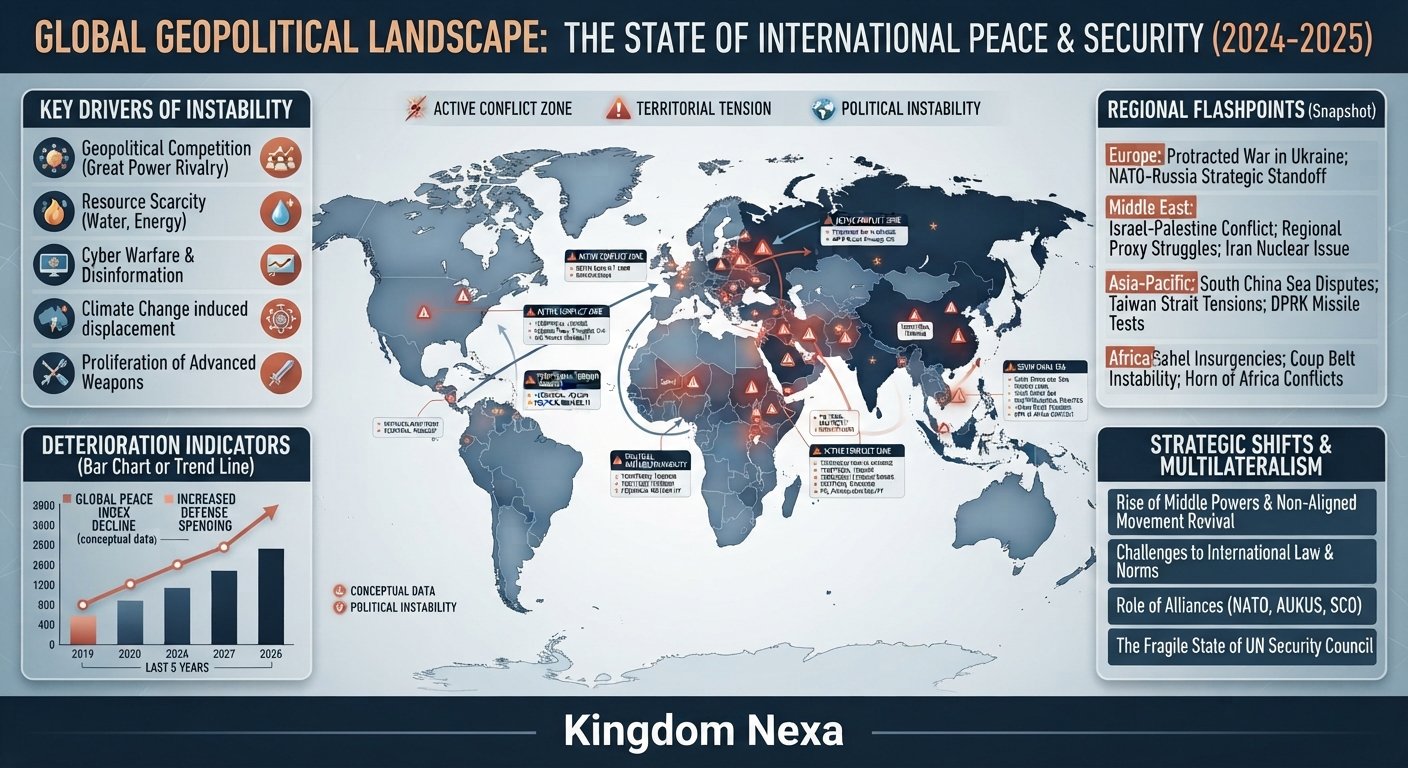
As of 29 September 2026, international peace and security are being tested by a combination of armed conflicts, strategic rivalry, nuclear risks, political fragmentation, technological change, humanitarian crises, and pressure on multilateral institutions. The idea of peace is therefore much broader than simply the absence of war. It also involves preventing escalation, protecting civilians, managing disputes, maintaining international law, reducing security dilemmas, and creating conditions in which states and societies can resolve disagreements without violence.
The scale of the challenge is visible in recent data. Uppsala Conflict Data Program recorded 65 state-involved armed conflicts in 2025, the highest number in its historical dataset, while 13 reached its threshold for war. (Uppsala University) Global military expenditure also reached an estimated $2.887 trillion in 2025, according to SIPRI. (SIPRI)
This article explains what international peace and security means, how the system developed, why it is under pressure today, and how diplomacy, international law, peacekeeping, arms control, economic cooperation, technology governance, and peacebuilding can reduce the risk of further instability.


What Is International Peace and Security?
International peace and security refers to the collective effort to prevent war, manage international disputes, deter aggression, protect populations, uphold international law, and create conditions for durable peaceful relations among states and peoples.
The concept is central to the United Nations Charter, which gives the UN a primary institutional role in maintaining international peace and security. The Charter emphasizes peaceful settlement of disputes, while also establishing mechanisms through which the Security Council can respond to threats to peace, breaches of peace, and acts of aggression. (United Nations)
Peace and security are closely connected but not identical. A country may experience an absence of conventional war while facing terrorism, organized violence, political instability, cyberattacks, communal conflict, or severe humanitarian insecurity.
Negative and Positive Dimensions of Peace
Negative peace generally means the absence or reduction of direct violence and armed conflict.
Positive peace concerns the broader political, social, and institutional conditions that make peaceful relations sustainable. These can include effective institutions, rule of law, social cohesion, political inclusion, economic opportunity, and mechanisms for peacefully resolving disputes.
This distinction matters because ending fighting does not automatically resolve the causes of conflict. A ceasefire can stop immediate violence, while peacebuilding seeks to address the political and institutional conditions that could otherwise produce renewed conflict.
Why Is International Peace and Security Important?
International security affects virtually every aspect of modern global affairs.
Armed conflict can destroy infrastructure, interrupt trade, displace populations, disrupt food and energy supplies, damage investment, and create long-term political instability. Conflict can also spread beyond national borders through refugee movements, arms transfers, organized crime, terrorism, economic disruption, and regional military involvement.
The humanitarian dimension is particularly significant. UNHCR estimated that 123.2 million people were forcibly displaced worldwide at the end of 2024, including refugees, internally displaced people and others requiring international protection. By April 2025, UNHCR estimated the total had fallen slightly to about 122.1 million, although the organization stressed that future trends depended heavily on developments in major conflict-affected countries. (UNHCR)
For businesses, peace affects supply-chain reliability, insurance costs, investment decisions, infrastructure security and access to markets. For governments, it affects defense policy, diplomacy, economic planning and national resilience.
Historical Development of the International Security System
From Collective Security to the United Nations
Modern international peace and security institutions developed largely from the experience of two world wars.
The League of Nations, established after the First World War, attempted to create a collective system for preventing aggression. Its limitations became evident during the interwar period.
After the Second World War, governments established the United Nations in 1945 with a broader institutional framework. The Security Council was given primary responsibility for maintaining international peace and security, while the Charter established principles concerning sovereign equality, peaceful dispute settlement and the prohibition on the threat or use of force, subject to recognized exceptions under international law.
The Cold War
During the Cold War, international security was heavily influenced by competition between the United States and Soviet Union. Nuclear deterrence, military alliances, proxy conflicts and arms-control negotiations became central features of the international system.
At the same time, the UN and regional organizations continued diplomatic, humanitarian and peacekeeping activities.
The Post-Cold War Period
The end of the Cold War created opportunities for new forms of multilateral cooperation, but it did not eliminate armed conflict.
The international community increasingly focused on civil wars, humanitarian emergencies, terrorism, peacebuilding, sanctions, post-conflict reconstruction and protection of civilians.
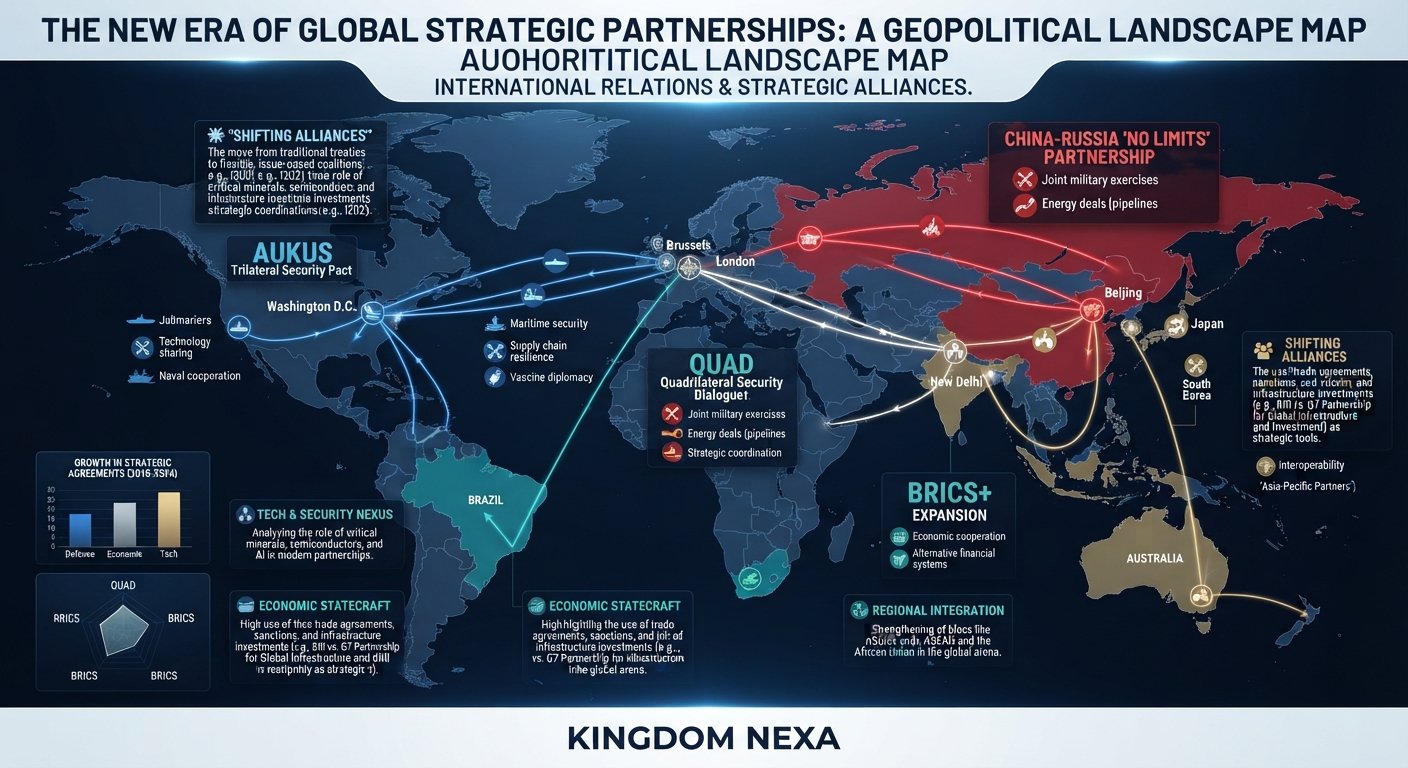
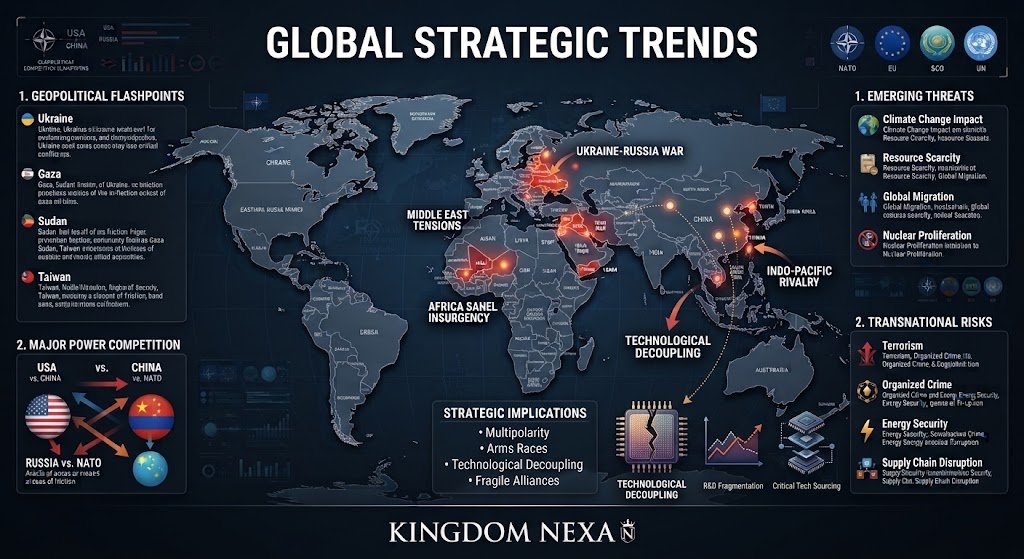
Today, international security has become more multidimensional. Conventional military threats coexist with cyber operations, disinformation, autonomous weapons, economic coercion, transnational crime, climate-related security pressures and competition over strategic technologies.
The Current State of International Peace and Security
More Armed Conflicts and Greater International Involvement
Recent conflict data indicate a difficult security environment.
UCDP recorded 65 conflicts involving states in 2025, the highest number since its records began in 1946. It also recorded eight interstate conflicts, twice the number recorded in 2023 and the highest figure in its dataset. Approximately 244,600 people were killed in organized violence in 2025, according to UCDP’s estimate. (Uppsala University)
These figures should be interpreted carefully. Different organizations use different definitions of conflict, war and political violence, so totals are not necessarily directly interchangeable.
The UN Security Council’s 2026 programme of work continues to include major peace and security issues involving Ukraine, the Middle East, Sudan, terrorism, Haiti, the Democratic Republic of the Congo and other situations. (United Nations)
Rising Military Expenditure
Military spending is another indicator of the changing security environment.
SIPRI estimates that global military expenditure reached $2.887 trillion in 2025, increasing by 2.9% in real terms. This represented the 11th consecutive annual increase and approximately 2.5% of global GDP. Spending increased particularly sharply in Europe and Asia and Oceania. (SIPRI)
Higher defense spending does not automatically mean greater insecurity in every country. Governments may describe military investment as deterrence or defensive preparation. Nevertheless, simultaneous military buildups can create security dilemmas in which measures intended to increase one state’s security are interpreted by others as potential threats.
Key Actors in International Peace and Security
United Nations
The UN remains the central global institution for collective peace and security.
Its instruments include:
- Diplomacy and mediation
- Security Council decisions
- Peacekeeping operations
- Sanctions
- Conflict prevention
- Humanitarian coordination
- Peacebuilding
- International legal mechanisms
- Support for political settlements
The UN currently operates 11 peacekeeping missions, with more than 50,000 peacekeepers serving across these operations according to its current peacekeeping factsheet. Since 1948, more than two million people from 125 countries have served under the UN flag. (United Nations Peacekeeping)
Regional Organizations
Regional institutions can complement the UN by responding to conflicts where local knowledge, political relationships and geographic proximity are important.
Examples include the European Union, African Union, NATO, Organization for Security and Co-operation in Europe, ASEAN, Arab League and Organization of American States.
Their roles vary substantially. Some focus on collective defense, others on political cooperation, mediation, election support, peace operations or regional conflict prevention.
States and Major Powers
States remain the principal actors in international security. Major powers have disproportionate military, economic, technological and diplomatic capabilities, while middle powers and regional powers can exert substantial influence within their geographic areas.
International security therefore depends not only on formal institutions but also on the strategic choices made by governments.
How Diplomacy Helps Maintain International Peace
Negotiation and Mediation
Diplomacy is one of the most important mechanisms for preventing disputes from becoming wars.
Article 33 of the UN Charter identifies negotiation, enquiry, mediation, conciliation, arbitration, judicial settlement and regional mechanisms among the peaceful means that parties should pursue when disputes threaten international peace and security. (United Nations Legal Affairs)
Diplomatic processes may involve:
- Direct negotiations between governments.
- Third-party mediation.
- Confidence-building measures.
- Ceasefire arrangements.
- Prisoner or detainee exchanges.
- Humanitarian agreements.
- Monitoring mechanisms.
- Long-term political settlements.
Successful diplomacy often depends on timing. Negotiations may become possible when the parties perceive that continued fighting carries unacceptable costs or when external actors create incentives for compromise.
Deterrence and Strategic Stability
Diplomacy operates alongside deterrence.
Deterrence attempts to prevent an adversary from taking a particular action by demonstrating that the expected costs would outweigh the potential benefits.
Strategic stability is more complicated than simply possessing military strength. It can depend on communication channels, crisis-management mechanisms, transparency, force posture, arms-control agreements and the ability of governments to distinguish defensive preparations from preparations for attack.
Nuclear Weapons and International Security
Nuclear weapons remain one of the most consequential issues in international peace and security.
SIPRI estimated that the world’s nine nuclear-armed states possessed approximately 12,187 nuclear weapons at the beginning of 2026, including about 9,745 in military stockpiles potentially available for use. SIPRI also reported continued modernization of nuclear arsenals during 2025. (SIPRI)
A significant recent development was the expiration of New START on 5 February 2026. The UN Secretary-General stated that the expiration left the United States and Russia without binding bilateral limits on their strategic nuclear arsenals. (The United Nations in India)
This does not mean nuclear war is inevitable. It does mean that arms-control, verification and risk-reduction arrangements have become increasingly important in an environment characterized by strategic competition and technological change.
International Law and the Rules of Peace
International law provides a framework for managing relations between states.
The UN Charter establishes fundamental principles including sovereign equality and peaceful settlement of disputes. It also contains provisions concerning the use of force and self-defense.
International humanitarian law, meanwhile, regulates conduct during armed conflict. Its purpose is not to determine whether a war was politically justified; rather, it establishes rules designed to limit suffering and protect civilians and other protected persons during conflict.
International law therefore contributes to security in two different ways:
- Preventive rules seek to reduce the likelihood of unlawful or destabilizing uses of force.
- Rules during conflict seek to limit harm when hostilities occur.
Compliance remains a major challenge because international institutions depend heavily on state cooperation, enforcement mechanisms and political support.
Technology and the New Security Environment
Artificial Intelligence
Artificial intelligence is changing both military operations and international security.
Potential applications include intelligence analysis, surveillance, logistics, cyber operations, decision support and autonomous systems. At the same time, AI can introduce risks involving miscalculation, escalation, misinformation and increasingly autonomous weapons.
The UN Secretary-General has emphasized that AI can support conflict prevention and humanitarian work but can also be weaponized. In 2025, the Security Council held a high-level debate specifically addressing artificial intelligence and international peace and security. (United Nations)
The policy challenge is therefore not simply whether AI should be used, but how states can establish safeguards, accountability and human control over high-risk applications.
Cybersecurity and Information Operations
Cyber operations can target government networks, financial systems, communications, energy infrastructure and critical services.
Because attribution can be difficult, cyber incidents create particular challenges for crisis management. A state may not immediately know who conducted an operation, whether it was criminal or state-sponsored, or whether a cyber incident represents preparation for a larger attack.
Information operations add another layer by influencing public understanding during crises. Reliable information, independent verification and resilient institutions are therefore increasingly relevant to international security.
Space Security
Satellites support navigation, communications, weather forecasting, intelligence and economic activity.
Damage or disruption to space infrastructure could therefore have consequences well beyond military operations. The 2024 Pact for the Future includes commitments to strengthen international frameworks governing outer space and to prevent an arms race in space. (United Nations)
Economic Dimensions of International Security
Peace and economic stability are closely interconnected.
War can damage production, transportation networks, energy infrastructure and financial systems. It can also increase government expenditure on defense and emergency measures while reducing resources available for development.
Economic interdependence can sometimes create incentives for cooperation, but it can also become a source of strategic vulnerability.
Governments increasingly consider:
- Energy security
- Critical minerals
- Semiconductor supply chains
- Food security
- Maritime trade routes
- Strategic infrastructure
- Sanctions
- Export controls
- Foreign investment screening
These issues demonstrate how the boundaries between economic policy and national security have become increasingly blurred.
Human Security and the Human Cost of Conflict
International peace is not only about relations between governments.
Conflict affects civilians through death, displacement, food insecurity, destroyed infrastructure, interrupted education, public-health crises and loss of livelihoods.
UNHCR’s latest consolidated Global Trends data showed that forced displacement had reached 123.2 million people at the end of 2024, illustrating the scale of the humanitarian consequences associated with conflict, persecution, violence and serious disturbances of public order. (UNHCR)
This is why contemporary security analysis increasingly considers human security alongside traditional national-security concepts.
A stable international system ultimately depends on whether people can live without persistent fear of violence and whether political disputes can be managed without destroying civilian life.
Peacekeeping, Peacebuilding and Conflict Prevention
Peacekeeping
UN peacekeeping generally operates with mandates authorized by the Security Council. Missions can help protect civilians, support ceasefires, facilitate political processes and create space for peace agreements.
Peacekeeping cannot substitute for political settlement. A mission may contain violence temporarily without resolving the underlying dispute.
Peacebuilding
Peacebuilding addresses conditions that influence whether peace can survive after conflict.
The UN Peacebuilding Fund supports prevention and peacebuilding across areas including peace agreements, dialogue, basic services, institutional recovery and social cohesion. Between 2006 and 2026, it supported 75 countries and territories and invested more than $2 billion, according to UN data. (United Nations)
Peacebuilding can involve:
- Constitutional reform
- Transitional justice
- Reintegration of former combatants
- Local reconciliation
- Institutional reform
- Economic recovery
- Community dialogue
- Strengthening rule of law
Conflict Prevention
Prevention is often less visible than military intervention because success may mean that a crisis never becomes a war.
Early-warning systems, mediation, diplomatic engagement, development assistance and regional cooperation can all contribute to prevention.
The Role of the UN Security Council
The Security Council has five permanent members and ten elected members. The permanent members’ veto power is one of the defining features of the current international security system.
The Council can authorize peacekeeping missions, impose sanctions, establish mandates and adopt measures under the UN Charter.
However, geopolitical disagreement among major powers can restrict collective action.
The 2024 Pact for the Future called for Security Council reform, including greater representation and action to address the underrepresentation of Africa. It also identified questions surrounding membership categories and the veto as important elements of the reform discussion. (United Nations)
Reform negotiations remain politically complex because any change to the Council’s composition or decision-making arrangements requires broad agreement among states.
Major Challenges to International Peace and Security
Several challenges are particularly important in the current environment.
Great-Power Competition
Strategic competition among major powers affects alliances, military planning, trade, technology, energy and diplomatic relationships.
Competition does not automatically produce war, but poor communication and miscalculation can increase escalation risks.
Protracted Regional Conflicts
Long-running conflicts can become embedded in regional politics, creating networks of external support and making negotiated settlements more difficult.
Nuclear and Conventional Arms Competition
Rising military expenditure and nuclear modernization increase the importance of arms control, transparency and crisis communication.
Weakening Multilateral Consensus
International institutions depend on cooperation. When major powers disagree over fundamental security questions, collective responses can become slower or more difficult.
Climate and Resource Pressures
Climate change does not mechanically cause war, but environmental stress can interact with poverty, weak governance, displacement and competition over land and resources.
Emerging Technologies
AI, cyber capabilities, autonomous weapons and space systems are developing faster than some international governance arrangements.
What Could Happen Next?
Future developments cannot be predicted with certainty, but several broad pathways are plausible.
Scenario 1: Greater Strategic Competition
Military modernization and competing security blocs could continue, with governments emphasizing deterrence and resilience.
Scenario 2: Renewed Arms-Control Efforts
Major powers could seek new agreements covering nuclear weapons, emerging technologies, strategic communications or other military capabilities.
Scenario 3: Stronger Regional Diplomacy
Regional organizations and middle powers could assume greater responsibility for mediation and conflict prevention where global consensus is difficult.
Scenario 4: Fragmented Multilateralism
International institutions could continue functioning but with more limited consensus on major security crises.
These scenarios are not mutually exclusive. Different regions can experience different trajectories simultaneously.
The central variable will be whether states can combine deterrence with diplomacy and competition with practical mechanisms for crisis management.
How Can International Peace and Security Be Strengthened?
A durable approach requires more than military capability.
Key priorities include:
- Strengthening diplomatic channels before crises escalate.
- Maintaining credible arms-control and risk-reduction mechanisms.
- Protecting civilians and respecting international humanitarian law.
- Investing in conflict prevention and peacebuilding.
- Improving international cooperation on cyber and emerging technologies.
- Strengthening regional organizations and mediation capacity.
- Addressing economic and social conditions that can contribute to instability.
- Improving transparency and crisis communication among major powers.
- Reforming multilateral institutions where their representation no longer reflects contemporary geopolitical realities.
- Including women, youth and affected communities in peace processes.
The UN’s Pact for the Future reflects this broader approach by linking peace and security with sustainable development, human rights, technology, governance and international law. (United Nations)
Frequently Asked Questions About International Peace and Security
What is international peace and security?
International peace and security is the collective effort to prevent armed conflict, manage disputes, deter aggression, protect populations, uphold international law and create conditions for peaceful international relations.
Why is international peace and security important?
It is important because conflict can cause deaths, displacement, economic disruption, humanitarian crises and regional instability. Peace also creates conditions for trade, investment, development and international cooperation.
What organization is primarily responsible for international peace and security?
The United Nations Security Council has primary responsibility within the UN system for maintaining international peace and security. The wider UN system, regional organizations and individual states also contribute through diplomacy, peacekeeping, mediation and peacebuilding.
What is the role of the UN in maintaining peace?
The UN uses diplomacy, mediation, Security Council decisions, sanctions, peacekeeping, humanitarian coordination and peacebuilding to prevent and manage conflicts. UN peacekeeping currently operates across 11 missions. (United Nations Peacekeeping)
How does international law support peace and security?
International law establishes rules governing relations among states, peaceful dispute settlement, the use of force and conduct during armed conflict. The UN Charter is a central component of this legal framework.
How do nuclear weapons affect international security?
Nuclear weapons create both deterrence dynamics and catastrophic escalation risks. Continued modernization and the weakening of some arms-control arrangements make nuclear risk reduction and strategic communication particularly important. (SIPRI)
What is the difference between peacekeeping and peacebuilding?
Peacekeeping generally helps contain conflict and support security and political processes, often through internationally mandated missions. Peacebuilding focuses more broadly on addressing conditions that help prevent renewed conflict after or alongside violence.
How does artificial intelligence affect international peace and security?
AI can improve intelligence analysis, early warning and humanitarian operations, but it can also create risks involving autonomous weapons, cyber operations, misinformation, escalation and human decision-making. International discussions increasingly focus on appropriate safeguards and accountability. (United Nations)
Can international peace be achieved without military deterrence?
Different governments and security scholars disagree about the appropriate balance between deterrence, diplomacy, arms control and other tools. In practice, contemporary international security systems generally use a combination of military, diplomatic, legal, economic and institutional mechanisms.
Conclusion
International peace and security is not a single policy area. It is a complex system connecting diplomacy, military strategy, international law, economic stability, human security, technology and multilateral institutions.
The current environment is particularly demanding. UCDP’s latest data show a historically high number of state-involved conflicts, while SIPRI reports continued growth in global military expenditure. Nuclear modernization, the expiration of New START, technological change and persistent humanitarian crises add further complexity. (Uppsala University)
Yet international security is not determined by military competition alone. Negotiation, mediation, peacekeeping, peacebuilding, arms control, regional diplomacy and international law remain important tools for reducing escalation and managing disputes.
The central challenge for the international system is therefore to maintain credible security while preserving channels for cooperation. The future of International Peace and Security will depend not only on how states respond to existing conflicts, but also on whether they can build institutions and rules capable of managing new strategic, technological and economic risks.