
Current reality assessed: 27 September 2026
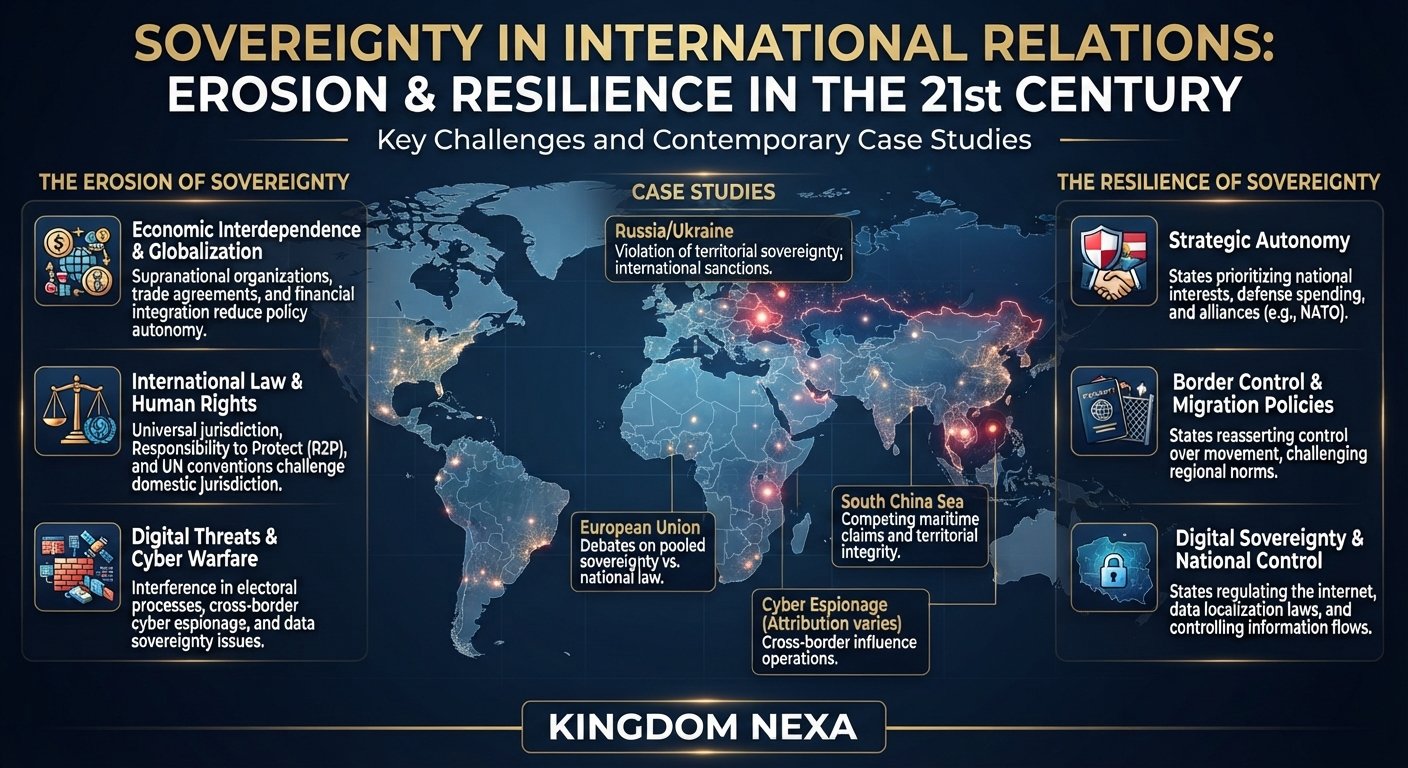
Territorial integrity is one of the foundational principles of the modern international system. At its simplest, it means that a state’s territorial boundaries and political unity should not be violated through unlawful external force. Yet in contemporary geopolitics, the concept is much more complicated than a simple rule about borders. It intersects with sovereignty, self-determination, national security, occupation, secession, annexation, maritime boundaries, peace agreements and the use of military power.
The principle is embedded in the United Nations Charter, particularly Article 2(4), which requires states to refrain from the threat or use of force against the territorial integrity or political independence of another state. (United Nations Legal Affairs) At the same time, international law recognizes the right of peoples to self-determination, creating difficult questions when demands for political independence collide with the territorial claims of existing states.
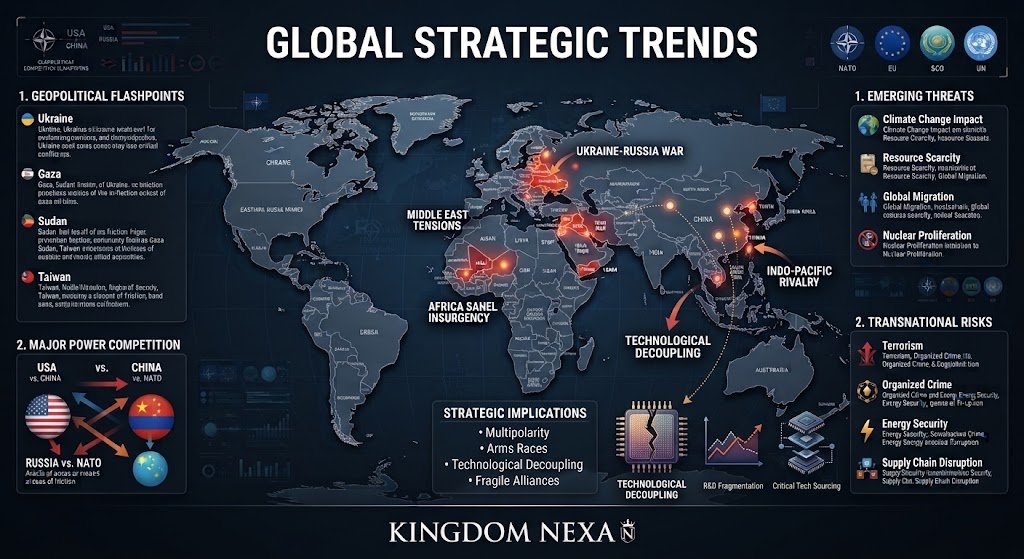
Those tensions remain highly relevant in 2026. Ukraine, the Occupied Palestinian Territory, Sudan and the Democratic Republic of the Congo demonstrate different ways in which sovereignty and territorial control can become central international disputes. This article explains what territorial integrity means, its legal foundations, historical development, geopolitical significance, current applications and the challenges likely to shape the principle in the years ahead.

What Is Territorial Integrity?
Territorial integrity is the principle that a state’s territory should remain territorially whole and protected from unlawful external interference, particularly the threat or use of force.
In international relations, it is closely associated with sovereignty, political independence, territorial sovereignty and the inviolability of international borders.
A useful distinction is:
- Sovereignty concerns a state’s supreme legal authority within its territory.
- Territorial integrity concerns the protection of that territory and its political unity from unlawful external disruption.
- Territorial sovereignty concerns a state’s authority over a particular geographical area.
- Political independence concerns freedom from external control over the state’s governmental choices.
- Self-determination concerns the right of peoples to determine their political status and pursue their economic, social and cultural development.
These principles overlap but are not identical.
The United Nations Charter places territorial integrity within the broader framework of sovereign equality, peaceful dispute settlement and the prohibition of force. Article 2(4) specifically prohibits threats or uses of force against the territorial integrity or political independence of states. (United Nations Legal Affairs)
Territorial Integrity in Simple Terms
A straightforward way to understand the concept is:
A state should not lose territory because another state uses force to take it.
This does not mean every international boundary is permanently frozen. States can settle territorial questions through lawful agreements, boundary treaties, arbitration, judicial decisions and other peaceful mechanisms.
The key issue is how territorial change occurs.
The international legal order places particular emphasis on preventing territorial acquisition through force. The UN’s Friendly Relations Declaration states that states must refrain from using force to violate existing international boundaries or to settle territorial disputes. (International Court of Justice)
Territorial Integrity and International Law
Territorial integrity has become deeply embedded in the international legal system since the creation of the United Nations in 1945.
The United Nations Charter
Three Charter principles are particularly important.
First, Article 2(1) establishes the sovereign equality of UN members.
Second, Article 2(3) requires international disputes to be settled by peaceful means.
Third, Article 2(4) prohibits the threat or use of force against the territorial integrity or political independence of any state. (United Nations)
Together, these provisions create a legal framework intended to prevent states from resolving territorial disputes through military conquest.
The Friendly Relations Declaration
General Assembly Resolution 2625 of 1970 further developed these principles. It states that states must refrain from the threat or use of force against the territorial integrity or political independence of another state and emphasizes peaceful settlement of disputes. (United Nations Treaty Collection)
The Declaration is particularly important because it connects territorial integrity with self-determination, sovereign equality and non-intervention.
It therefore demonstrates that territorial integrity cannot be understood in isolation.
Is Territorial Integrity an Absolute Principle?
Not in the sense that every existing border can never change.
International law permits states to establish or alter boundaries through lawful and peaceful processes. Boundary agreements are a normal feature of international relations.
The critical distinction is between peaceful, consensual territorial change and territorial acquisition or alteration imposed through unlawful force.
The International Court of Justice has repeatedly emphasized the importance of territorial sovereignty and the stability of boundaries in international relations. (International Court of Justice)
Territorial Integrity and Self-Determination
One of the most difficult questions in international law is the relationship between territorial integrity and self-determination.
The UN Charter recognizes the principle of equal rights and self-determination of peoples. (United Nations Legal Affairs) The International Covenant on Civil and Political Rights also states that all peoples have the right of self-determination. (United Nations)
This creates a potential tension:
What happens when a population seeks political separation from an existing state?
The answer depends heavily on the historical and legal circumstances.
Colonial Self-Determination
International law clearly developed a right to self-determination in the context of decolonization.
The International Court of Justice has recognized that the territorial integrity of a non-self-governing territory is closely connected to the right of its people to self-determination. In its 2019 Chagos Advisory Opinion, the Court described territorial integrity as a necessary element of effective self-determination in the decolonization context. (International Court of Justice)
This does not mean that every separatist movement automatically possesses a general right to unilateral secession.
Secession and Independence
The legal position becomes more complicated outside colonial situations.
In its 2010 Kosovo Advisory Opinion, the ICJ concluded that international law did not contain a general prohibition applicable to declarations of independence as such. The Court also emphasized the importance of territorial integrity within the UN Charter framework. (International Court of Justice)
The opinion therefore should not be simplified into a rule that international law grants every separatist movement a right to independence.
Instead, questions of statehood, recognition, territorial control, self-determination and the legality of external intervention must be examined separately.
Why Territorial Integrity Matters in Geopolitics
Territorial integrity is not merely a legal concept. Territory provides the physical foundation for political authority, security and economic organization.
Strategic Geography
Territory determines access to:
- Ports and maritime routes
- Rivers and freshwater
- Energy infrastructure
- Mineral resources
- Agricultural land
- Mountain passes
- Transport corridors
- Strategic military positions
- Communications infrastructure
- Airspace and territorial waters
Control of territory can therefore change a state’s strategic position even when the disputed area is relatively small.
National Security
A state’s territorial integrity is closely connected with defense planning.
Military establishments, border infrastructure, surveillance systems and alliances are designed partly around protecting national territory.
NATO, for example, describes collective defense as a central purpose of the Alliance and explicitly links the security of its members with the protection of sovereignty and territorial integrity. (NATO)
Economic Security
Territorial disputes can also affect:
- Foreign investment
- Trade routes
- Energy supplies
- Mining projects
- Insurance costs
- Infrastructure development
- Tourism
- Agricultural production
- Cross-border commerce
Uncertainty over territorial control can increase political risk because businesses may be reluctant to invest in areas where sovereignty or security conditions are disputed.
How Territorial Integrity Is Challenged
Territorial integrity can be placed under pressure through several mechanisms.
Military Invasion and Occupation
The most direct challenge occurs when foreign armed forces enter and establish control over another state’s territory without lawful justification or consent.
Occupation does not automatically transfer sovereignty to the occupying power. The law of occupation regulates the conduct of an occupying power while preserving important legal distinctions concerning territorial status.
Annexation
Annexation occurs when a state claims to incorporate another territory into its own sovereign territory.
The principle that territory should not be acquired through force is central to the post-1945 international order. The UN has repeatedly applied this principle in territorial disputes, including Ukraine and the Occupied Palestinian Territory. (Digital Library)
Support for Armed Groups
Territorial integrity can also be challenged indirectly.
External support for armed groups may enable non-state actors to establish territorial control, create parallel administrations or undermine the authority of the recognized government.
This is particularly significant in conflicts where neighboring states have competing security interests.
Political and Economic Coercion
Territorial disputes do not always begin with conventional military operations.
Cyber operations, economic coercion, disinformation, political interference and infrastructure pressure can weaken a state’s ability to exercise effective authority.
Modern territorial security therefore increasingly extends beyond traditional military defense.
Current Geopolitical Reality in 2026
The principle of territorial integrity remains highly relevant because several major international crises involve disputes over sovereignty, occupation, territorial control or political fragmentation.
Ukraine
Ukraine remains one of the clearest contemporary examples of territorial integrity becoming a central issue in international diplomacy.
The UN General Assembly has repeatedly reaffirmed Ukraine’s sovereignty, independence, unity and territorial integrity within its internationally recognized borders. In February 2025, the Assembly adopted two resolutions concerning the war, while acknowledging continuing disagreement among member states over how peace should be achieved. (United Nations Press Release)
By September 2026, the war remained unresolved. On 23 September 2026, UN Under-Secretary-General Rosemary DiCarlo told the Security Council that the conflict was entering a dangerous phase, with intensifying attacks, rising civilian casualties and increased risks of regional spillover. She again reaffirmed Ukraine’s sovereignty and territorial integrity. (UN Digital Policy Platform)
The Ukraine case illustrates several dimensions of territorial integrity at once: military occupation, border claims, recognition, sanctions, diplomatic negotiations, security alliances and the question of whether territorial changes produced by force can receive international recognition.
The Occupied Palestinian Territory
The Palestinian case demonstrates a different and particularly complex interaction between territorial integrity and self-determination.
In its July 2024 Advisory Opinion, the International Court of Justice addressed the Palestinian people’s right to self-determination and the territorial integrity of the Occupied Palestinian Territory. The Court concluded that the Palestinian people must be able to exercise self-determination over the territory as a whole. (International Court of Justice)
The situation remained highly consequential in September 2026.
A 24 September 2026 UN report stated that settlement expansion, displacement, movement restrictions and continuing violence in the West Bank were undermining prospects for a viable and contiguous Palestinian state. It also emphasized that Gaza should remain an integral part of a future Palestinian state and that Gaza and the West Bank would need political, economic and administrative unity. (United Nations)
This case illustrates why territorial integrity can involve not only international borders but also territorial continuity, political authority and the ability of a population to exercise self-determination.
Sudan
Sudan demonstrates how territorial integrity can be threatened from within a state as well as through external intervention.
The conflict between the Sudanese Armed Forces and the Rapid Support Forces has produced competing centers of military and political control. In February 2025, the UN Secretary-General warned that efforts to establish a parallel governing authority risked deepening fragmentation. (United Nations)
The concern remained relevant in 2026. In April 2026, the Secretary-General’s Personal Envoy reiterated the UN position supporting Sudan’s sovereignty, unity and territorial integrity while rejecting parallel authorities. (United Nations)
In September 2026, the African Union, IGAD, Arab League, European Union and United Nations continued coordinated diplomatic engagement through the Quintet. (UN Digital Policy Platform)
Sudan therefore demonstrates that territorial integrity is not only about foreign armies crossing borders. A state’s territorial unity can also be weakened when rival armed organizations establish durable political, administrative or security structures.
Democratic Republic of the Congo
Eastern Democratic Republic of the Congo provides another example of the relationship between armed groups, regional security and territorial sovereignty.
The M23 conflict has involved contested territorial control, allegations concerning external support and broader regional security concerns. The UN Security Council has repeatedly emphasized respect for the sovereignty and territorial integrity of the DRC. In June 2026, Security Council Resolution 2825 renewed sanctions-related measures and the mandate of the Group of Experts concerning the DRC. (United Nations)
The case demonstrates how territorial integrity can become intertwined with armed groups, regional rivalries, natural resources and cross-border security.
Territorial Integrity at Sea
Territorial integrity is not limited to land.
The law of the sea gives coastal states sovereignty over their territorial seas, subject to applicable international law.
Under the United Nations Convention on the Law of the Sea, a coastal state’s sovereignty extends to its territorial sea, including the airspace above it and the seabed and subsoil. The territorial sea may extend up to 12 nautical miles from the applicable baselines. (United Nations)
However, maritime sovereignty has important limitations.
Foreign ships generally enjoy a right of innocent passage through the territorial sea, subject to the rules of UNCLOS. (United Nations)
Beyond the territorial sea, concepts such as the exclusive economic zone and continental shelf involve different forms of sovereign rights and jurisdiction rather than full sovereignty.
This distinction is important in disputes involving offshore oil and gas, fisheries, shipping routes and maritime boundaries.
The Role of Diplomacy and International Organizations
Territorial disputes rarely have purely military solutions.
United Nations
The UN provides several mechanisms for addressing territorial disputes:
- Security Council action
- General Assembly resolutions
- Mediation
- Peacekeeping
- Special political missions
- Fact-finding
- Humanitarian coordination
- International legal processes
Article 33 of the UN Charter identifies negotiation, enquiry, mediation, conciliation, arbitration and judicial settlement among peaceful means of resolving disputes. (United Nations)
International Court of Justice
The ICJ can settle legal disputes between states when jurisdictional requirements are satisfied, while its advisory opinions can clarify important questions of international law.
Cases involving territorial sovereignty, maritime boundaries, self-determination and occupation have helped develop modern legal understanding.
Regional Organizations
Regional organizations also play major roles.
Examples include:
- African Union
- European Union
- NATO
- Organization of American States
- ASEAN
- Arab League
- Organization for Security and Co-operation in Europe
Regional institutions can provide mediation, monitoring, sanctions, peacekeeping support or political coordination.
Technology and the Defense of Territorial Integrity
Technology is changing how states protect and contest territorial control.
Satellites and Geospatial Intelligence
Satellite imagery can help governments and international organizations monitor:
- Troop movements
- Border changes
- Infrastructure construction
- Military installations
- Displacement
- Environmental damage
Commercial satellite imagery has also made geospatial information more widely available outside traditional intelligence organizations.
Drones
Unmanned aerial systems have transformed surveillance and battlefield operations.
They can monitor borders, identify military movements and provide targeting information. At the same time, inexpensive drones allow relatively small actors to challenge traditional military advantages.
Cybersecurity
Cyberattacks can target government systems, critical infrastructure, communications networks and military command structures without physically crossing an international boundary.
This raises a difficult strategic question: when does cyber activity become a threat to territorial integrity?
International law does not reduce every cyber incident to an act of territorial aggression. The legal assessment depends on factors including the nature, scale and effects of the operation.
Major Challenges to Territorial Integrity
Several trends will continue to test the principle.
Frozen Conflicts
Unresolved territorial disputes can persist for decades.
They may produce ceasefire lines, de facto authorities and competing claims without a final political settlement.
Recognition Disputes
A territory may be controlled by one authority while much of the international community continues to recognize another state’s sovereignty.
This creates a distinction between effective control and legal title or international recognition.
Secessionist Movements
Governments often emphasize territorial integrity, while separatist movements emphasize self-determination.
The international response depends heavily on the historical and legal context rather than a universal rule automatically favoring either side.
Great-Power Competition
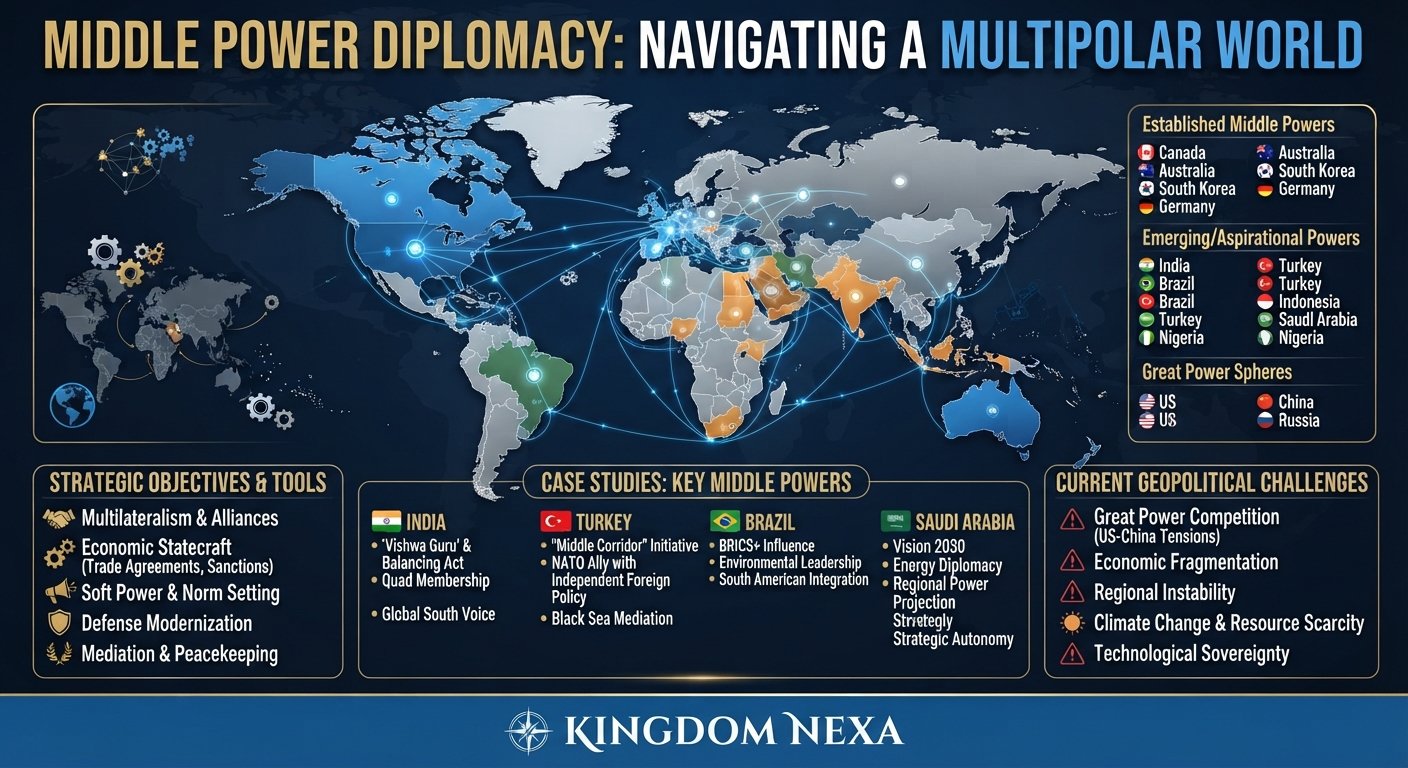
Major powers may interpret territorial disputes through broader strategic competition.
A local territorial dispute can therefore become connected to military alliances, sanctions, energy security and global diplomatic alignments.
Weak State Institutions
Where governments cannot exercise effective authority across their territory, armed groups and criminal networks may fill the vacuum.
The result can be territorial fragmentation without a formal change in international borders.
Future Scenarios for Territorial Integrity
The future of territorial integrity is likely to develop along several possible paths.
Scenario 1: Stronger Enforcement of the Non-Use of Force
States could strengthen diplomatic, economic and legal mechanisms designed to deter territorial acquisition through force.
This would reinforce the post-1945 principle of stable borders.
Scenario 2: Prolonged De Facto Territorial Division
Some conflicts may remain unresolved while territorial control becomes divided for extended periods.
In such situations, the legal position of territory may remain contested even when political and military realities appear relatively stable.
Scenario 3: Negotiated Territorial Settlements
Some disputes may ultimately be addressed through negotiated settlements, boundary agreements, autonomy arrangements or other political compromises.
Such processes can preserve international stability when changes occur peacefully and with the necessary legal and political consent.
Scenario 4: Increasingly Hybrid Territorial Competition
Future territorial disputes are likely to involve combinations of conventional military force, drones, cyber operations, economic pressure, information operations and satellite surveillance.
The concept of defending territory will therefore increasingly include digital and economic resilience.
Why Territorial Integrity Matters for the International System
Territorial integrity performs a stabilizing function because international relations depend heavily on predictable territorial boundaries.
If states could routinely alter borders through force, the security calculations of neighboring countries would change dramatically. Governments would have stronger incentives to expand military capabilities, build alliances and respond pre-emptively to perceived territorial threats.
At the same time, territorial integrity cannot be treated as a complete answer to every territorial dispute.
International law also recognizes self-determination, human rights, decolonization and peaceful dispute settlement. The difficult task is determining how these principles interact in specific historical and political circumstances.
That is why serious analysis must avoid reducing every territorial dispute to a simple question of “who controls the land.”
The deeper questions are:
Who has legal title? Who exercises effective control? What does international law permit? What does the affected population seek? Was force used? What agreements exist? And what peaceful mechanisms remain available?
Frequently Asked Questions
What is territorial integrity in international relations?
Territorial integrity is the principle that a state’s territorial unity and internationally protected territory should not be violated through unlawful external force or coercion. It is closely connected with sovereignty and political independence.
Why is territorial integrity important?
It helps maintain predictable international borders and limits the use of force as a means of acquiring territory. This contributes to international stability, security and peaceful dispute settlement.
What does the UN Charter say about territorial integrity?
Article 2(4) of the UN Charter requires states to refrain from the threat or use of force against the territorial integrity or political independence of any state. (United Nations)
Is territorial integrity the same as sovereignty?
No. Sovereignty refers broadly to a state’s supreme legal authority, while territorial integrity focuses particularly on preserving the territorial unity and protected boundaries of the state.
How is territorial integrity different from self-determination?
Territorial integrity protects the territorial and political unity of states, while self-determination concerns the right of peoples to determine their political status. International law requires these principles to be considered within their specific historical and legal contexts.
Can international borders legally change?
Yes. States can alter boundaries through lawful and peaceful processes, including negotiated agreements. The central international-law concern is preventing territorial changes imposed through unlawful force.
Does territorial integrity apply to maritime territory?
Yes, although maritime law uses different legal categories. Under UNCLOS, coastal states exercise sovereignty over their territorial sea, which may extend up to 12 nautical miles, while other maritime zones involve different sovereign rights and jurisdictions. (United Nations)
What are current examples of territorial integrity disputes?
Ukraine, the Occupied Palestinian Territory, Sudan and the Democratic Republic of the Congo illustrate different contemporary challenges involving sovereignty, territorial control, occupation, armed groups, self-determination and political fragmentation. (UN Digital Policy Platform)
Can military occupation change sovereignty?
Occupation can establish effective control without automatically transferring lawful sovereignty. Questions of occupation, annexation, territorial title and recognition must therefore be analyzed separately under international law.
Conclusion
Territorial integrity remains a central principle of international law and geopolitics because the modern international system is fundamentally organized around sovereign states and their territories. The UN Charter places strong legal importance on protecting territorial integrity and prohibiting the use of force to alter political independence or territorial boundaries. (United Nations Legal Affairs)
Yet territorial integrity does not exist in isolation. Its relationship with sovereignty, self-determination, human rights, occupation and peaceful boundary settlement makes territorial disputes among the most complicated problems in international affairs.
The conflicts and political crises visible in 2026 demonstrate why the principle remains relevant. Ukraine shows the consequences of large-scale war and competing territorial claims; the Palestinian question illustrates the relationship between territorial continuity and self-determination; Sudan demonstrates how internal fragmentation can threaten national unity; and the Democratic Republic of the Congo highlights the interaction between armed groups, regional security and territorial sovereignty. (UN Digital Policy Platform)
The future of territorial integrity will depend not only on military capabilities, but also on diplomacy, international institutions, technological change, economic resilience and the continued credibility of international law. Understanding the principle therefore requires looking beyond maps and borders to the legal, political and strategic forces that determine how territory is governed, contested and protected.