Introduction
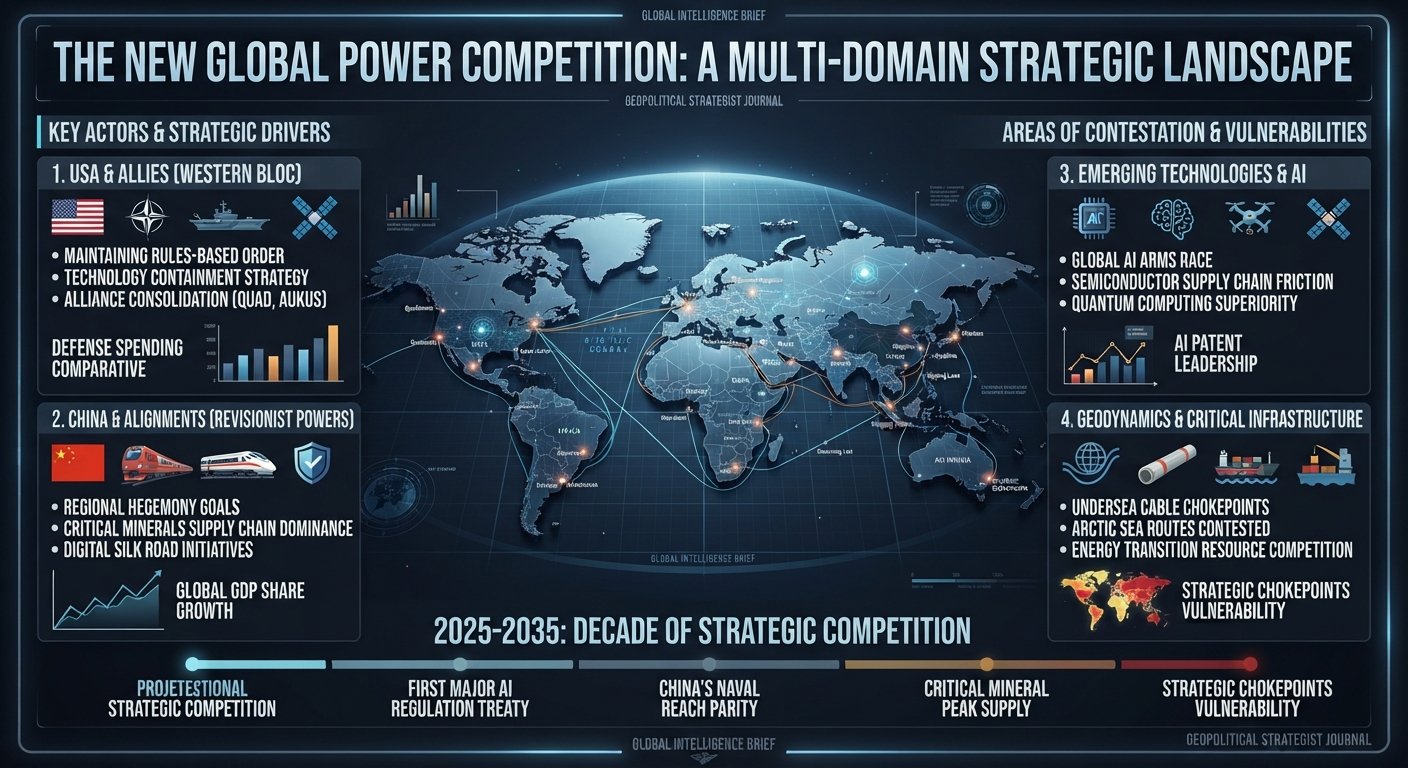
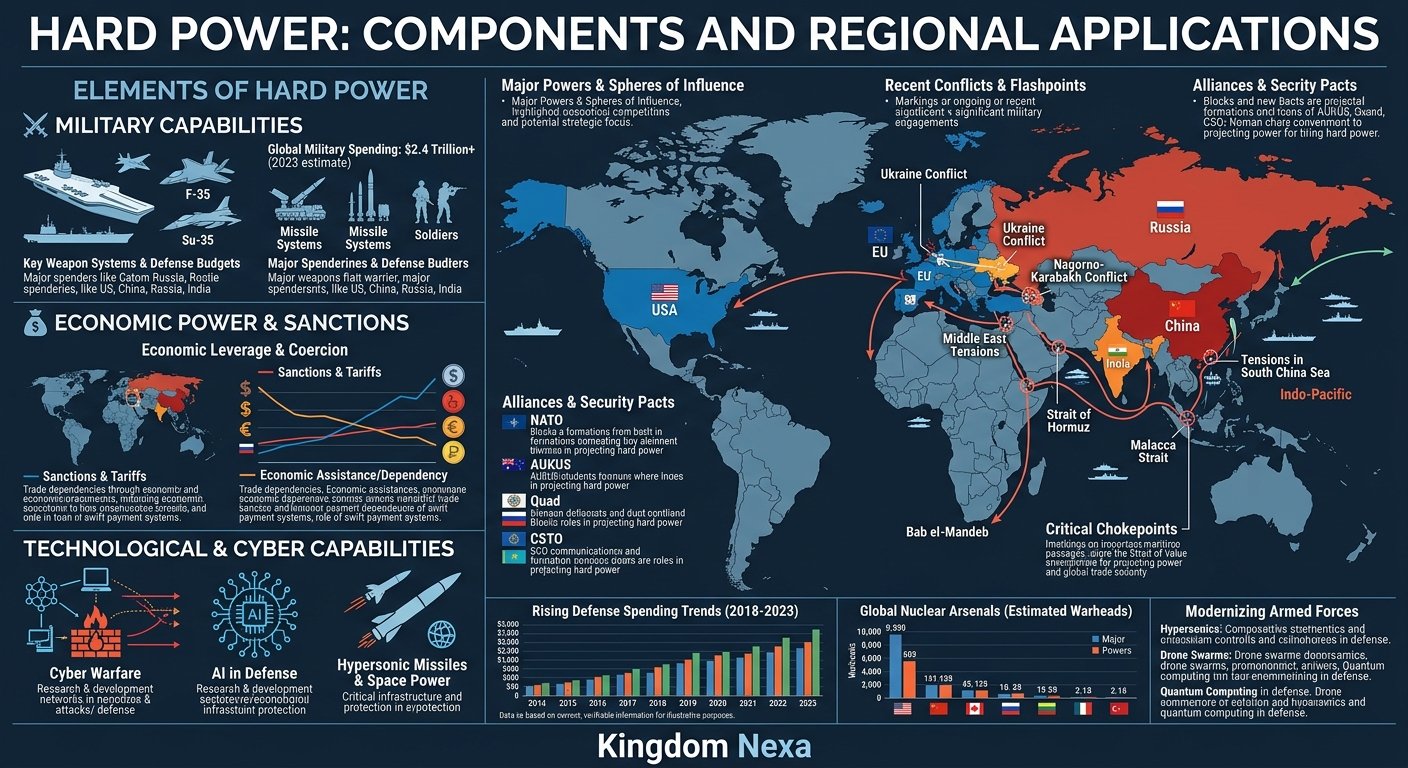
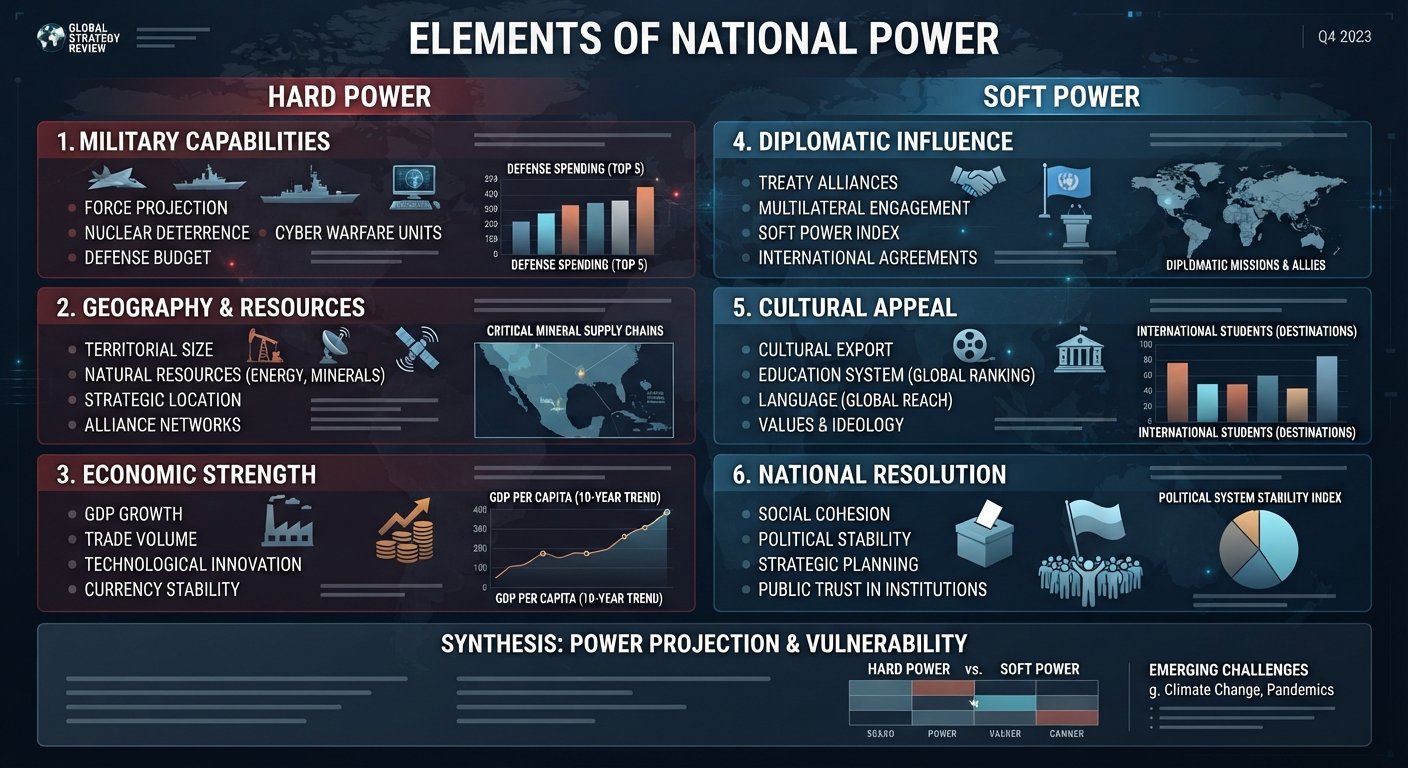
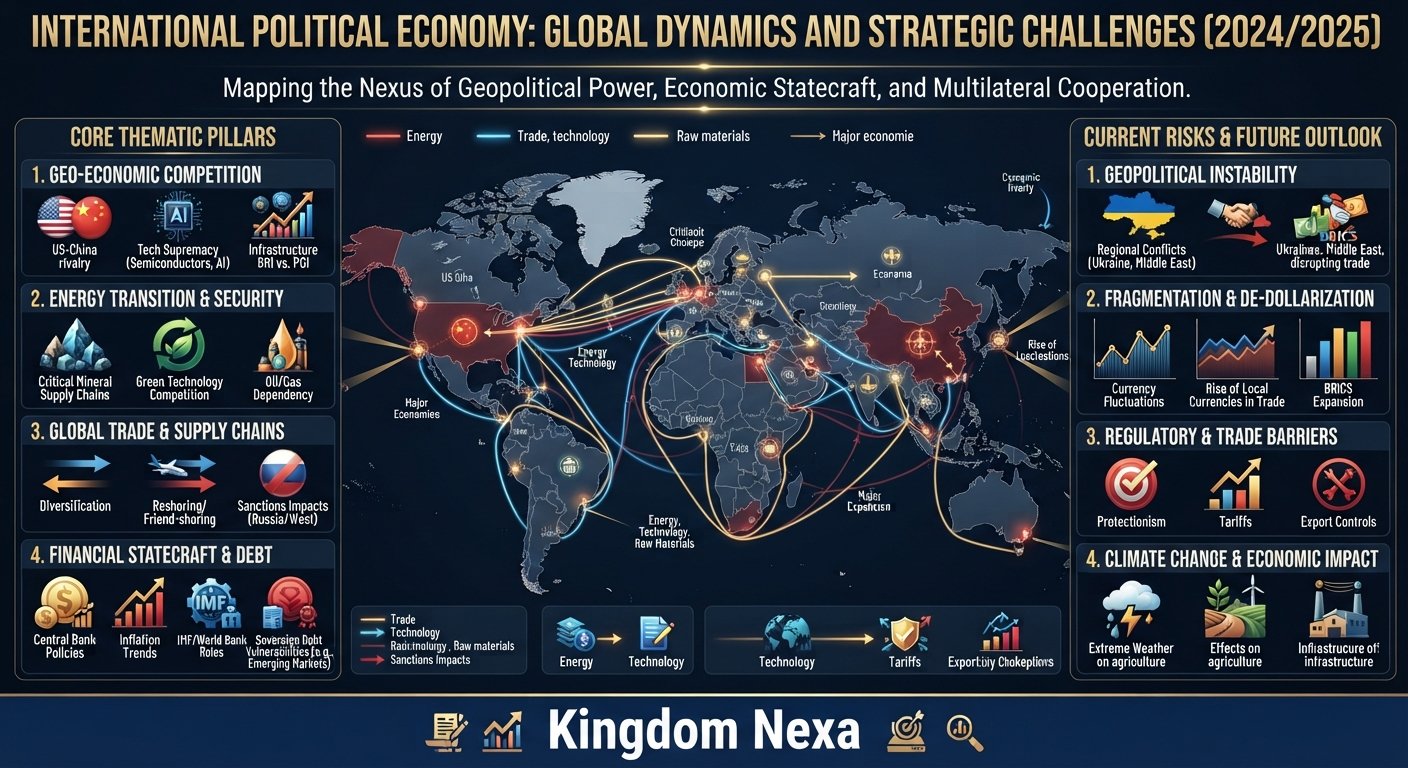
International Political Economy (IPE) examines one of the most consequential relationships in world affairs: how political power shapes economic activity across borders, and how economic forces, in turn, influence international politics. Trade agreements, currencies, foreign investment, sanctions, supply chains, development finance, energy markets, technology controls, and international institutions are not simply economic matters. They can alter strategic relationships, redistribute power, and influence the choices available to governments.
The importance of International Political Economy has become especially visible in the 2020s. Trade tensions, geopolitical conflicts, industrial policy, supply-chain restructuring, technological competition, financial vulnerabilities, and debates over the future of multilateral institutions are changing how governments approach economic interdependence. Global trade nevertheless remains substantial: UN Trade and Development reported that world trade in goods and services exceeded $35 trillion in 2025, even as geopolitical tensions and policy changes reshaped trade patterns. (UNCTAD)
This article explains the meaning, evolution, major theories, institutions, key actors, and current challenges of International Political Economy, while examining what its changing dynamics mean for governments, businesses, developing countries, and the wider international system.

What Is International Political Economy?
International Political Economy is the study of the interaction between politics and economics at the international level.
In simple terms, IPE asks questions such as:
- Who controls economic resources and institutions?
- Why do governments promote free trade in some circumstances but protectionism in others?
- How does economic interdependence affect political power?
- Why do countries impose sanctions, tariffs, export controls, or investment restrictions?
- How do international institutions influence national economic policies?
- Why do some countries gain more from globalization than others?
Traditional economics often concentrates on markets, incentives, production, prices, and resource allocation. International relations traditionally focuses on states, diplomacy, security, institutions, and power. IPE connects these areas.
Consequently, the subject covers international trade, finance, investment, monetary relations, development, globalization, economic security, energy, technology, sanctions, supply chains, and economic diplomacy.
The central insight is that markets do not operate independently of political authority. Governments establish rules, negotiate agreements, regulate capital, control borders, impose taxes, protect strategic industries, and determine how economic relationships interact with national interests.
Why Is International Political Economy Important?
Economic relationships have become deeply connected across national borders. A product may involve raw materials from one country, components from several others, financing from international banks, software developed elsewhere, and consumers in dozens of markets.
This interdependence creates both economic opportunities and strategic vulnerabilities.
For governments, access to energy, food, technology, capital, shipping routes, critical minerals, and financial systems can affect national security. For businesses, geopolitical decisions can suddenly alter tariffs, market access, investment rules, transportation costs, or supply-chain reliability.
The scale of contemporary economic integration illustrates this relationship. UNCTAD reported that global trade surpassed $35 trillion in 2025, while foreign direct investment rose 6% to approximately $1.6 trillion. Yet UNCTAD also found that the recovery in investment was highly concentrated, with more than 80% of global FDI going to the world’s 20 largest host economies. (UNCTAD)
IPE therefore helps explain why economic developments cannot always be separated from diplomacy and geopolitics.
Historical Development of International Political Economy
From Mercantilism to Liberal Trade
The relationship between political authority and international commerce predates the modern academic field.
During the mercantilist era, European governments frequently viewed international trade as an instrument of state power. Governments supported exports, restricted imports, accumulated precious metals, established trading companies, and used naval power to secure commercial routes.
The expansion of industrial capitalism later encouraged arguments for freer trade and international economic integration. Yet states continued to use tariffs, subsidies, colonial policies, financial measures, and commercial diplomacy to pursue national objectives.
The Great Depression and Economic Nationalism
The interwar period demonstrated how economic nationalism could interact with geopolitical instability.
The Great Depression produced severe economic disruption, unemployment, financial instability, and declining international trade. Competitive currency policies and protectionist measures contributed to a less cooperative international environment.
These experiences influenced the design of the post-Second World War economic order.
Bretton Woods and the Postwar Order
In July 1944, representatives from 44 countries met at Bretton Woods, New Hampshire, to construct a framework for international economic cooperation. The conference produced the foundations of the International Monetary Fund and the International Bank for Reconstruction and Development, now part of the World Bank Group. (World Bank)
The IMF was designed to support international monetary cooperation and financial stability, while the World Bank’s original mission focused heavily on reconstruction and later expanded toward development.
The postwar order also developed through the General Agreement on Tariffs and Trade, eventually replaced institutionally by the World Trade Organization in 1995.
The End of Bretton Woods
The original Bretton Woods exchange-rate system was based on adjustable exchange rates linked to the US dollar, while the dollar was convertible into gold.
In August 1971, the United States suspended dollar convertibility into gold. The fixed exchange-rate framework subsequently gave way to a more flexible international monetary system. (IMF)
This transition was important for IPE because it demonstrated that international economic institutions are shaped by political decisions, domestic priorities, financial pressures, and changing distributions of power.
Major Theories of International Political Economy
Economic Liberalism
Liberal approaches emphasize the benefits of international markets, trade, specialization, investment, and economic cooperation.
From this perspective, international economic institutions can reduce uncertainty and encourage states to cooperate. Rules can make economic relationships more predictable and lower the costs of cross-border exchange.
However, liberal approaches do not necessarily assume that every country gains equally from globalization.
Economic Nationalism and Mercantilism
Economic nationalist approaches place greater emphasis on state power, strategic industries, national resilience, and relative gains.
Governments may support domestic industries even when doing so creates higher short-term costs because they consider particular sectors strategically important.
Modern industrial policy, strategic subsidies, technology restrictions, and efforts to reduce dependence on foreign suppliers can be examined through this perspective.
Structuralist and Critical Approaches
Structuralist approaches focus on unequal economic relationships between countries and the distribution of wealth, technology, finance, and productive capacity.
They ask why some countries remain dependent on commodities or low-value production while others dominate advanced manufacturing, financial services, intellectual property, and technological systems.
These perspectives are particularly relevant to debates about development, debt, global value chains, and the economic position of developing countries.
The Main Actors in International Political Economy
States and Governments
States remain central actors because governments control taxation, regulation, trade policy, monetary institutions, investment rules, national budgets, and many aspects of economic security.
Major powers can also influence international markets because their domestic policies generate cross-border effects.
International Institutions
Organizations such as the IMF, World Bank, WTO, United Nations, OECD, and regional development banks provide rules, financing, standards, surveillance, technical assistance, and negotiation mechanisms.
The IMF, for example, monitors the international monetary system, conducts economic surveillance, provides financial resources to members facing balance-of-payments problems, and offers technical assistance. (IMF)
Multinational Corporations
Multinational companies influence IPE through foreign investment, production networks, technology transfer, employment, taxation, and supply-chain decisions.
Their importance has increased as production has become internationally distributed.
Financial Institutions
Commercial banks, investment funds, central banks, rating agencies, payment networks, and other financial institutions influence the movement and pricing of capital.
UNCTAD’s 2025 Trade and Development Report highlighted an often-overlooked reality: more than 90% of world trade depends on international banking and financial infrastructure. (UNCTAD)
Civil Society and Non-State Actors
NGOs, labor organizations, research institutions, advocacy groups, professional associations, and international networks can influence debates over trade, climate policy, labor standards, development, taxation, and corporate responsibility.
Trade and International Political Economy
International trade is one of the core subjects of IPE because trade creates both mutual economic benefits and political conflicts.
Countries trade because specialization and exchange can increase economic efficiency. At the same time, trade affects employment, industries, regional inequality, technological capabilities, and political interests.
This produces recurring debates over:
- Free trade versus protectionism
- Tariffs and quotas
- Subsidies
- Trade agreements
- Rules of origin
- Export controls
- Industrial policy
- Strategic supply chains
- Trade deficits and surpluses
The WTO remains central to this system. Its membership has expanded from 23 economies in the original GATT era to 166 members, representing around 98% of global trade, according to the WTO’s 2026 World Trade Report. (World Trade Organization)
Yet the institution faces significant pressure as governments increasingly use unilateral trade measures and national-security arguments.
International Finance and Monetary Power
International finance is another central pillar of IPE.
Cross-border capital flows can finance investment and development, but sudden reversals can generate financial crises, currency depreciation, and debt pressures.
The international monetary system also has a political dimension because some currencies have much greater international importance than others.
The US dollar remains central to global finance, trade invoicing, reserves, and international borrowing. This creates advantages for the United States but also generates debates about monetary dependence, diversification, and reform of the international financial system.
The history of the international monetary system demonstrates that monetary arrangements are not purely technical. They reflect bargaining power, domestic political priorities, financial structures, and international cooperation.
Foreign Direct Investment and Global Supply Chains
Foreign direct investment links corporations and national economies through ownership and long-term productive activity.
FDI can bring:
- Capital
- Employment
- Technology
- Managerial knowledge
- Export opportunities
- Infrastructure
- Access to international markets
But its effects vary by country and sector.
UNCTAD’s 2026 World Investment Report found that global FDI increased to $1.6 trillion in 2025, but developing-economy inflows grew by only 2%, compared with an 11% increase for developed economies. It also found increasing concentration of investment in strategic sectors, including digital infrastructure. (Investment Policy Hub)
This demonstrates why IPE examines not only how much capital moves internationally, but also where it goes and what political and developmental consequences follow.
Economic Statecraft and Geopolitical Power
Economic instruments increasingly form part of national strategy.
Sanctions
Economic sanctions can restrict financial transactions, trade, investment, or access to technology. Governments use them to pursue foreign-policy objectives without necessarily resorting to direct military action.
Their effectiveness depends on factors including international coordination, the target country’s economic structure, enforcement, alternative markets, and the availability of substitute suppliers.
Tariffs and Trade Restrictions
Tariffs can protect domestic producers or be used as bargaining instruments. Export restrictions can also become strategically important when products have military or technological significance.
The contemporary debate increasingly concerns the boundary between economic policy and national security.
Energy as Economic Power
Energy markets illustrate the intersection of economics and security particularly clearly.
Oil and gas exporters can gain strategic influence from their resource position, while import-dependent states may seek diversified suppliers, domestic production, renewable energy, storage capacity, and alternative transportation routes.
Energy transitions are also creating new competition around critical minerals and processing capacity.
Technology and the New Geoeconomics
Technology has become one of the most important areas of contemporary IPE.
Semiconductors, artificial intelligence, cloud infrastructure, telecommunications, cybersecurity, satellites, advanced manufacturing, and digital platforms have economic and strategic value.
Governments increasingly view technological capabilities as connected to national security and long-term competitiveness.
This has encouraged policies involving:
- Semiconductor subsidies
- Export controls
- Investment screening
- Technology partnerships
- Data regulation
- Cybersecurity requirements
- Domestic manufacturing incentives
- Critical-mineral strategies
The WTO reported that AI-related value chains were an important driver of trade growth in 2025, illustrating how technological investment is becoming increasingly integrated with international commerce. (World Trade Organization)
International Political Economy in the Developing World
Developing countries face many of the same opportunities as advanced economies but often with greater exposure to external shocks.
Important vulnerabilities include:
- External debt
- Currency depreciation
- Commodity-price volatility
- Limited fiscal capacity
- Dependence on imported energy or food
- Restricted access to affordable finance
- Weak infrastructure
- Technology gaps
UNCTAD has repeatedly highlighted the disproportionate pressures faced by vulnerable developing economies from debt servicing, weak investment, trade uncertainty, and constrained policy space. (UNCTAD)
For these countries, IPE is not simply about choosing between globalization and protectionism. It is also about building productive capacity, diversifying exports, attracting useful investment, improving infrastructure, developing human capital, and gaining greater resilience within the international economy.
The Current State of International Political Economy in 2026
As of September 2026, the international political economy is characterized less by the disappearance of globalization than by its reconfiguration.
Globalization has not simply stopped. UNCTAD reported that world trade reached a record level in 2025, while also identifying increasing fragmentation, regionalization, and changing global value chains. (UNCTAD)
At the same time, the global economic outlook has become more difficult.
The IMF’s July 2026 update projected global growth of 3.0% in 2026 and 3.4% in 2027, while noting that the global economy had been affected by the war in the Middle East and that inflation pressures had increased. (IMF)
The World Bank’s June 2026 outlook was more cautious, projecting global growth of 2.5% in 2026 and 2.8% in 2027, and identifying higher energy prices, inflation, and borrowing costs associated with the Middle East conflict as significant pressures. (World Bank)
These different forecasts demonstrate an important analytical point: economic projections are model-dependent and sensitive to assumptions about geopolitical developments.
From Globalization to Selective Interdependence
The emerging pattern is not complete economic separation.
Instead, governments and companies are attempting to determine which dependencies are acceptable and which are strategically risky.
This has encouraged concepts such as:
- De-risking
- Resilience
- Friend-shoring
- Near-shoring
- Supply-chain diversification
- Strategic autonomy
- Economic security
The result may be a global economy that remains highly interconnected but is organized increasingly around strategic considerations as well as efficiency.
The Role of the WTO and Multilateral Economic Governance
The WTO remains a central institution because international commerce requires predictable rules.
Its 2026 World Trade Report describes the trading system as facing major disruption while also emphasizing the economic value of multilateral rules. WTO analysis estimates that a highly fragmented geopolitical trading system could reduce global GDP by about 5.1% relative to its baseline scenario, although such estimates are model-based scenarios rather than forecasts of an inevitable outcome. (World Trade Organization)
This distinction matters.
Fragmentation is not necessarily equivalent to deglobalization. Countries can simultaneously reduce dependence in selected strategic sectors while expanding trade in other areas.
The future of multilateral economic governance will therefore depend partly on whether governments can reconcile national-security objectives with the economic benefits of international cooperation.
Risks and Challenges
Geoeconomic Fragmentation
If trade, finance, technology, and investment become increasingly organized around geopolitical blocs, firms may face higher costs and governments may lose some of the efficiency benefits associated with integrated markets.
Debt and Financial Vulnerability
High borrowing costs can place considerable pressure on governments with large external financing requirements.
Supply-Chain Disruption
Concentration in strategic production can create vulnerabilities when conflict, sanctions, natural disasters, pandemics, or policy changes interrupt supplies.
Unequal Distribution of Globalization
Economic integration can produce aggregate gains without distributing those gains equally across countries, regions, industries, or workers.
This distributional problem remains politically important because domestic dissatisfaction can influence trade and foreign-policy decisions.
Technology Competition
Competition over advanced technologies can accelerate innovation but also increase export controls, investment restrictions, standards competition, and strategic rivalry.
What Does the Future of International Political Economy Look Like?
The future cannot be predicted with certainty, but several plausible developments can be identified.
A More Fragmented Global Economy
One possibility is deeper geopolitical segmentation, with countries organizing supply chains, technology ecosystems, investment, and trade around strategic partnerships.
Managed Interdependence
Another possibility is continued globalization with greater safeguards. Governments may retain international trade while diversifying critical suppliers and protecting selected strategic sectors.
Renewed Multilateral Cooperation
A further possibility is institutional adaptation. Governments could strengthen international rules while updating them for digital trade, industrial subsidies, climate policy, technology, investment screening, and economic-security concerns.
The actual outcome will depend on domestic politics, major-power relations, economic performance, technological developments, conflicts, and the willingness of governments to cooperate.
For that reason, scenarios should be treated as analytical possibilities rather than predictions.
Why International Political Economy Matters for Business and Policy
For businesses, IPE provides a framework for understanding risks that traditional market analysis may overlook.
A company can face economic consequences from:
- A new tariff
- Sanctions
- Export controls
- Currency volatility
- Political instability
- Investment restrictions
- Energy-price shocks
- Shipping disruptions
- Technology regulations
For policymakers, IPE helps connect domestic economic decisions with international consequences.
For students and researchers, it provides a framework for understanding why trade, finance, development, security, diplomacy, and geopolitics increasingly overlap.
The Citizens, it helps explain why international political developments can affect inflation, employment, energy prices, consumer goods, investment, and national economic opportunities.
Frequently Asked Questions About International Political Economy
What is International Political Economy in simple terms?
International Political Economy studies how politics and economics interact across national borders. It examines trade, finance, investment, development, economic power, institutions, technology, and economic statecraft.
Why is International Political Economy important?
It explains how governments, markets, international institutions, and corporations influence one another and how economic relationships affect geopolitical power and international relations.
What are the main areas of International Political Economy?
Major areas include international trade, monetary relations, finance, foreign investment, globalization, development, economic security, sanctions, energy, technology, and international economic institutions.
What are the major theories of International Political Economy?
The major approaches include liberalism, economic nationalism or mercantilism, and structuralist or critical approaches. Each emphasizes different relationships between markets, states, institutions, and power.
How does International Political Economy differ from international economics?
International economics primarily analyzes economic relationships using economic theory and quantitative methods. IPE adds political power, institutions, strategic interests, domestic politics, and international relations to the analysis.
What institutions are important in International Political Economy?
Major institutions include the IMF, World Bank, WTO, United Nations, OECD, regional development banks, and regional economic organizations.
How do sanctions relate to International Political Economy?
Sanctions are economic instruments used to influence the behavior of governments or other actors. Their effectiveness depends on enforcement, international cooperation, economic vulnerabilities, alternative markets, and political objectives.
Why is technology becoming important to International Political Economy?
Technologies such as semiconductors, artificial intelligence, telecommunications, satellites, and cybersecurity have become strategically important because they influence economic competitiveness, military capabilities, infrastructure, and national security.
Is globalization ending?
There is no simple evidence that globalization has ended. Global trade remained at record levels in 2025, but trade patterns, investment flows, and supply chains are being reorganized in response to geopolitical tensions and economic-security concerns. (UNCTAD)
What is the future of International Political Economy?
The international economic system is likely to remain interconnected, but governments may place greater emphasis on resilience, strategic industries, supply-chain security, technological capabilities, and geopolitical risk. The balance between cooperation and fragmentation remains uncertain.
Conclusion
International Political Economy provides a powerful framework for understanding a world in which economic and political power are increasingly interconnected. Trade agreements can influence diplomacy. Financial systems can affect strategic autonomy. Energy and critical minerals can become geopolitical assets. Technology can determine both economic competitiveness and national security.
The current international system is not simply moving from globalization toward isolation. Instead, the evidence through 2026 points toward a more complicated process in which extensive global commerce continues alongside greater concern about strategic dependence, economic security, supply-chain resilience, and geopolitical fragmentation. UNCTAD’s data show that trade and investment remain substantial, while the IMF, World Bank, and WTO highlight the continuing effects of geopolitical conflict, policy uncertainty, and changes in the international economic environment. (UNCTAD)
Understanding International Political Economy therefore requires looking beyond GDP, tariffs, or trade figures individually. The deeper question is how power, markets, institutions, technology, resources, and political interests interact to shape the global economic order. That relationship will remain central to international geopolitics, business strategy, national policy, and global affairs.